If the liberal elite won’t take the risks their own warnings demand, the world will remain asleep — and the task of awakening it falls to the small minority willing to act.
Goya’s The Sleep of Reason Produces Monsters (1799)
Last week, Robert Hunziker wrote in CounterPunch how the “UK National Emergency Briefing Wakes Up World.” The piece reports on the National Emergency Briefing held in Westminster on 27 November, where leading UK scientists warned MPs, peers, business leaders and the media about the existential threat of climate breakdown and the need for a war-time mobilisation.
On the surface, the event looks impressive: a gathering of the establishment, addressed by respected scientists, issuing yet another urgent warning. But underneath, it is simply the same information-led method we have seen for years, and it will clearly not wake the world up. It feels like a ritual rather than a rupture — a familiar performance of concern without any meaningful shift in strategy.
It is madness, defined as repeating the same action even after it is clear the approach fails. In other words, talking to the great and the good (i.e. the liberal elite, also taking us to mass death) about “the science” and the “facts” will not change anything. We have tried this for decades. The emissions curve still rises. The ecosystem still collapses. The political class still looks away.
Sanity requires a plurality of approaches when previous methods have failed. So why not have:
A sociologist who will explain why elites never reform themselves after a certain point of degeneration, and so now revolutions are inevitable.
A Freudian psychologist who will explain why people want to die due to the death wish, because they find life intolerable.
A political scientist who will explain that everyone in the audience will be seen as complicit by the next generation, and it’s a no-brainer that they will be on trial for destroying UK society and the state. Inaction is treason.
These perspectives would at least acknowledge the social, psychological and political realities that actually determine whether mass action occurs. Without them, the briefing becomes yet another polite appeal to reason in a context where reason is no longer decisive.
In summary, in an absolute emergency, if you aim to persuade the entire audience, you will get no one to do what is necessary. If you want effective action, you have to apply the law of collective action, which means alienating the majority of the audience (with the truth of points 1–3) in order to get the minority to do what is necessary.
This is not a moral claim; it is a sociological one. Movements are not built on unanimity. They are built on minorities willing to act while the majority remains paralysed.
What is effective is nonviolent civil disobedience to the point of the carbon state putting you in prison, triggering a backfire response of public uprising. But none of the speakers are willing to do this either for virtue-ethical or utilitarian reasons, which, of course, sends the subliminal message that what they are saying is not a big deal, and so people don’t think it is a big deal.
The public takes its cues from the speaker’s behaviour, not their words. If the scientists speaking will not risk anything — their careers, their freedom, their comfort — why would anyone else believe we are in an emergency?
None of the speakers will go to prison to save our society and state – and that is why there will be revolutions. They have left it way too late for anything else. When the establishment refuses to act proportionately to reality, the only remaining path is rupture.
This article was written by Robert Hunziker and was published in CounterPunch on December 5, 2025.
Image by NOAA.
An impressive display of world class scientists recently (Nov. 27th) held a UK National Emergency Briefing, informing the world of impending climate change disaster scenarios that can no longer be ignored. A war-time footing is necessary. Ten of the UK’s leading experts briefed politicians, business leaders, faith, sport, and the media in a marathon session.
The British are dead serious about the deleterious impact of climate change and intend to alert the public to this existential threat to civilization. Eighty-one (81) Members of Parliament and fifty-two (52) Peers attended the session headed by the UK’s chief scientific advisor, explaining why the UK must take emergency-level action like a war-time scenario. There were 1,200 invite-only attendees at the session. A 45-minutte documentary of the event is in the production stage.
Opening remarks by Professor Mike Berners Lee, Lancaster University, Sustainability Expert, Chair of the session: “For an understanding of the root causes of the most serious crisis that will ever impact our species we need people. We need to trust them because they are telling us the truth…. The information that we’re going to be looking at is extremely serious, urgent, and it affects us all here in the UK. That is why we’re calling this a National Emergency Briefing…. In the words of James Baldwin: ‘Nothing can be changed until it is faced.’ COP30 recently ended without any progress on fossil fuel emissions, in fact, the words ‘fossil fuel’ were stripped from the proceedings. We desperately need to reset the narrative on climate change and wipe out misinformation.”
The original video of the event d/d November 27th runs 3:05. Herein a sampling of excerpts of the first five speakers suffices to emphasize the critical nature of the subject prompting this emergency briefing. These excerpts are a combination of direct quotes as well as summaries of statements.
Excerpts of First Four Speakers:
Chris Packham, UK Naturalist: We are the only known life forms in the universe, and we’ve got nowhere else to go. This little blue planet is where we will either live in harmony with the environment or we will destroy ourselves and much of other life too… Do we want it on our conscience that we waste everything? Why are we unbelievably pulling back from addressing the greatest crises to ever threaten our species, climate breakdown and biodiversity loss… climate denialism is a mainstream thing again thanks to well-oiled machines of the rich, powerful, and influential lobbyists from the fossil fuel and other industries. A dangerous wave of misinformation and lies fills our lives. But worse, it fills the lives of our decision-makers… the people who shape policy. For example, the petro states said “no” and thrashed COP30 because of the crazed consensus requirement that allows oil to say “no” and abort any movement against CO2 emissions. Fossil fuel companies are some of the biggest contributors to our politicians, especially the less scrupulous. And the media is failing to explain to the public “the gravity of our predicament.” We must listen to the science… if politicians ignore science, billions of lives are at risk. Politicians in the audience today must listen to the scientists and act accordingly.
Nathalie Seddon, Professor of Biodiversity, Oxford Martin School: Nature is not simply nice to have. It’s not a luxury. It’s critical national infrastructure. When we destroy and degrade it, we expose this country to escalating risks, e.g. floods, fires, heat waves, insecurity and economic instability. When we protect and restore it, we can build resilience. The living creatures that support our entire life system are breaking down. We are facing a national emergency not only because the climate is changing but because the living systems that regulate that climate, protect homes and feed our people are breaking down here in one of the most nature depleted nations on Earth. The facts are sobering. Only about ½ of UK biodiversity remains. Only 14% of rivers in England are in good ecological health as the result of chemical pollution, sewage discharge and erosion, and agricultural runoff choking the arteries of the landscape. When rivers fail, so does resilience to droughts, etc.. Only 7% of our woodlands are healthy, only 3% of our lands, and 8% of our waters are effectively protected for nature. Over 5 million properties in England are at risk of flooding. Additional national concerns due to degradation, misuse, and abuse of nature are itemized in this speech skillfully transitioning the errors of society and government to the need to follow public opinion, which strongly supports protecting nature and redirecting public funds from inadvertent harmfulness to positive embracing of nature within government policymaking.
Kevin Anderson, Tyndall Centre for Climate Change: Let me start by framing the problem as I see it. And it’s very much that CO2 concentrations in the environment in the atmosphere that are rising at unprecedented rates… across the last 800,000 years, CO2 varied by 100 parts per million but over the past 10,000 years it only varied by 20 parts per million. This gave civilization a very stable climate. Now, in a blink of geologic time we’ve increased, since 1850 from 280 to 424 ppm or +134 ppm in less than 200 years, burying 9,800 years of the perfect climate system, not too hot, not too cold. That is gone. Therefore, we must eliminate, not cut, fossil fuels or temperatures will continue to go up. We are headed for 2C by midcentury and 3C to 4C by 2100. The planet system cannot handle it. We are looking at systemic collapse of economies within a collapsing climate system. 1.5C is no longer a viable target because of failure to cut emissions, which is a very depressing admission. There is new evidence that we are warming up much faster than science expected, which adds to the urgency of taking action now.
The world needs to cut carbon emission by 13% per year to hold temps down to 2C. We need a profound shift in our social norms to accomplish that, and you can forget carbon capture and storage. After 30 years of promises to do the job, according to the CCS Institute, it’s managed to store less than 0.03% of all fossil fuel emissions after 30 years of promises by the ‘delay technology” groupies, like the oil and gas industry. These are false solutions designed to avoid meaningful legislation to cut back emissions. Timely technologies are required, e.g. retrofitting homes, more public transport, EV charging stations, zero carbon electricity.
It is now too late for nonradical solutions. There is no way other than revolutionary rates of change, and the rich, luxury class of living must give up its overallocation of resources. Remarkably, the top 1% of the population of high income/high emissions people give rise to twice the level of emissions as the bottom half of the world’s population. This statistic makes the case for revolutionary change. Put another way, the top 1% generate twice the greenhouse gas emissions as 4,000,000,000 people.
According to an article in Oxfam (not provided by Anderson but this is a fact-check of his !% statement; the Stockholm Environment Institute also participated in Oxfam’s study, and several other independent studies show variations of the Oxfam study; all similar, some showing less some more but all show vast inequity in carbon polluting by class status) Oxfam (est. 1942) Richest 1% Use Their Entire Annual Carbon Limit in Just 10 Days d/d January 10, 2025: “The richest 1% are responsible for more than twice as much carbon pollution than half of humanity, with devastating consequences… To meet the 1.5°C goal, the richest 1% need to cut their emissions by 97% by 2030… Governments need to stop pandering to the richest. Rich polluters must be made to pay for the havoc they’re wreaking on our planet… Tax them, curb their emissions, and ban their excessive indulgences —private jets, superyachts, and the like. Leaders who fail to act are effectively choosing complicity in a crisis that threatens the lives of billions.”
Kevin Anderson (cont.) We need urgent legislation to drive down energy use within that 1% group. And I would argue that the second prerequisite of Paris is that fair and deep reductions in energy use… This will deliver immediate and substantial cuts in emissions; it gives us critical time to put in place zero carbon technologies that are very important, and it releases the labor, the materials, the finance, and even the political capital we need to drive the clean revolution… affordable low carbon homes, high quality public transport, etc., we need to move the resources and labor that furnish the private luxury of a relative few of us like me and many of us here to the public well-being for all.
Tim Lenten, Global Systems Institute, University of Exeter: Tipping Points.
If we carry on with current trajectory to three or maybe four degrees centigrade, then we will definitely be in a national emergency. We’ll likely be at a tipping point with a climate that’ll make this country a very different uninhabitable place. There is plenty of evidence that we are headed toward several tipping points, which interact, causing widespread climate disruption. We’ve already crossed a tipping point with the world’s coral reefs that support the livelihoods of ½ billion people and protects coastlines from rising sea levels and storm surges.
An upcoming example of the most dangerous tipping point is AMOC, the Atlantic Meridional Overturning Circulation, which is already showing signs of slowing. Paleoclimate research shows us that AMOC has turned off and on several times over the last ice age.
If we lose the deep-water formation of AMOC, a state-of-the-art scientific model using 2°C of global warming shows what’ll happen with the decadal winter climate extremes, assuming we cross this tipping point, thereby losing the enduring circulation of tropical warm water to the North Atlantic, heretofore warming Europe.
Here are the theoretical consequences of losing AMOC because of a 2°C warming cycle:
(1) Remarkable comeback of Arctic sea ice reaches down to covering most of the North Sea by February each winter
(2) In London it is minus 20°C (-4°F) with three frozen months of the year
(3) Edinburgh minus 30°C (-22°F) with five and a half frozen months per year
(4) But the summers will still be hotter than today because of a 2°C warmer world, well beyond today’s 1.4-1.5C.
(5) The UK will be nearly 100% dependent upon import of food crops and suffer a shortage of potable water.
(6) On a global scale, regions where staple crops are grown will be reduced by 50%.
In closing, a radical acceleration of action towards zero emissions is required. And the only way to convince ourselves that that’s credible is to show positive tipping points achieved via transition from fossil fuels to renewables that can become self-accelerating, and we’ve successfully done that in the UK but only in the power sector. At the peak in 2012, 40% of UK electricity came from black coal. Today it is zero from coal. This was accomplished by a climate change act with cross-party consensus to gradually put a floor price on carbon levied just on the power sector, stepped up over time, enough to incentivize switching to renewables, which, with ever-larger economies of scale, serve as a tipping point to lesser costs and enhanced proficiency. Importantly, in the final analysis, mandates on a global scale are needed to take out fossil fuels, transitioning as soon as possible out of fossil fuels.
Every single day in 2024, wildfires consumed more than 360 square kilometres of forest – an area larger than Malta.
By the end of 2024, more than 134,000 square kilometres of forest had gone up in flames – an area greater than England.
Over the past 24 years, wildfires have erased 1.5 million square kilometres of forest – an area the size of Mongolia.
The world is losing forests to fire at an unsustainable rate, experts have warned.
Wildfires have always been part of nature’s cycle, but in recent decades their scale, frequency and intensity in carbon-rich forests have surged.
Research from the World Resources Institute (WRI) shows that fires now destroy more than twice as much tree cover as they did two decades ago.
In 2024 alone, 135,000km² of forest burned – the most extreme wildfire year on record.
Yet fires in other landscapes have not risen in the same way, according to research from the University of Tasmania. While the total area burned globally has fallen for decades as farms have expanded across Africa and slowed the spread of blazes – forests have become a new hotspot.
The rise in forest fires is unmistakable. Four of the five worst years on record have occurred since 2020.
Brazil, Bolivia, Russia, Australia and Canada have all endured some of their worst fire seasons in recent years, as heatwaves stoked by fossil fuel pollution drive the risk of extreme blazes higher.
The maps, using data from the University of Maryland, show some of the hardest-hit forests.
Areas burned in 2021
Areas burned outside 2021 (2001–2024)200 km100 mi
Fires tore through forests and tundra around Vilyuysk in summer, driven by record heat and drought
This fire recorded in 2020 was just 110 km from the Arctic Ocean and one of the most northernmost fires ever recorded
Areas burned in 2023
Areas burned outside 2023 (2001–2024)500 km300 mi
Forests near Fox Creek burned over 1,000 km2 and forced mass evacuations
In August, a massive forest fire forced Hay River, a town of 3,500 people, to evacuate entirely
Areas burned in 2024
Areas burned outside 2024 (2001–2024)100 km50 mi
Fire is used to clear rainforest for agriculture around settlements and new roads
Historically home to well-preserved forest in indigenous land, 2024 saw fires hit degraded forest area
Areas burned in 2020
Areas burned outside 2020 (2001–2024)100 km100 mi
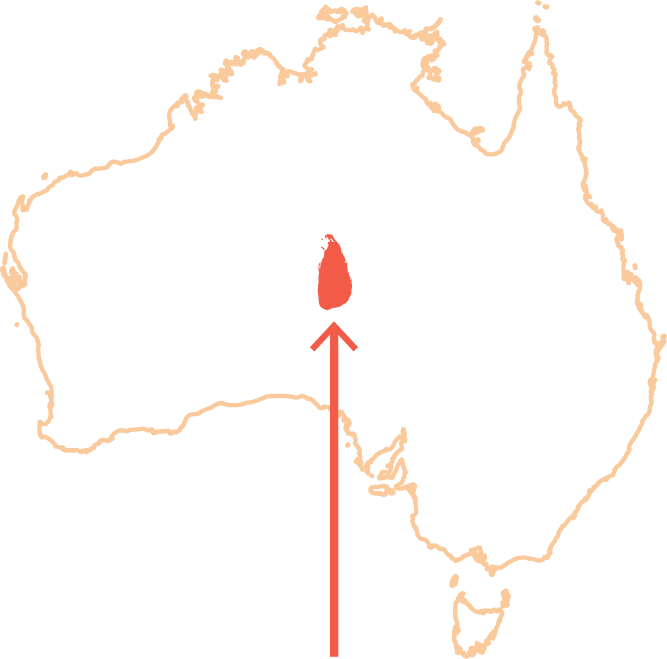
At the start of 2020, a lightning strike caused a 400 km2 fire in Stirling Range national park
In January 2020, fires ripped through the world’s biggest temperate woodland, killing hundreds of animals
How climate change is driving this change
Experts warn that climate change is making wildfires bigger, longer and more destructive. Hotter, drier conditions are extending fire seasons and fuelling more extreme blazes.
Northern latitudes are heating faster than the global average, driving a surge in boreal forest fires.
James MacCarthy, wildfire research manager with the Global Forest Watch initiative at the WRI, said: “Because of where they grow and how climate patterns are changing, boreal and temperate conifer forests are warming and drying faster than most other forests.
“Fire is a natural part of these ecosystems, but the traits that once helped them survive infrequent burns – like thick bark and seeds that are released in response to fire – are now being overwhelmed as fires grow larger, more frequent and more severe.”
“Fires are increasingly burning in places that were historically too wet to ignite and rarely caught fire, like peat-rich forests.”
A vicious cycle
What makes burning forests even more concerning is the fact that, normally, they are carbon sinks.
By absorbing CO2 and storing it in trees, plants and soil, forests normally regulate the climate by reducing greenhouse gases and slowing the pace of global warming.
But when they burn down, the carbon that they have stored is released into the atmosphere.
MacCarthy warned: “When these forests and peatlands burn, they release carbon that has been locked away in trees and soil for hundreds of years, accelerating climate change and setting the stage for more fire. Smoke from these fires can travel thousands of miles, polluting the air for millions of people, while nearby communities face evacuations, health risks and mounting costs.”
Calum Cunningham, research fellow at the University of Tasmania fire centre, said: “Massive forest fire seasons threaten to reshape the atmosphere by releasing huge amounts of CO2, which could create a feedback loop – more warming, worse fire weather, more fire. That’s the ultimate fear.”
Curbing the damage
Reducing human-caused carbon emissions and addressing climate change is the crucial step in tackling fires.
But experts say local action is also essential. Halting deforestation, restoring degraded land and managing fire risk in vulnerable regions can all help curb the damage.
Areas burned in 2024
Areas burned outside 2024 (2001–2024)200 km100 mi
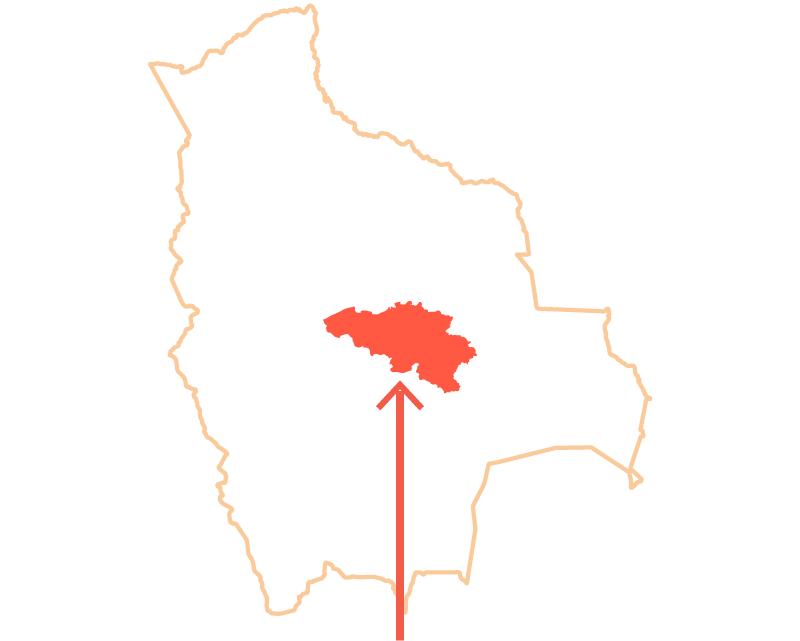
South of Llanos de Moxos – one of the world’s largest wetlands – hit by fires that consumed surrounding forests
Early warning systems and land-use politices helped prevent spread of fires
But some forests in Bolivia escaped the worst of the flames.
Charagua Iyambae, a newly established Indigenous Territory in southern Bolivia, had invested in early warning systems and land-use policies that helped prevent the spread of forest fires.
A crucial protected area within the territory – called Ñembi Guasu – largely avoided the worst of the fires due to a combination of Indigenous-led governance and practical fire-management. It is a 12,000 km2 area and home to jaguars, giant armadillos and tapirs.
This involved local Guaraní park rangers using satellite monitoring to report risks quickly to authorities, enabling quick action before small ignitions spread. Pre-positioned people and gear were quick to stamp out or block fires before they became bigger problems.
All of this meant that, while the map above shows how swathes of Bolivian forests burned last year, Charagua Iyambae was left relatively untouched – even areas that burned before.
But authorities cannot be complacent. In early September this year, the territory declared a disaster as flames entered the protected area. Rainfall eventually helped extinguish them, but the episode showed there is no such thing as fire immunity.
Some fire-affected forests can regrow if given the chance: in Australia, for example, many ecosystems are adapted to recover after low-intensity burns, though recovery depends on the species lost and the extent to which the land is left ecologically degraded.
Experts warn that these trends will continue as climate change gets worse. The ongoing rise in global temperatures is expected to create even more conducive conditions for wildfires, leading to longer and more intense fire seasons.
Boreal and temperate conifer forests, already experiencing rapid warming, are especially vulnerable. Without significant action, the vicious cycle of warming leading to more fires, less carbon absorption and further warming is set to accelerate.
The WRI’s MacCarthy said that a combination of local and global solutions will be needed to solve the crisis.
“To reduce the growing risk of forest fires, we need to address the underlying drivers. Cutting greenhouse gas emissions can limit the hot, dry conditions that fuel fires, while ending deforestation can slow climate change and prevent forest fires linked to land clearing.”
This article was written by Ian Bickis of the Canadian Press and was published in the Toronto Star on January 13, 2026.
Royal Bank of Canada signage is pictured in the financial district in Toronto on September 8, 2023. THE CANADIAN PRESS/Andrew Lahodynskyj (Andrew Lahodynskyj)
A new report from the RBC Climate Action Institute finds that while progress has been made since 2019, climate efforts in Canada are losing momentum.
The institute’s climate action barometer, which it uses to try to quantify efforts, fell in 2025 for the first time since it began measuring six years ago.
The end of the consumer carbon tax, removal of electric vehicle incentives, Alberta’s restrictions on new renewables and flatlining government funding were pointed to as some examples of stalled progress.
The report says economic and trade uncertainty, along with policy changes, appear to be souring business and consumer sentiment on climate action.
A poll of 2,000 Canadians commissioned by RBC found that affordability, health care and economy were the top three concerns, while only 12 per cent of respondents identified climate change as the most important priority and a third ranked it among the top three priorities.
The report says businesses are in “course-correction” mode as U.S. President Donald Trump steers a dramatic shift away from climate efforts, with a quarter of Canadian executives citing the change as a key reason for scaling back climate commitments.
Anti-subsidy investigation, vehicle tariffs have strained ties between Beijing and European bloc
This article was written by Chan Hohim and was published in the Toronto Star on January 13, 2026.
China and the European Union said Monday they have agreed on steps toward resolving their dispute over the bloc’s imports of Chinesemade electric vehicles.
A “guidance document” released by the EU on Monday gives instructions for Chinese EV manufacturers on making price offers for battery EVs, including minimum import prices and other details. The EU had imposed tariffs of up to 35.3 per cent on Chinese EV imports in 2024 following an antisubsidy investigation.
The EU said minimum import prices must be set at a level “appropriate to remove the injurious effects of the subsidization.” Chinese EV manufacturers’ plans for investments within the EU will also be considered, it said.
“The European market is open to electric vehicles from all around the world, provided that they have come here according to that level playing field,” said European Commission spokesperson Olof Gill. “If those conditions are met, then we can look at price undertakings in a serious way.”
The EU said the European Commission would assess each offer in an “objective and fair manner, following the principle of nondiscrimination” and in line with World Trade Organization rules.
“This is conducive not only to ensuring the healthy development of ChinaEU economic and trade relations, but also to safeguarding the rulesbased international trade order,” a statement by China’s Commerce Ministry said. The China Chamber of Commerce to the EU welcomed the move, which it said would bring about a “soft landing” in the EV standoff.
The EU’s antisubsidy probe and tariffs on Chinese EVs had strained ties between China and the bloc. In late 2024, the EU imposed countervailing tariffs of 7.8 per cent to 35.3 per cent on Chinese battery EV imports for a fiveyear period.
As lowpriced Chinese EVs rapidly entered the European market, EU officials said China’s EV makers — with massive support from the Chinese government — benefited from “unfair” subsidization which threatened economic injury to EU auto manufacturers.
Monday’s announcement also came after the EU said last month it had opened a review into whether a price undertaking offer by Germanybased Volkswagen group’s Chinese joint venture could potentially replace the EU’s antisubsidy tariffs applied on its Chinabuilt EVs.
“The minimum prices offer Chinese brands probably some comfort to continue their exports long term … while avoiding higher import tariffs,” said Rico Luman, a senior economist at the Dutch bank ING who focuses on transport, logistics and the automotive industry. “I’m convinced the inroads of Chinese brands will continue.”
EU manufacturers depend heavily on Chinese made batteries, rare earths materials and computer chips. That requires “a balancing act to avoid frustrating the trade relationship” with China, Luman said.
Stephen Chan, an associate director at S&P Global Ratings, said some European demand of Chinabuilt vehicles could be constrained if the approved floor price under the new guidelines “significantly narrows the gap between Chinese BEVs (battery EVs) and European rivals.”
Chinese car brands are expected to gain more market share in Europe over the next few years, analysts said. Chinamanufactured cars rose to six per cent of sales in the EU in the first half of 2025, according to the European Automobile Manufacturers’ Association (ACEA) and S&P Global Mobility, up from five per cent in the same period of 2024.
EU manufacturers represented 74 per cent of total EU car sales in the first half of 2025, the ACEA said. Germany produced about 20 per cent of cars sold in the EU, followed by Spain, Czechia and France.
This Letter to the Editor was written by Jack Gibbons and was published in the Toronto Star on January 13, 2026.
Re: New power line will run under Lake Ontario, Toronto Star, Jan. 8, 2026
Building a new transmission line under Lake Ontario to bring more electricity to downtown Toronto makes sense. But the provincial government’s plans to build new high cost nuclear reactors and import enriched uranium from the U.S. to fuel them will needlessly jeopardize our national security and raise our electricity rates.
A much better way to supply the new transmission line would be to build a wind farm in Lake Ontario.
Approximately 130 fivemegawatt wind turbines in Lake Ontario could produce the same amount of electricity as the Portlands gas plant did in 2024, at less than half the cost of new nuclear reactors.
Jack Gibbons, Toronto, chair, Ontario Clean Air Alliance
This article was written by Ryan Tumilty and was published in the Toronto Star on January 13, 2026.
Prime Minister Mark Carney will meet Tuesday with representatives of an alliance of First Nations that has said it will never allow a proposed oil pipeline through British Columbia to be built.
Carney will meet with the Coastal First Nations in Prince Rupert, B.C. before travelling to China this week, a government source told the Star.
Coastal First Nations, an umbrella group of several First Nations on Haida Gwaii, opposes a proposed oil pipeline from Alberta to B.C.’s northwest coast that was included in a memorandum of understanding signed last fall by the federal government and Alberta.
When the agreement was announced, Coastal First Nations president Marilyn Slett was unequivocal the pipeline could not be built.
“We will never allow oil tankers on our coast,” she said. “This pipeline project will never happen.”
Slett said the First Nations were frustrated by a lack of communication from Ottawa before the agreement was announced.
“We have been met with a wall of silence from the federal government. Such conduct is not honourable and is fundamentally at odds with Canada’s constitutional, legislative, and international obligations to coastal First Nations,” she said
A government source, speaking on background because they were not authorized to speak publicly, said the meeting with the prime minister will include a discussion of several projects.
“We expect to cover a number of subjects, including major projects underway in the region, and how Canada’s new government and Indigenous communities can ensure projects are built sustainably and in partnership,” the source said.
“The focus will be on common priorities — primarily marine conservation, oceans protections and empowering Indigenous communities to lead these efforts.”
Alberta Premier Danielle Smith launched the pipeline proposal last year without a private sector proponent and the provincial government is footing the cost of early design and consultation work in order to have a project to submit to Ottawa’s Major Projects Office.
The memorandum of understanding proposed the pipeline would carry one million barrels per day to a new oil tanker facility. It would require the federal government to repeal or amend a tanker ban currently in place along B.C.’s northwest coast.
Coastal First Nations is an umbrella group of several First Nations on Haida Gwaii. It opposes a proposed oil pipeline from Alberta to B.C.’s northwest coast
Ottawa in talks to lower tariffs on Chinese electric vehicles
This article was written by Tonda MacCharles and was published in the Toronto Star on January 13, 2026.
Canadian negotiators are in “active discussions” with China about lowering or dropping tariffs on Chinese made electric vehicles in exchange for easing punitive Chinese counter tariffs on Canadian canola and seafood, but government officials declined to say how it might affect Canada’s trade tensions with a U.S. administration that is hawkish on blocking China’s EVs from North America.
On the eve of Prime Minister Mark Carney’s trip to Beijing, the talks are considered so politically sensitive as the U.S. and Canada navigate the upcoming negotiation to renew the North American free trade pact that Canadian officials would say very little about the tariff dispute that is jamming Ottawa between China and the U.S. and opened a double trade war for this country.
A senior Canadian official, among several who briefed reporters on condition they not be identified in order to discuss the government’s position ahead of Carney’s departure, said there has been a “concerted effort to address trade irritants systematically with the objective of making progress over time.”
They said that after Carney met with Chinese Premier Li Qiang at the United Nations last fall and with President Xi Jinping at the AsiaPacific summit in Korea, there were extensive discussions between the two governments at ministerial and official levels “to address the irritants on both sides” — talks that were ongoing even as Carney prepares to arrive Wednesday evening in Beijing.
“This visit is really an opportunity to help put in place a much stronger foundation for ongoing cooperation in this regard. This is not our one chance to fix all the irritants … but we do expect to make progress,” they said.
Asked about the potential for the trip to aggravate U.S. President Donald Trump, the official said only that many countries have pursued trade diversification and broader economic relations with China, including the U.S., which has an “enormous commercial relationship” with the Asian economic giant.
Carney’s two days in the Chinese capital includes meetings with Xi, Li and the chairman of the standing committee of the National People’s Congress, as well as an official dinner hosted by Li.
For months, Canadian automakers have warned against any shift that would signal to the U.S. that Canada is softening on Chinese EVs.
In the fall of 2024, Canada matched U.S. tariffs against Chinese imports, imposing 100 per cent tariffs on Chinese electric vehicles, and 25 per cent tariffs on Chinese steel and aluminum imports. When the tariffs on China were announced at a cabinet retreat, the Trudeau government made clear it was moving in lockstep with the Americans against Chinese “overcapacity.” China responded with countertariffs on Canadian canola oil and seafood. Prairie premiers like Saskatchewan’s Scott Moe have demanded that Ottawa try to ease the agricultural tariffs.
But Brian Kingston, head of the Canadian Vehicle Manufacturers’ Association, said dropping EV tariffs would be “incomprehensible” and “dangerous,” and could trigger a backlash from the U.S. at a critical time for the renewal of the CanadaU.S.Mexico free trade deal.
Mexico matched American and Canadian tariffs on Chinese electric cars “because they realize that this is critical if we’re going to have a protected North American integrated automotive industry,” Kingston said, adding that the economics just aren’t there.
“There is no fair competition with the Chinese automotive industry. They massively subsidized this sector and they are now dumping vehicles around the world,” he said.
This article was written by Stephanie Levitz and Justine Hunter, and was published in the Globe & Mail on January 13, 2026.
Prime Minister Mark Carney will meet with Coastal First Nations in British Columbia Tuesday for discussions on natural resources developments planned for the region, ahead of a major overseas trip focused on finding new markets and investment for Canadian goods.
The meeting in Prince Rupert follows frustration and anger from First Nations in B.C. late last year after they were caught off guard by a new energy accord struck between Alberta and Ottawa. That agreement, among other things, sets the stage for a new oil pipeline to the West Coast and a potential lift of the tanker ban.
A senior government source told The Globe and Mail that Mr. Carney expects to cover several subjects in Tuesday’s meeting, including how Indigenous communities can be partners in major projects.
The Globe is not naming the source as they were not authorized to provide advance notice of Mr. Carney’s itinerary.
After the meeting, Mr. Carney will travel to China, Qatar and Switzerland as part of his strategy to diversify Canada’s export markets and bring new investment to the country as the Canada-U.S. relationship falters.
Fast-tracking natural resource development within Canada is also part of that strategy.
Last year, Mr. Carney’s government launched a new approach to the sector. It included setting up a Major Projects Office charged with speeding along significant developments. Thirteen projects have already been referred, including several in B.C.
The Carney government has pledged that partnership with Indigenous communities is central to resource development.
Coastal First Nations leadership are expected to speak with reporters after Tuesday’s meeting.
In an advisory for their news conference, the alliance said it is “looking forward to a productive and collaborative discussion with Prime Minister Carney on how to advance shared priorities around sustainable economic development and marine protection in the region.”
Some of the projects already before the MPO have significant support from B.C. First Nations, including the construction of two liquefied natural gas facilities in the province.
But community leaders and B.C. politicians are warning that support is at stake after Mr. Carney signed a memorandum of understanding with Alberta last year that includes support for the new pipeline.
Among other things, the MOU says the federal government would consider lifting a current ban on oil tankers so that product can be shipped from the pipeline’s terminus to Asian markets.
When the deal was announced, Coastal First Nations president Marilyn Slett said the pipeline will never become a reality.
“We will never consent to allowing oil tankers in our coastal waters,” she said at the time. “We will never tolerate exemptions to an oil tanker ban that has existed for over 50 years, and it is foundational to protecting our economy and our way of life.”
Coastal First Nations is the name of an alliance of First Nations groups whose traditional territories are along B.C.’s central and northern coast.
Ms. Slett is the elected chief of the Heiltsuk First Nation, whose community has been fighting for greater control over marine traffic since a tugboat carrying oil ran aground in its territory in 2016.
The incident resulted in the closing of seafood harvesting that the Heiltsuk depend on.
After the MOU was signed, Coastal First Nations also expressed frustration they had not been consulted ahead of time, and also that they weren’t able to attend a meeting with Natural Resources Minister Tim Hodgson afterwards because it was scheduled on short notice.
The government source said Mr. Hodgson will be part of the delegation in B.C., as will Housing Minister Gregor Robertson and B.C. MP Wade Grant, who is a member of the Musqueam Nation.
The discussions will also touch on marine conservation and ocean protections and how Indigenous communities can play a lead role in those areas, the source said.
This article was written by Matthew McClearn and was published in the Globe & Mail on January 13, 2026.
Ontario Power Generation is seeking a near-doubling of payments it receives for electricity produced by its nuclear power plants, a request that could lead to surging power bills.
In a rate application submitted to the Ontario Energy Board in December, OPG requested payments of nearly $207 dollars per megawatt hour produced by its nuclear power stations beginning Jan. 1, 2027, roughly double what it received as recently as last year. It seeks similar amounts for each year through 2031.
OPG spokesperson Neal Kelly said the sought rates would increase a typical residential customer’s monthly bill by an average of $3.50 for the next five years, or roughly 2.4 per cent annually.
Ontario has generated roughly half of its power in recent years from its Darlington, Pickering and Bruce nuclear stations. (The latter is operated by private power producer Bruce Power and is not part of OPG’s application.) Energy Minister Stephen Lecce is pursuing an aggressive expansion of the reactor fleet to meet an expected surge in demand for electricity between now and mid-century, which includes plans to build large new multireactor stations.
Chelsea McGee, a spokesperson for Mr. Lecce, referred an interview request from The Globe and Mail to the OEB and OPG.
The requested payment increases require the board’s approval. OEB spokesperson Tom Miller said it would be inappropriate to comment on OPG’s application because it is before a panel of commissioners. Mr. Miller said it will be adjudicated later this year.
OPG is entering a period of intense capital spending. Last year, it began constructing the first of four new small modular reactors at its Darlington station, with an estimated cost of $20.9-billion. OPG said that project accounts for about one-quarter of the sought payment increases.
Far more consequential, at 60 per cent of the payment increase, is the $26.8-billion refurbishment of four aging reactors at Pickering station. The government approved that overhaul in November; it’s expected to wrap up in the mid-2030s.
OPG is also spending to refurbish many of its hydroelectric stations.
“Every investment in the application has been carefully evaluated, planned prudently and designed to provide longterm value to Ontarians,” Mr. Kelly wrote in a statement.
Mark Winfield, a professor at York University’s environmental faculty, said that because OPG’s projects have been approved by the government, the OEB has little room to disallow the payment increases sought by the utility.
“They can’t really say no to OPG,” he said.
“The system runs by political fiat, and all the agencies are basically mandated to fulfill the minister’s will.”
Ontario’s residential electricity rates previously increased 29 per cent on Nov. 1. The OEB attributed those hikes to “higher-than-expected generation costs” as well as increased spending on conservation programs, but it provided few additional details. Those rate hikes were largely offset by a 23.5-per-cent increase in the Ontario Electricity Rebate, a taxpayer-funded instrument the government uses to provide relief on residential power bills.
The Globe twice requested interviews with OEB officials in December to explore the role rising nuclear costs played in the Nov. 1 rate increases. Mr. Miller denied those requests but agreed to answer questions by e-mail. The Globe sent questions to the OEB on Jan. 5, but had not received responses by late Monday.
A report by Power Advisory LLC, a consultancy that performed work for the OEB related to the Nov. 1 rate increases, attributed them partly to “higher-than-expected nuclear generation.” That report noted payments for OPG’s nuclear generation rose to $123.76 per megawatt hour in 2026, as compared with $111.61 per megawatt hour last year.
The current trajectory for power rates has attracted concern from the Association of Major Power Consumers in Ontario, which represents industrial power users including automakers Ford Motor Co. and Toyota Motor Corp., and steel producers Stelco and ArcelorMittal Dofasco.
AMPCO president Brad Duguid said the province has no choice but to overhaul and expand its nuclear fleet – a decision he argued will preserve the provincial grid’s reliability. But he’s concerned that industrial power rates are already “skyrocketing” for AMPCO’s members – increases he mainly attributed to rising natural gas generation as reactors are taken offline for refurbishment.
“Over the next seven to 10 years, we’re seeing significant increases in the market energy rates to make up that difference,” he said.
“We’re talking about increases in the range of 165 per cent for the market rate over the next three years alone. That’s untenable. That’s an absolute threat to the competitiveness of our industrial sector and the hundreds of thousands of jobs it supports.”
Jack Gibbons, chair of the Ontario Clean Air Alliance, attributed the hikes directly to the government’s nuclear expansion and predicted the situation will only worsen.
“It’s just absurd to be investing in high-cost nuclear,” he said.
“It’s going to push up rates, make life less affordable for hard-working families and make Ontario’s businesses less competitive.”
York University’s Mr. Winfield said the government has four options to address the upward pressure on electricity rates. First, it can allow them to rise, but that would undermine affordability and could stall electrification of Ontario’s economy.
The government could also further increase subsidies such as the Ontario Energy Rebate. But at a total annual cost “of $8.5-billion a year, this has to be already at or near the limits of fiscal feasibility,” Mr. Winfield wrote in an e-mail.
Another option is to reconsider the province’s electricity plans to focus on lower-cost options. Finally, the government could conceal the additional costs as debt, a choice previous governments pursued.
Electricity rates are also rising sharply in many other jurisdictions across North America, including ones with little or no nuclear generation.
According to the U.S. Energy Information Administration, average residential rates across the United States increased 5 per cent for the year ended Oct. 31, reaching nearly 18 US cents per kilowatt hour.




 My Climate Change Website