UK National Emergency Briefing Wakes Up World

This article was written by Robert Hunziker and was published in CounterPunch on December 5, 2025.
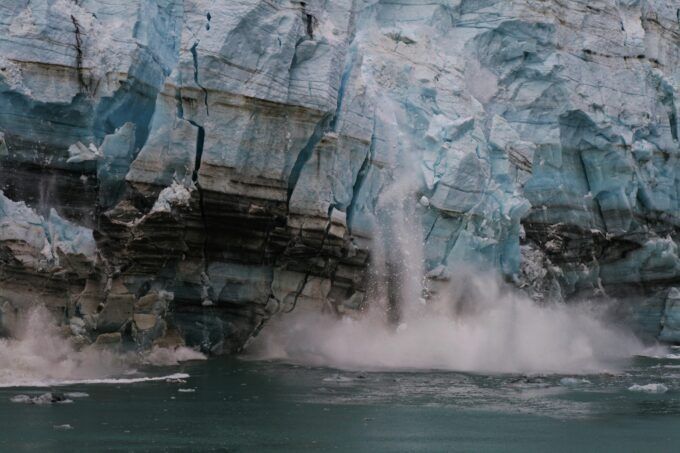
Image by NOAA.

An impressive display of world class scientists recently (Nov. 27th) held a UK National Emergency Briefing, informing the world of impending climate change disaster scenarios that can no longer be ignored. A war-time footing is necessary. Ten of the UK’s leading experts briefed politicians, business leaders, faith, sport, and the media in a marathon session.

The British are dead serious about the deleterious impact of climate change and intend to alert the public to this existential threat to civilization. Eighty-one (81) Members of Parliament and fifty-two (52) Peers attended the session headed by the UK’s chief scientific advisor, explaining why the UK must take emergency-level action like a war-time scenario. There were 1,200 invite-only attendees at the session. A 45-minutte documentary of the event is in the production stage.

Opening remarks by Professor Mike Berners Lee, Lancaster University, Sustainability Expert, Chair of the session: “For an understanding of the root causes of the most serious crisis that will ever impact our species we need people. We need to trust them because they are telling us the truth…. The information that we’re going to be looking at is extremely serious, urgent, and it affects us all here in the UK. That is why we’re calling this a National Emergency Briefing…. In the words of James Baldwin: ‘Nothing can be changed until it is faced.’ COP30 recently ended without any progress on fossil fuel emissions, in fact, the words ‘fossil fuel’ were stripped from the proceedings. We desperately need to reset the narrative on climate change and wipe out misinformation.”

The original video of the event d/d November 27th runs 3:05. Herein a sampling of excerpts of the first five speakers suffices to emphasize the critical nature of the subject prompting this emergency briefing. These excerpts are a combination of direct quotes as well as summaries of statements.

Excerpts of First Four Speakers:

Chris Packham, UK Naturalist: We are the only known life forms in the universe, and we’ve got nowhere else to go. This little blue planet is where we will either live in harmony with the environment or we will destroy ourselves and much of other life too… Do we want it on our conscience that we waste everything? Why are we unbelievably pulling back from addressing the greatest crises to ever threaten our species, climate breakdown and biodiversity loss… climate denialism is a mainstream thing again thanks to well-oiled machines of the rich, powerful, and influential lobbyists from the fossil fuel and other industries. A dangerous wave of misinformation and lies fills our lives. But worse, it fills the lives of our decision-makers… the people who shape policy. For example, the petro states said “no” and thrashed COP30 because of the crazed consensus requirement that allows oil to say “no” and abort any movement against CO2 emissions. Fossil fuel companies are some of the biggest contributors to our politicians, especially the less scrupulous. And the media is failing to explain to the public “the gravity of our predicament.” We must listen to the science… if politicians ignore science, billions of lives are at risk. Politicians in the audience today must listen to the scientists and act accordingly.

Nathalie Seddon, Professor of Biodiversity, Oxford Martin School: Nature is not simply nice to have. It’s not a luxury. It’s critical national infrastructure. When we destroy and degrade it, we expose this country to escalating risks, e.g. floods, fires, heat waves, insecurity and economic instability. When we protect and restore it, we can build resilience. The living creatures that support our entire life system are breaking down. We are facing a national emergency not only because the climate is changing but because the living systems that regulate that climate, protect homes and feed our people are breaking down here in one of the most nature depleted nations on Earth. The facts are sobering. Only about ½ of UK biodiversity remains. Only 14% of rivers in England are in good ecological health as the result of chemical pollution, sewage discharge and erosion, and agricultural runoff choking the arteries of the landscape. When rivers fail, so does resilience to droughts, etc.. Only 7% of our woodlands are healthy, only 3% of our lands, and 8% of our waters are effectively protected for nature. Over 5 million properties in England are at risk of flooding. Additional national concerns due to degradation, misuse, and abuse of nature are itemized in this speech skillfully transitioning the errors of society and government to the need to follow public opinion, which strongly supports protecting nature and redirecting public funds from inadvertent harmfulness to positive embracing of nature within government policymaking.

Kevin Anderson, Tyndall Centre for Climate Change: Let me start by framing the problem as I see it. And it’s very much that CO2 concentrations in the environment in the atmosphere that are rising at unprecedented rates… across the last 800,000 years, CO2 varied by 100 parts per million but over the past 10,000 years it only varied by 20 parts per million. This gave civilization a very stable climate. Now, in a blink of geologic time we’ve increased, since 1850 from 280 to 424 ppm or +134 ppm in less than 200 years, burying 9,800 years of the perfect climate system, not too hot, not too cold. That is gone. Therefore, we must eliminate, not cut, fossil fuels or temperatures will continue to go up. We are headed for 2C by midcentury and 3C to 4C by 2100. The planet system cannot handle it. We are looking at systemic collapse of economies within a collapsing climate system. 1.5C is no longer a viable target because of failure to cut emissions, which is a very depressing admission. There is new evidence that we are warming up much faster than science expected, which adds to the urgency of taking action now.

The world needs to cut carbon emission by 13% per year to hold temps down to 2C. We need a profound shift in our social norms to accomplish that, and you can forget carbon capture and storage. After 30 years of promises to do the job, according to the CCS Institute, it’s managed to store less than 0.03% of all fossil fuel emissions after 30 years of promises by the ‘delay technology” groupies, like the oil and gas industry. These are false solutions designed to avoid meaningful legislation to cut back emissions. Timely technologies are required, e.g. retrofitting homes, more public transport, EV charging stations, zero carbon electricity.

It is now too late for nonradical solutions. There is no way other than revolutionary rates of change, and the rich, luxury class of living must give up its overallocation of resources. Remarkably, the top 1% of the population of high income/high emissions people give rise to twice the level of emissions as the bottom half of the world’s population. This statistic makes the case for revolutionary change. Put another way, the top 1% generate twice the greenhouse gas emissions as 4,000,000,000 people.

According to an article in Oxfam (not provided by Anderson but this is a fact-check of his !% statement; the Stockholm Environment Institute also participated in Oxfam’s study, and several other independent studies show variations of the Oxfam study; all similar, some showing less some more but all show vast inequity in carbon polluting by class status) Oxfam (est. 1942) Richest 1% Use Their Entire Annual Carbon Limit in Just 10 Days d/d January 10, 2025: “The richest 1% are responsible for more than twice as much carbon pollution than half of humanity, with devastating consequences… To meet the 1.5°C goal, the richest 1% need to cut their emissions by 97% by 2030… Governments need to stop pandering to the richest. Rich polluters must be made to pay for the havoc they’re wreaking on our planet… Tax them, curb their emissions, and ban their excessive indulgences —private jets, superyachts, and the like. Leaders who fail to act are effectively choosing complicity in a crisis that threatens the lives of billions.”

Kevin Anderson (cont.) We need urgent legislation to drive down energy use within that 1% group. And I would argue that the second prerequisite of Paris is that fair and deep reductions in energy use… This will deliver immediate and substantial cuts in emissions; it gives us critical time to put in place zero carbon technologies that are very important, and it releases the labor, the materials, the finance, and even the political capital we need to drive the clean revolution… affordable low carbon homes, high quality public transport, etc., we need to move the resources and labor that furnish the private luxury of a relative few of us like me and many of us here to the public well-being for all.

Tim Lenten, Global Systems Institute, University of Exeter: Tipping Points.

If we carry on with current trajectory to three or maybe four degrees centigrade, then we will definitely be in a national emergency. We’ll likely be at a tipping point with a climate that’ll make this country a very different uninhabitable place. There is plenty of evidence that we are headed toward several tipping points, which interact, causing widespread climate disruption. We’ve already crossed a tipping point with the world’s coral reefs that support the livelihoods of ½ billion people and protects coastlines from rising sea levels and storm surges.

An upcoming example of the most dangerous tipping point is AMOC, the Atlantic Meridional Overturning Circulation, which is already showing signs of slowing. Paleoclimate research shows us that AMOC has turned off and on several times over the last ice age.

If we lose the deep-water formation of AMOC, a state-of-the-art scientific model using 2°C of global warming shows what’ll happen with the decadal winter climate extremes, assuming we cross this tipping point, thereby losing the enduring circulation of tropical warm water to the North Atlantic, heretofore warming Europe.

Here are the theoretical consequences of losing AMOC because of a 2°C warming cycle:

(1) Remarkable comeback of Arctic sea ice reaches down to covering most of the North Sea by February each winter

(2) In London it is minus 20°C (-4°F) with three frozen months of the year

(3) Edinburgh minus 30°C (-22°F) with five and a half frozen months per year

(4) But the summers will still be hotter than today because of a 2°C warmer world, well beyond today’s 1.4-1.5C.

(5) The UK will be nearly 100% dependent upon import of food crops and suffer a shortage of potable water.

(6) On a global scale, regions where staple crops are grown will be reduced by 50%.

In closing, a radical acceleration of action towards zero emissions is required. And the only way to convince ourselves that that’s credible is to show positive tipping points achieved via transition from fossil fuels to renewables that can become self-accelerating, and we’ve successfully done that in the UK but only in the power sector. At the peak in 2012, 40% of UK electricity came from black coal. Today it is zero from coal. This was accomplished by a climate change act with cross-party consensus to gradually put a floor price on carbon levied just on the power sector, stepped up over time, enough to incentivize switching to renewables, which, with ever-larger economies of scale, serve as a tipping point to lesser costs and enhanced proficiency. Importantly, in the final analysis, mandates on a global scale are needed to take out fossil fuels, transitioning as soon as possible out of fossil fuels.

The full 3:05 session UK National Emergency Briefing is on YouTube: https://www.youtube.com/live/2-PFKT1SNc4

Robert Hunziker lives in Los Angeles and can be reached at rlhunziker@gmail.com.

2025 was one of three hot­test years on record

Study also finds heat waves have become the dead­li­est extreme weather events

Exhaust gases billowing from the chimneys of a large coalfired power station in Taean, South Korea. November's UN climate talks in Brazil ended without any explicit plan to transition away from fossil fuels.

This article was written by Alexa St. John and was published in the Toronto Star on December 31, 2025.

Cli­mate change worsened by human beha­viour made 2025 one of the three hot­test years on record, sci­ent­ists said.

It was also the first time the three year tem­per­at­ure aver­age broke through the threshold set in the 2015 Paris Agree­ment of lim­it­ing warm­ing to no more than 1.5 C since pre­indus­trial times. Experts say keep­ing the Earth below that limit could save lives and pre­vent cata­strophic envir­on­mental destruc­tion around the globe.

The ana­lysis from World Weather Attri­bu­tion (WWA) research­ers, released Tues­day in Europe, came after a year when people around the world were slammed by the dan­ger­ous extremes brought on by a warm­ing planet.

Tem­per­at­ures remained high des­pite the pres­ence of a La Niña, the occa­sional nat­ural cool­ing of Pacific Ocean waters that influ­ences weather world­wide. Research­ers cited the con­tin­ued burn­ing of fossil fuels — oil, gas and coal — that send planet­warm­ing green­house gases into the atmo­sphere.

“If we don’t stop burn­ing fossil fuels very, very, quickly, very soon, it will be very hard to keep that goal” of warm­ing, Friederike Otto, cofounder of World Weather Attri­bu­tion and an Imper­ial Col­lege Lon­don cli­mate sci­ent­ist, told The Asso­ci­ated Press. “The sci­ence is increas­ingly clear.”

Extreme weather events kill thou­sands of people and cost bil­lions of dol­lars in dam­age annu­ally.

WWA sci­ent­ists iden­ti­fied 157 extreme weather events as most severe in 2025, mean­ing they met cri­teria such as caus­ing more than 100 deaths, affect­ing more than half an area’s pop­u­la­tion or hav­ing a state of emer­gency declared. Of those, they closely ana­lyzed 22.

That included dan­ger­ous heat waves, which the WWA said were the world’s dead­li­est extreme weather events in 2025. The research­ers said some of the heat waves they stud­ied in 2025 were 10 times more likely than they would have been a dec­ade ago due to cli­mate change.

“The heat waves we have observed this year are quite com­mon events in our cli­mate today, but they would have been almost impossible to occur without human ­induced cli­mate change,” Otto said. “It makes a huge dif­fer­ence.”

Mean­while, pro­longed drought con­trib­uted to wild­fires that scorched Greece and Tur­key. Tor­ren­tial rains and flood­ing in Mex­ico killed dozens of people and left many more miss­ing. Super Typhoon Fung­wong slammed the Phil­ip­pines, for­cing more than a mil­lion people to evac­u­ate. Mon­soon rains battered India with floods and land­slides.

The WWA said the increas­ingly fre­quent and severe extremes threatened the abil­ity of mil­lions of people across the globe to respond and adapt to those events with enough warn­ing, time and resources, what the sci­ent­ists call “lim­its of adapt­a­tion.” The report poin­ted to Hur­ricane Melissa as an example: The storm intens­i­fied so quickly that it made fore­cast­ing and plan­ning more dif­fi­cult, and pum­melled Jamaica, Cuba and Haiti so severely that it left the small island nations unable to respond to and handle its extreme losses and dam­age.

This year’s United Nations cli­mate talks in Brazil in Novem­ber ended without any expli­cit plan to trans­ition away from fossil fuels, and though more money was pledged to help coun­tries adapt to cli­mate change, they will take more time to do it.

Offi­cials, sci­ent­ists and ana­lysts have con­ceded that Earth’s warm­ing will over­shoot 1.5 C, though some say revers­ing that trend remains pos­sible.

Yet dif­fer­ent nations are see­ing vary­ing levels of pro­gress.

China is rap­idly deploy­ing renew­able ener­gies includ­ing solar and wind power — but it is also con­tinu­ing to invest in coal. Though increas­ingly fre­quent extreme weather has spurred calls for cli­mate action across Europe, some nations say that lim­its eco­nomic growth.

Mean­while, in the U.S., the Trump admin­is­tra­tion has steered the nation away from clean ­energy policy in favour of meas­ures that sup­port coal, oil and gas.

The effects of cli­mate change begin at home

This Letter to the Editor was written by Samantha Green and was published in the Toronto Star on December 27, 2025.

Two key Toronto cli­mate policies appeared set to be shelved. Then the pub­lic spoke up, Dec. 9

What cli­mate impacts are people exper­i­en­cing in their homes? Impacts to their health. Cana­dians spend 90 per cent of their time indoors. As the cli­mate crisis wor­sens, the build­ings we live in can either cause harm or help pro­tect us from extremes. Across Canada, sum­mers are get­ting hot­ter and more deadly. A max­imum heat bylaw in rental units is crit­ical. In Toronto, we saw 24 days last sum­mer in which tem­per­at­ures exceeded 30 C. We don’t know what next sum­mer will bring, but we know access to cool­ing saves lives.

The Build­ing Emis­sions Per­form­ance Stand­ards Policy, revived by pop­u­lar demand after hav­ing been shelved, will also deliver sig­ni­fic­ant health bene­fits. Its emis­sions­reduc­tion require­ments will drive ret­ro­fits that could help pro­tect a build­ing’s res­id­ents from tem­per­at­ure extremes; the install­a­tion of heat pumps with air fil­ters to reduce expos­ure to wild­fire smoke; and a trans­ition away from gas, improv­ing indoor air qual­ity and lower­ing asthma rates, espe­cially among chil­dren.

We shouldn’t be sur­prised that res­id­ents sup­port these policies. We know we need to drive down the emis­sions fuel­ling the cli­mate crisis and to pro­tect our health from cli­mate haz­ards where we exper­i­ence them most: in our homes.

Sam­antha Green, Toronto

Feds aim to reduce meth­ane emis­sions

Stricter rules tar­get oil and gas sec­tor, land­fills in 2028

This article was written by Catherine Morrison and was published in the Toronto Star on December 17, 2025.

The fed­eral gov­ern­ment is plan­ning new reg­u­la­tions to cut meth­ane emis­sions from the oil and gas sec­tor and land­fills.

A fed­eral doc­u­ment says the new rules for oil and gas oper­at­ors, which expand on reg­u­la­tions intro­duced in 2018, strengthen leak detec­tion and repair require­ments and set new stand­ards on vent­ing.

The new rules apply to upstream pro­duc­tion, pro­cessing and trans­mis­sion facil­it­ies in Canada’s onshore oil and gas sec­tor, includ­ing gas plants and pipelines.

The doc­u­ment says the reg­u­la­tions will be phased in start­ing Jan. 1, 2028, and will help the Cana­dian oil and gas industry with pro­du­cing “low­meth­ane intens­ity products and sup­port­ing long­term suc­cess in a tech­no­lo­gic­ally advanced, decar­bon­iz­ing industry.”

The gov­ern­ment estim­ates that between 2028 and 2040 it will see a cumu­lat­ive green­house gas emis­sions reduc­tion of 304 mega­tonnes of car­bon diox­ide equi­val­ent.

New land­fill meth­ane rules will also require own­ers and oper­at­ors of reg­u­lated land­fills to mon­itor the land­fill sur­face, land­fill gas recov­ery wells and equip­ment used to con­trol land­fill meth­ane emis­sions.

The fed­eral gov­ern­ment estim­ates that land­fills accoun­ted for 17 per cent of Canada’s meth­ane emis­sions and three per cent of its green­house gas emis­sions in 2023. It says the reg­u­la­tions will allow for early detec­tion of meth­ane emis­sions and leaks that must be repaired within spe­cified timelines.

By 2040, the reg­u­la­tions are expec­ted to reduce green­house gas emis­sions by 100 mega­tonnes of car­bon diox­ide equi­val­ent.

“This announce­ment is about build­ing the strong eco­nomy of the future,” Envir­on­ment Min­is­ter Julie Dab­rusin said in Burn­aby, B.C., Tues­day. “One that is cleaner, more com­pet­it­ive and more resi­li­ent.”

The gov­ern­ment is also announ­cing nearly $16 mil­lion in fund­ing for invest­ment in meth­ane emis­sion reduc­tion tech­no­lo­gies across Canada. Meth­ane is a green­house gas more than 80 times more potent than car­bon diox­ide over a 20­year span, but its life­time in the atmo­sphere is up to a dozen years versus cen­tur­ies for CO2.

Global insured catastrophe losses set to hit $107-billion in 2025: report

This article was written by Pritam Biswas and was published in the Globe & Mail on December 17, 2025.

Insured losses from natural catastrophes top US$100-billion in 2025 for a sixth straight year, with the Palisades Fire in Southern California the costliest wildfire on record globally at US$40-billion, Swiss Re said.

Annual global insured losses from natural catastrophes are expected to hit US$107-billion in 2025, driven by the Los Angeles wildfires and severe convective storms in parts of the United States, a Swiss Re Institute study showed on Tuesday.

The U.S. stood as the most affected market in 2025, accounting for 83 per cent of the global insured losses.

Insured losses from natural catastrophes topped US$100-billion in 2025 for the sixth straight year, according to the report, shifting focus back on tighter underwriting, higher premiums and fresh scrutiny of risk models.

“Reinsurers and the broader insurance sector have a dual role: acting as financial shock absorbers and supporting the development of resilient, risk-informed public policy and private investment that reduce future losses,” said Jérôme Jean Haegeli, Swiss Re’s group chief economist.

However, the figure was below Swiss Re’s earlier forecast of US$150-billion in total insured losses. Global insured losses from natural catastrophes had reached US$80-billion in the first half of 2025, according to a preliminary report issued earlier this year.

The Palisades Fire, which tore through Southern California in early 2025 and burned more than 23,000 acres, destroying homes and businesses and forcing thousands to flee, was the costliest wildfire event on record globally with insured losses of US$40-billion, Swiss Re said.

Rising climate risks are prompting insurers to pull back from high-risk areas across the U.S., widening coverage gaps and increasing financial pressure on vulnerable communities.

“2025 once again reminds us that elevated natural catastrophe losses are no longer outliers but the new baseline. It’s critical we double down on investing in resilience and adaptation so communities can be better prepared for the future,” said Monica Ningen, CEO of U.S. property and casualty at Swiss Re.

Global insured losses from severe convective storms rose to US$50-billion in 2025, making it the third-costliest year after 2023 and 2024, and extending a multiyear upward trend.

However, hurricane losses were low, as none of the storms made landfall on the U.S. coast, for the first time in 10 years, despite an active season, helping keep insured losses below Swiss Re’s pre-season expectations.

As record warmth transforms the Arctic, waning political will leaves its communities in peril

This article was written by Jenn Thornhill Verma and Ivan Semeniuk, and was published in the Globe & Mail on December 17, 2025.

The permafrost cliffs around Sachs Harbour, NWT, keep inching closer to residents; this is where they were in the summer of 2024. Locals have had to consider relocating or reinforcing the shoreline.

If 2025 was the year that climate change was supposed to take a back seat to more pressing matters, then there’s one part of the planet that didn’t get the memo.

On Tuesday, the U.S. National Oceanic and Atmospheric Administration released its annual Arctic Report Card – a collection of concise, peer-reviewed summaries that aims to capture how the climate is behaving at Earth’s northern extremes, including in Canada.

The latest version comes with some big implications for those who live in the Arctic. If efforts to mitigate fossil fuel emissions, the main drivers of climate change, are sidelined, then northern communities will be even further pressed to adapt to a changing environment – and more quickly.

“The Arctic is getting warmer, the Arctic is getting wetter, the Arctic is getting greener,” said Chris Derksen, director of Environment and Climate Change Canada’s climate research division. “Year over year, it may seem like an incremental change, but over 20 years, the body of evidence for the holistic changes to the Arctic – they just become clear.”

A well-known feature of climate change is that the Arctic is warming several times faster than the rest of the planet on average. This year’s Arctic Report Card confirms that the region has just logged its warmest year since 1900 – a new extreme that follows the general trend.

Other broken records in 2025 include the lowest maximum sea ice extent in the 47year satellite record, the warmest fall on record and the highest annual precipitation since tracking began.

Multiyear sea ice – the thick, old ice that once dominated the Arctic – has declined 95 per cent since the 1980s, with what remains now largely confined to coastal areas around Greenland and the Canadian Arctic Archipelago. That difference alone is set to utterly transform the Arctic.

As the report card notes, “The profound changes in sea ice since 2005 are opening the Arctic to more human activity and bringing to the fore concerns about safety, security and the environment.”

Dr. Derksen added that the report card serves as “an annual checkup on what’s happening in the Arctic.” But increasingly, the ocean and lands it describes are beginning to look like an entirely new sort of patient.

NOAA began issuing its report card in 2006 as a way to highlight Arctic change for a broad audience, including policy makers. Canadian experts are among the 112 scientists from 13 countries that authored this year’s 20th edition of the document.

Notwithstanding its international flavour, the effort has always been organized and led by U.S. researchers and is presented each December at the annual meeting of the American Geophysical Union.

Tuesday’s release comes at an especially fraught time for circumpolar science and collaboration.

Earlier this year, the U.S. administration, guided by President Donald Trump’s open contempt for concerns about climate change, cut hundreds of staff, including scientists, from NOAA’s ranks. Others were blocked from attending international meetings and avoided speaking openly on international calls.

For Canadian scientists, the situation comes with a hint of déjà vu. The last time politics got in the way of U.S. and Canadian climate scientists working together on joint projects such as the Arctic report card, it was prime minister Stephen Harper’s government that furnished the roadblocks.

Yet this year’s report card is surprisingly candid about the barriers, such as “cutbacks in funding and logistical support for Arctic research and spaceborne monitoring capabilities in the United States and the European Union.” Of the 31 observing systems it assesses, 23 depend on U.S. federal support.

Dr. Derksen, whose division works with U.S. counterparts on the report’s snow monitoring, described the impact of entire federal departments in upheaval, compounded by an extended government shutdown.

“You can’t have business as usual when it comes to scientific collaborations when you have disruptions of that scale,” he said.

During a news conference on Tuesday, U.S. authors of the report card acknowledged the challenges they faced.

Twila Moon, a climate scientist at the National Snow and Ice Data Center in Boulder, Colo., and an editor of the report card, said international collaboration helped fill the gaps. “Bumps can happen,” she said. “This was another year where we saw people stepping up, making things happen, working extra time and really hustling, because all of us believe that this is incredibly important information.”

Yet political realities cast a shadow on the briefing once it was apparent that participants, in contrast to previous years, could not speak openly about why the Arctic climate is changing so dramatically.

Repeating a phrase uttered by NOAA’s administrator Neil Jacobs during his congressional confirmation hearings, NOAA’s acting chief scientist, Steve Thur, merely stated that “there is a human role.”

For Canada, home to a vast Arctic coastline and the planet’s third-largest reserve of glacial ice, the strained relations with its closest research partner highlight the need for more domestic monitoring. The country’s own observing systems and Indigenous-led research networks are becoming more critical.

Globally, emissions-reduction efforts have stalled – last month’s COP30 summit ended without a fossil fuel phase-out road map and with new national climate plans delivering less than 15 per cent of the emissions cuts needed to hold warming to 1.5 C.

“Inuit Nunangat is at the forefront of climate change, and irreversible changes are occurring in our homeland,” said Denise Baikie, manager of policy advancement at Inuit Tapiriit Kanatami, the national representational organization for Inuit in Canada. (Inuit Nunangat refers to the Inuit homeland, spanning four regions and most of Canada’s Arctic coastline.)

“Our adaptation costs and needs will grow whether or not global temperatures remain within 1.5 or 2.0 degrees. ITK is deeply concerned that Canada won’t meet its emissions targets.”

CHANGES BY SEA AND LAND

This year’s report card documents a litany of changes that are reshaping Arctic ecosystems and outpacing the models scientists use to predict them. Among those highlighted are:

Atlantification

This is the intrusion of warm, salty Atlantic water several hundred kilometres into the central Arctic Ocean. It is happening because a cold-water barrier called the halocline, which historically kept heat trapped at depth and protected sea ice from below, has lost roughly 30 per cent of its stability over three decades.

Climate models have projected that atlantification would not reach the western Arctic Ocean this century; yet, the report card documents evidence to the contrary. In the coastal seas north of Europe, August sea surface temperatures were as much as 7 C warmer than the 1991-2020 average. On Canada’s Atlantic side, the cold Labrador Current still acts as a buffer – but the report card suggests this is a delay, not a reprieve.

Borealization

Warming bottom waters, declining sea ice and rising plankton levels are driving the northward expansion of southern marine species and sharp declines in Arctic species – disrupting commercial fisheries, food security and Indigenous subsistence. In the northern Bering and Chukchi Seas, roughly one-third of Arctic species examined are declining; snow crab and Arctic cod are losing ground while walleye pollock and yellowfin sole push north. Plankton productivity has spiked – up 80 per cent in the Eurasian Arctic, 34 per cent in the Barents Sea and 27 per cent in Hudson Bay since 2003. The result has disrupted the food webs on which Arctic communities depend.

Toxic rivers

Across Alaska, iron and toxic metals released by melting permafrost have turned streams in more than 200 watersheds visibly orange over the past decade. The increased acidity and elevated metal levels

have degraded water quality, eroded biodiversity and in some streams exceeded safe drinking water guidelines for cadmium and nickel. Similar chemical processes have been documented in Canada’s Yukon and Mackenzie watersheds, though visible rusting has not yet been reported at the same scale.

Water security

Glaciers in Arctic Scandinavia and Svalbard experienced their largest annual net loss on record between 2023 and 2024; Alaskan glaciers have lost an average of 38 metres of ice since the mid-20th century. In Canada’s northernmost community, Grise Fiord (Ausuittuq) in Nunavut, the pressure is tangible.

“The glaciers here on Ellesmere Island are disappearing faster than we thought they would, or people predicted,” said Meeka Kiguktak, the mayor of Grise Fiord. The hamlet – situated closer to the North Pole than to Southern Canada – relies on glacier runoff and iceberg water as its only sources of freshwater and is now building a new water plant.

“Ausuittuq means the place that never melts,” Ms. Kiguktak said. “It’s melting now, so we gotta change the name of our community soon.”

Melting glaciers are not the only change the community has witnessed: This year, sea ice arrived late and so rough that hunters couldn’t find seal holes, pushing the season back a month; narwhals and belugas stayed until late October, weeks past normal.

A TRADITION OF WATCHFULNESS

While the changes now evident across the Arctic are historically unprecedented, the report card notes that survival in the region has always depended on close observation of the environment. Only recently has the value of this tradition been fully appreciated. “For too long, Arctic research has treated Indigenous peoples as ‘informants’ or ‘stakeholders,’ ” the report card states, adding that Indigenous experts who combine Western and traditional knowledge to care for their lands and waters “have always been scientists.”

Philippe Archambault, a marine scientist at Laval University who leads the research network ArcticNet, said that he and his colleagues have benefited from the realization that Indigenous peoples in the Arctic constitute a permanent community of observers and analysts. By partnering with them, he said, “we’re doing our work in a more effective way.”

In Canada, Inuit Nunangat is on the verge of complete climate strategy coverage. In 2019, ITK released the National Inuit Climate Change Strategy. The Inuvialuit Settlement Region adopted its strategy in 2021; Nunavik published an adaptation plan in 2024; and Nunatsiavut released its climate strategy this year. When Nunavut’s territory-wide strategy is released next year, it will close the loop: co-ordinated climate frameworks across a vast territory, built from the ground up by the communities most affected.

“Inuit know what’s happening and what’s needed,” Ms. Baikie said. “Decisions about our homeland must be inclusive of Inuit as rights holders and knowledge holders.”

This co-operation stands in contrast to the federal picture. Canada’s Climate Competitiveness Strategy, released in November, has been criticized for lacking Indigenous input. That same month, federal cabinet minister Steven Guilbeault resigned over the rollback of climate policies he had championed, including carbon pricing and the oil-and-gas emissions cap. And a report by the University of Waterloo’s Intact Centre on Climate Adaptation found Arctic coastlines are eroding by up to 40 metres a year – yet Canada lacks a co-ordinated national framework for shoreline management.

The report card sits alongside a growing ecosystem of Arctic assessments: the Arctic Monitoring and Assessment Programme (AMAP, the Arctic Council’s scientific arm) produces circumpolar reports; the Intergovernmental Panel on Climate Change (IPCC) has its seventh assessment under way, with a synthesis report expected by late 2029; and Canada’s own national assessment, Canada’s Changing Climate, is expected next spring (published every five years, the last was published in 2019). Together, these reports build a layered picture of Arctic change from global to local scales.

But Canada has no equivalent to NOAA’s report card, and federal Arctic science remains fragmented: Natural Resources Canada tracks permafrost and glacier change, Fisheries and Oceans Canada produces Arctic seas reports, while Environment and Climate Change Canada monitors snow and ice.

Dr. Archambault said the situation resembles that of a medical patient who hears only from specialists, without reference to a broader prognosis.

“What we need now is to synthesize, to bring all these different streams of information together in a more cohesive way,” he said.

For John Smol, an ecologist at Queen’s University in Kingston who was just awarded Norway’s Mohn Prize for outstanding Arctic research, the distributed and costly nature of polar science means the region is getting less attention than it should from Canadians over all.

“We’re fickle with the environment,” Dr. Smol said, noting how the country’s vast northern wilderness seems to recede when the national discussion is focused on more immediate matters.

In the long run, however, Canada must prioritize the Arctic and its rapid transformation. Otherwise, he added, “we’re sleepwalking to disaster.”

Crit­ics say cli­mate plan leaves res­id­ents at risk

This article was written by Kate Allen and was published in the Toronto Star on December 3, 2025.

As Toronto con­tin­ues to grapple with extreme weather, a slate of pro­pos­als meant to address what the city calls its “most urgent cli­mate threat” — extreme heat — delays long­anti­cip­ated meas­ures by years and leaves vul­ner­able res­id­ents at risk, crit­ics say.

After a severe heat wave last June exposed what Mayor Olivia Chow called “ser­i­ous gaps” in the city’s heat relief strategy, coun­cil dir­ec­ted staff to report back with improve­ments. That request came amid ongo­ing efforts, endorsed by coun­cil, to cre­ate a max­imum indoor tem­per­at­ure bylaw that would enforce safe liv­ing con­di­tions for renters.

On Tues­day, city staff released a pack­age of updates to those plans that crit­ics called “dis­ap­point­ing.” While the reports touch on everything from drink­ing­water trail­ers to air­con­di­tion­ing grants to pro­act­ive pub­lic pool repairs, crit­ics said they don’t pro­tect res­id­ents who need it the most, and that a “very sig­ni­fic­ant delay” in imple­ment­ing the most impact­ful meas­ure — the max­imum tem­per­at­ure bylaw — will leave many Toronto­n­ians exposed to harm. The pro­pos­als will be con­sidered by the mayor’s exec­ut­ive com­mit­tee next week.

“My patients can’t wait,” said Dr. Sam­antha Green, a fam­ily phys­i­cian and pres­id­ent of the Cana­dian Asso­ci­ation of Phys­i­cians for the Envir­on­ment. “I have patients who are suf­fer­ing from heat­related ill­ness when we are exper­i­en­cing extreme heat in Toronto. And we exper­i­enced a lot this sum­mer,” Green said.

Last sum­mer’s heat was extreme, the reports make clear: Toronto suffered through six sep­ar­ate heat­waves with a com­bined 29 heat warn­ing days. Another report released Tues­day found that of all the cli­mate threats facing Toronto, “heat will intensify most rap­idly, rede­fin­ing how sum­mers are exper­i­enced with every passing year.”

Last June, when Pear­son broke a Humi­dex record, the city struggled. Res­id­ents were frus­trated to find pools closed after the city touted them as places to cool off, and advoc­ates warned that unhoused people had nowhere safe to go.

In one of Tues­day’s reports, staff admit­ted that the city “did not suf­fi­ciently pre­pare pools to oper­ate,” lead­ing 21 of them to tem­por­ar­ily sus­pend oper­a­tions on one day. Those chal­lenges were related to the city’s policies to keep its own employ­ees safe, an oblig­a­tion under Ontario law — and one the Star pre­vi­ously repor­ted had been flagged by the Min­istry of Labour four years earlier.

The city says it boos­ted pool staff­ing levels by 30 per cent this sum­mer to ensure life­guards and other aquat­ics staff could take neces­sary breaks to pre­vent heat ill­ness, as well as added fans and other cool­ing and safety meas­ures. Those extra staff and resources cost an addi­tional $2.9 mil­lion, a fig­ure that staff anti­cip­ates requir­ing again next year, assum­ing sum­mer’s heat is sim­il­arly severe.

The reports called the reli­able oper­a­tion of pools “crit­ical to an effect­ive heat response.” Experts said this focus is mis­guided.

“Pools are nice to have, but they are not a solu­tion to pro­tect the most vul­ner­able,” said Green.

The people most at risk of harm from heat include infants and very young chil­dren, the eld­erly, people with lim­ited mobil­ity or chronic ill­nesses, unhoused people, and work­ers exposed to heat on the job. Pools are of lim­ited or no use to these groups: Con­struc­tion work­ers, babies, and eld­erly people who need help walk­ing can’t just pop over to Sunnyside and jump in.

The most import­ant strategy, experts say, and one backed up by pub­lic health evid­ence, is to main­tain safe tem­per­at­ures in indoor liv­ing spaces. After the west­ern heat dome in 2021, the B.C. cor­oner found that nearly all of the 619 people who died were found in homes, most without access to air­con­di­tion­ing.

Last year, coun­cil endorsed a plan to cre­ate a max­imum tem­per­at­ure bylaw that would require land­lords to keep res­id­ences below 26 C, and asked staff to come back with a plan to imple­ment the new rules. Instead of an imple­ment­a­tion plan, Tues­day’s report recom­mends car­ry­ing out a “com­pli­ance ana­lysis” in 2026 and report­ing back to coun­cil in 2027 with the res­ults of that study.

Premier Ford, we’ll still see you in court

These seven Ontarians are fighting Ontario's climate inaction in court. Back row from left: Shelby Gagnon and Madison Dyck, both 29. Middle row from left: Zoe KearyMatzner, 19, Beze Gray, 30, Sophia Mathur, 18, and Shaelyn Wabegijig, 28. Front row: Alex Neufeldt, 29.

This article was written by SOPHIA MATHUR, SHELBY GAGNON, SHAELYN WABEGIJIG, BEZE GRAY, MADISON DYCK, ALEX NEUFELDT AND ZOE KEARY­MATZNER and was published in the Toronto Star on December 2, 2025.

This week was sup­posed to be the week.

We had it circled in our cal­en­dars for months — rearran­ging exams, shift­ing work sched­ules and post­pon­ing plans. We told our pro­fess­ors, bosses and fam­il­ies: we’ll be in court on Dec. 1 to hold the Ford gov­ern­ment account­able for its cli­mate record.

We were ready.

In fact, we’ve been ready for this courtroom show­down since we launched our ground­break­ing case six years ago.

But instead of our day in court, we’re star­ing down yet another cyn­ical move by a gov­ern­ment that seems more afraid of hav­ing to answer before the courts than of one of the greatest threats to human­ity.

Just weeks before our his­toric Charter chal­lenge was set to be heard, the Ford gov­ern­ment scrambled to repeal the very cli­mate legis­la­tion our case was focused on.

No, not because they made a bet­ter plan. More likely, because they saw the writ­ing on the wall.

Last year, Ontario’s highest court ruled that gov­ern­ment cli­mate tar­gets must com­ply with the Charter of Rights and Freedoms. The sci­ence was settled. The law was clear. In what we hoped would be a final, decis­ive hear­ing, we were ready for a ground­break­ing vic­tory for cli­mate justice.

But rather than face us in court, the Ontario gov­ern­ment repealed the law requir­ing it to set cli­mate tar­gets alto­gether.

Ontario seems to be say­ing if you don’t like our cli­mate tar­get, we just won’t have a tar­get. Rather than facing account­ab­il­ity on an issue that risks the lives of thou­sands of Ontari­ans, Premier Doug Ford is tak­ing his toys and going home.

He didn’t even have the guts to say it out loud. It was bur­ied in a 200­page Fall Eco­nomic State­ment without con­sulta­tion, mean­ing­ful debate, or an Envir­on­mental Registry post­ing.

This has every indic­a­tion of a last­minute attempt at a polit­ical escape hatch, not an informed policy shift. How else can you explain Fin­ance Min­is­ter Peter Beth­len­falvy claim­ing Ontario was doing this because the fed­eral gov­ern­ment had also dropped its tar­get, before imme­di­ately back­track­ing after being cor­rec­ted?

It’s not the first time they’ve tried to avoid us in court. They’ve tried before and yet they lost every time.

But this latest move is big­ger than our case.

Back in 2018, the world’s lead­ing sci­ent­ists said emis­sions needed to drop 45 per cent by 2030 to avoid cata­strophe. Since then, Ontario’s emis­sions have stag­nated.

Quietly, the Ford gov­ern­ment has scrapped renew­able energy projects and can­celled Cap and Trade. Accord­ing to the courts, it is “indis­put­able” that cli­mate change risks the lives and well­being of Ontari­ans on a massive scale.

These impacts aren’t just envir­on­mental — they’re eco­nomic and they’re pla­cing an unfair bur­den on all Ontari­ans. The 2024 flood­ing in Toronto is pro­jec­ted to cost us over $4 bil­lion. This is just a taste of our future, with recent stud­ies pro­ject­ing cli­mate change will cost the global eco­nomy $38 tril­lion per year by 2049.

Now, they’ve offi­cially legis­lated cli­mate denial. It leaves Ontario with no plan, no tar­gets and no account­ab­il­ity. We’re sail­ing into the storm of cli­mate cata­strophe with no com­pass, no map and no lead­er­ship. And it will cost us all.

But here’s the thing: our case was never just about one law. It’s about whether the gov­ern­ment has a con­sti­tu­tional respons­ib­il­ity to not harm the lives and futures of young people in this province. Ontario’s highest court has already said yes — cli­mate action must com­ply with the Charter. Charter rights don’t dis­ap­pear because the gov­ern­ment repeals a law.

So no, this case isn’t over. Justice has just been delayed.

But we’ll be back in court — stronger and more determ­ined than ever because we aren’t just fight­ing for a cli­mate plan, we are fight­ing for the right to have a future.

We’re not ask­ing for mir­acles, just account­ab­il­ity and lead­er­ship. So, to Ford and his gov­ern­ment: if you truly believe Ontari­ans don’t deserve a cli­mate plan, then say it. Stand up in the legis­lature and tell us that our lives, our health and our futures aren’t worth plan­ning for. Don’t hide behind budget bills and pro­ced­ural tac­tics. Don’t run from the courts and don’t run from us. Because we’re still here.

And we will have our day in court.

SOPHIA MATHUR, SHELBY GAGNON, SHAELYN WABEGIJIG, BEZE GRAY, MADISON DYCK, ALEX NEUFELDT AND ZOE KEARY­MATZNER ARE SEVEN YOUNG ONTARIANS TAKING THE FORD GOVERNMENT TO COURT OVER ITS CLIMATE INACTION.

Plan to curb emis­sions from build­ings on hold

Staff also con­firms the city won’t meet its cli­mate goals

Toronto's buildings contribute more than half of the city's annual greenhouse gas emissions. This past week, city staff said a plan to set targets for those emissions would not be presented.

This article was written by Kate Allen and was published in the Toronto Star on November 30, 2025.

The city has indef­in­itely shelved a plan to tackle its biggest source of car­bon emis­sions and said that Toronto will not meet its nearest tar­gets to battle the cli­mate crisis.

Offi­cials were expec­ted to release a pro­posal this week that would detail plans, years in the mak­ing, to set emis­sions tar­gets for exist­ing build­ings in Toronto. Build­ings, and the nat­ural gas used to heat them, are Toronto’s top source of planet­warm­ing green­house gases, con­trib­ut­ing more than half of the city’s annual total, accord­ing to recent account­ing.

Instead, city staff said in a report that the plan, known as the Build­ing Emis­sions Per­form­ance Stand­ards, would not be presen­ted for con­sid­er­a­tion at all. The report said the decision was promp­ted by pro­vin­cial, national and global decisions that had sty­mied cli­mate action, and by Toronto coun­cil’s ques­tions about afford­ab­il­ity and eco­nomic con­cerns.

Staff now say they will “review oppor­tun­it­ies to address these chal­lenges” and seek coun­cil’s dir­ec­tion. The report will be con­sidered as part of an update on the city’s cli­mate strategy, Trans­formTO, at com­mit­tee next week, and debated at coun­cil next month.

Although deep cuts to car­bon emis­sions are a shared respons­ib­il­ity, “there is a lot that cit­ies can do,” said Bryan Pur­cell, vice­pres­id­ent of policy and pro­grams at The Atmo­spheric Fund (TAF), a non­profit regional cli­mate agency.

“I think cli­mate lead­er­ship means when other levels of gov­ern­ment step back, cli­mate lead­ers need to step for­ward and sus­tain the momentum.”

In the report, the city poin­ted fin­gers at mul­tiple jur­is­dic­tions and policies: the fed­eral gov­ern­ment for can­cel­ling the con­sumer car­bon price and end­ing pop­u­lar home ret­ro­fit pro­grams, the province for passing legis­la­tion it said chal­lenged “the abil­ity of muni­cip­al­it­ies to imple­ment cli­mate­pos­it­ive pro­grams,” and the U.S. gov­ern­ment’s tar­iffs.

Those actions are “unfor­tu­nate,” said How­Sen Chong, a cli­mate cam­paigner for the Toronto Envir­on­mental Alli­ance and a mem­ber of the city’s cli­mate advis­ory group.

“It is also import­ant to note that the city does have impact­ful tools avail­able that are under devel­op­ment to actu­ally help at least bridge the gap. And one of those is miss­ing from this report, which is the Build­ing Emis­sions Per­form­ance Stand­ard.”

Pur­cell described the now ­back­ burnered build­ing per­form­ance pro­posal as mod­est: 85 per cent of build­ings already met the require­ments, he said, and the poorer ­per­form­ing build­ings that didn’t would see cuts to energy bills and improve­ments in com­fort and qual­ity of life for ten­ants and res­id­ents. Require­ments would only start being phased in start­ing in 2030. The first stages would set require­ments for large com­mer­cial build­ings and later for multi­unit res­id­en­tial build­ings.

Pur­cell added that TAF, along with rep­res­ent­at­ives from the real estate industry, util­it­ies, and com­munity groups, had spent years con­sult­ing on the plan, put­ting in “a lot of time and effort.”

The staff report also stated defin­it­ively that the city will not achieve its near­term cli­mate goals in 2025 or 2030, which would not come as a sur­prise for any­one track­ing Toronto’s latest emis­sions reports. A TAF invent­ory released last week found that emis­sions across the Greater Toronto and Hamilton Area had gone up for a fourth year in a row, miss­ing the large annual reduc­tions neces­sary to meet those tar­gets.

Toronto’s ambi­tious goal of reach­ing net zero by 2040 is also in doubt, the report sug­ges­ted. Mod­el­ling shows that when only con­sid­er­ing city­led policies, “a sig­ni­fic­ant gap” remains between busi­ness­asu­sual and the level of reduc­tions neces­sary to meet that tar­get.

“We remain com­mit­ted towards meet­ing Toronto’s ambi­tious cli­mate goals, while nav­ig­at­ing cur­rent eco­nomic pres­sures and policy changes across all levels of gov­ern­ment,” James Now­lan, the city’s exec­ut­ive dir­ector of envir­on­ment, cli­mate and forestry said in a state­ment, cit­ing 17 “cli­mate actions” lis­ted in the net­zero strategy plan.

“The City is also call­ing on longterm fund­ing, policy and pro­gram sup­ports from other levels of gov­ern­ment to fully achieve net zero emis­sions by 2040.”

City staff said the decision to shelve the plan was promp­ted by pro­vin­cial, national and global decisions that had sty­mied cli­mate action, and by Toronto coun­cil’s ques­tions about afford­ab­il­ity and eco­nomic con­cerns

Youth cli­mate policy law­suit in limbo

Ford gov­ern­ment repeals emis­sion­ reduc­tion law at heart of court case brought by stu­dents

The 2019 lawsuit launched by, clockwise from top left, Sophia Mathur, Shelby Gagnon, Beze Gray, Madison Dyck, Shaelyn Wabegijig, Alex Neufeldt and Zoë KearyMatzner, argued the province's climate targets infringed upon the Charter rights of youth and future generations by failing to ensure their health, safety and freedom.

This article was written by Marco Chown Oved and was published in the Toronto Stat on November 26, 2025.

Less than a week before a sem­inal cli­mate law­suit was set to be heard in court, the pro­vin­cial gov­ern­ment has repealed the emis­sion­reduc­tion law at the heart of the case.

The hear­ing was can­celled after gov­ern­ment law­yers sub­mit­ted that the law under­pin­ning the case was no longer in force, cast­ing into doubt a six­year legal odys­sey that attempts to hold Premier Doug Ford’s Pro­gress­ive Con­ser­vat­ive gov­ern­ment account­able for its cli­mate policy.

At a hear­ing sched­uled for next Monday, seven youth brought together by Eco­justice, the envir­on­mental organ­iz­a­tion that filed the case, were set to argue the province’s weak­en­ing of emis­sion­reduc­tion tar­gets in 2018 con­sti­tuted a breach of their Charter rights because it was not con­sist­ent with action sci­ent­ists say is neces­sary to main­tain a liv­able planet.

On Tues­day, the province repealed those tar­gets alto­gether, prompt­ing a judge to adjourn the hear­ing so the implic­a­tions of the gov­ern­ment’s legis­lat­ive changes could be assessed.

“When someone has to change the rules mid­game, it’s usu­ally because they’re los­ing,” said Nader Hasan, lead coun­sel for the youth applic­ants. “The tim­ing of these `amend­ments’ is not coin­cid­ental. These changes are yet another attempt by the Ford gov­ern­ment to sidestep its respons­ib­il­ity to pro­tect young people and future gen­er­a­tions from the harms of cli­mate change.”

Fraser Thom­son, a law­yer for Eco­justice, said he intends to argue the case should remain alive and will ask the judge for a new hear­ing, though it’s not clear the case can pro­ceed now that the law it was based on is no longer in force.

In a state­ment, Ford’s office did not address the repeal of emis­sion reduc­tion tar­gets, say­ing instead, “In the face of eco­nomic uncer­tainty, with (U.S.) Pres­id­ent Trump tak­ing dir­ect aim at our eco­nomy, our gov­ern­ment is tak­ing a hard look at the unne­ces­sary pro­cesses that have held us back.”

“All options are on the table, and we will con­tinue to invest in energy effi­ciency, elec­tri­city gen­er­a­tion, stor­age and dis­tri­bu­tion to reduce emis­sions while stream­lin­ing pro­cesses, keep­ing costs low for fam­il­ies,” wrote Ford spokes­per­son Han­nah Jensen in an email.

Launched in 2019, the cli­mate law­suit brought together seven girls and non­bin­ary youth from across the province, some of whom were still in ele­ment­ary school. They argued Ford’s weakened cli­mate tar­gets allow 200 addi­tional mega­tons of car­bon to be emit­ted, which will accel­er­ate cli­mate change and infringe upon the Charter rights of youth and future gen­er­a­tions by fail­ing to ensure their health, safety and free­dom.

It was the first cli­mate case in Canada to have a full hear­ing on its mer­its, dur­ing which the province made no attempt to defend its legis­lated tar­gets, instead arguing they were a com­mu­nic­a­tions exer­cise and had no effect on emis­sions.

A judge dis­missed the case, but the youth appealed and won, with the Court of Appeal send­ing the case back to Super­ior Court for a new hear­ing. The province appealed that decision to the Supreme Court, which declined to hear the case, set­ting the stage for Monday’s pivotal trial — some six years after the case was first filed.

“Over the time that this case has been going on, I’ve been able to see the cli­mate crisis unfold in real time,” said Zoë Keary­Matzner, who was 12 and in grade 8 when the case was launched and is now 19 and in second year at uni­versity. “Since this case began, tens of thou­sands of people have died as a res­ult of nat­ural dis­asters, heat­waves and floods across the world. But along­side that, we’ve also seen some glim­mers of hope: move­ments around the world have pro­duced real res­ults and achieved remark­able wins.”

While global emis­sions con­tinue to rise, car­bon releases in some of the world’s lead­ing developed eco­nom­ies have star­ted to fall, some dra­mat­ic­ally. In the U.S, green­house gas emis­sions have fallen more than 20 per cent from their peak in 2005. Ger­man emis­sions are down by nearly half since their peak in 1979. Much of this is due to a col­lapse in the burn­ing of coal and the recent blitz in the con­struc­tion of renew­able energy: wind and solar.

Emis­sions in Rus­sia and India, however, con­tinue to rise, and Chinese emis­sions over­took the U.S. as the largest in the world in 2006 and con­tinue to increase. The rapid deploy­ment of renew­ables has star­ted bend­ing those curves down­ward, and some early estim­ates pre­dict 2025 could have lower emis­sions than 2024, mark­ing the peak of global emis­sions and the begin­ning of an age of reduc­tions toward net zero by 2050.

Canada’s emis­sions have dropped about 8.5 per cent since 2005, but have been rel­at­ively flat for the last few years. Even though emis­sions have fallen or stayed flat in vir­tu­ally every sec­tor, oils­ands emis­sions have risen 75 per cent, can­cel­ling out much of that pro­gress.

Ontario’s emis­sions are down by 22 per cent since 2005, which puts the province within strik­ing dis­tance of the now­repealed 30 per cent tar­get by 2030. The pre­vi­ous tar­get, before it was weakened by the Ford gov­ern­ment, would have been the equi­val­ent of a 55 per cent reduc­tion by 2030.

“At its core, the ques­tion in this case is whether the gov­ern­ment’s fuel­ling of the cli­mate crisis viol­ates the fun­da­mental Charter­pro­tec­ted rights of Ontari­ans,” said Eco­justice’s Thom­son.

“The courts have already ruled that it’s indis­put­able that Ontari­ans are exper­i­en­cing an increased risk of death and increased threats to secur­ity of the per­son as a res­ult of cli­mate change, and crit­ic­ally, that by not tak­ing steps to reduce green­house gas emis­sions, Ontario is con­trib­ut­ing to these risks.”

“It kind of feels like the urgency of cli­mate change is not really something that is com­pat­ible with the Cana­dian judi­cial sys­tem, with how long everything takes,” said Alex Neufeldt, one of the applic­ants.