Carney, Poilievre have both vowed to speed up major resource projects – but can they?

This article was written by Justine Hunter and was published in the Globe & Mail on April 14, 2025.

Court cases, Indigenous consultation and environmental complexity could hinder political leaders’ pledges to cut red tape

The federal Conservatives and Liberals are in a bidding war to cut red tape for major resource projects that will help Canada weather the economic storms brought by the U.S. tariff war.

Liberal Leader Mark Carney and Conservative Leader Pierre Poilievre have both promised to fast-track approval processes: Mr. Carney says regulatory reviews for projects should take no more than two years, while Mr. Poilievre says he would set a maximum of one year.

But similar promises have been made across the country before with limited effect. Court cases, Indigenous consultation and the complexity of major projects with potential environmental consequences have all stymied many an enthusiastic politician.

Richard Masson, an executive fellow at the University of Calgary’s School of Public Policy, said there’s a reason the timelines are long. It can take several years of planning and engineering just to define the scope of a project enough to begin baseline environmental studies and consultation with Indigenous and local stakeholders.

“I would be surprised if this type of limit could work without substantial legislative change. Indigenous stakeholders have rights that are enforceable beyond the ability of Parliament to change,” said Mr. Masson, who has served as the director of oil sands policy and development for the Alberta Energy Department.

He said that changes are needed if Canada is to secure investments in its own resource development.

“There needs to be a better way than our current system – but finding it and implementing it will take sustained effort from skilled leaders across the country.”

THE RING OF FIRE’S LONG DEVELOPMENT TIMELINE

The Ring of Fire – an area of rich nickel and gold deposits in a remote section of Northern Ontario – shows that it takes more than political will to get shovels in the ground.

In the early 2010s, Dalton McGuinty’s Liberal government promoted the Ring of Fire as a means to jump-start Ontario’s economy. In 2018, Progressive Conservative Leader Doug Ford vowed to do what the Liberals could not, saying he would hop on a bulldozer himself to get construction started.

Mr. Ford has served almost seven years as Premier, but in the recent Ontario election, he was still campaigning on potential development in the Ring of Fire. His government says it has given its bureaucrats a limit of 24 months to review large renewable energy proposals. But proposals to tap those deposits remain stalled, currently awaiting a regional assessment by the Impact Assessment Agency of Canada (IAAC).

WHAT THE CONSERVATIVES HAVE PLEDGED

To fast-track development, the federal Conservatives have pledged to establish a single authority, the Rapid Resource Project Office, to manage regulatory approvals across all levels of government. That office would be given a target of six months to handle project assessments, with a maximum one-year decision window. This would require co-operation with provincial governments to manage all approvals through a single department.

For projects that cross provincial boundaries, Mr. Poilievre said he would create a national energy corridor. Under this model, the federal government would fasttrack transmission lines, railways, pipelines and other critical infrastructure by preapproving projects inside the corridor. That preapproved route would require approval of the premiers.

WHAT THE LIBERALS HAVE PLEDGED

The Liberals under Mr. Carney have proposed a “one window” approval process for assessing large infrastructure and naturalresource projects. The goal is to minimize redundancies across federal departments by streamlining permit applications required under federal laws such as the Fisheries Act. For most projects, the Liberals say, the federal government would recognize provincial environmental and impact review processes and decisions.

The Liberals would require all federal regulatory authorities, including the IAAC, to complete their review of projects that serve the national interest on a twoyear timeline. Mr. Carney has also promised to ensure that Indigenous consultations related to federally regulated infrastructure projects such as rail expansions, port upgrades and nuclear energy projects are held within “clear, predictable, and competitive timelines.”

LESS TALK, MORE ACTION

The head of the Mining Association of BC, Michael Goehring, said both parties are offering encouraging ideas, but it will take more than promises to secure new mining investments.

“There has been too much talk and not enough action, both at the federal and at the provincial levels,” he said in an interview.

A key component of both parties’ proposals is already in place in British Columbia, he noted, and this should be a model for the country, helping to fast-track approvals and remove uncertainty around resource development.

In 2018, the federal government and B.C. agreed to a single environmental assessment process for major projects, which allows Ottawa to substitute the B.C. assessment for its own. The pact was updated in March with additional commitments to streamline critical-mineral mine projects. It can still take up to 10-12 years to get a mining project through the regulatory process in B.C., Mr. Goehring said, but it is far less onerous than before.
Nature’s value

Put­ting a price on envir­on­ment could help with pre­ser­va­tion

Mike Kennedy, chief financial officer for the municipality of Rossland, B.C., said if a dollar value is assigned to water purification “services” provided by natural areas like wetlands, it can be measured against the cost of having to build or expand water filtration facilities to achieve the same benefit.

This article was written by Michael Tutton and was published in the Toronto Star on January 30, 2025.

A cli­mate change think tank has released a guide encour­aging muni­cip­al­it­ies to assign spe­cific dol­lar val­ues to nat­ural assets ran­ging from wet­lands to coastal dunes.

The Uni­versity of Water­loo’s Intact Centre on Cli­mate Adapt­a­tion pub­lished its “Get­ting nature into fin­an­cial report­ing” guide on Wed­nes­day. Lead author Joanna Eyquem says put­ting val­ues on nat­ural assets gives muni­cipal plan­ners ammuni­tion when they need to make a case for the assets’ pre­ser­va­tion.

“Money talks. Nature does not have a voice in eco­nomic decisions when it is not laid out in dol­lars,” Eyquem said in an email this week. “Without integ­rat­ing nature into fin­an­cial report­ing, Canada has already lost more than 70 per cent of wet­lands — and up to 98 per cent (of wet­lands) in densely pop­u­lated areas.”

The doc­u­ment, which drew on con­sulta­tions with 120 experts in account­ing and other fields, says nat­ural fea­tures such as forests and wet­lands “that have not been pur­chased” by local gov­ern­ments cur­rently aren’t on muni­cipal bal­ance sheets. That’s because the national body that sets account­ing stand­ards for the pub­lic sec­tor has yet to issue com­mon stand­ards for their valu­ation, the report says.

Still, the cli­mate centre found that about 150 Cana­dian com­munit­ies are non­ethe­less identi­fy­ing, valu­ing and man­aging nat­ural assets to put them in sep­ar­ate ledgers off the bal­ance sheet.

The guide urges oth­ers to fol­low their example, provid­ing a list of resources to help them.

The account­ing sys­tems being developed are based on the “ser­vices provided” by the lakes, rivers, wet­lands, coastal marshes, soils, forests, fields and dunes that might oth­er­wise be regarded as bar­ren or unused prop­er­ties, says the report.

The guide also lists draft account­ing stand­ards that muni­cip­al­it­ies can use to get star­ted.

In an inter­view Tues­day, Mike Kennedy, the chief fin­an­cial officer in Ross­land, B.C., said his muni­cip­al­ity is among those already cal­cu­lat­ing dol­lar val­ues for a “nat­ural asset invent­ory.”

He said his team has priced wood­lands on slopes that sur­round a human­built reser­voir for their value in redu­cing erosion and mit­ig­at­ing flood­ing, as well as recre­ational use. The total annual “ser­vices” value attached to for­es­ted areas in the muni­cip­al­ity is cur­rently set at $26 mil­lion, while wet­lands are val­ued at about $2.8 mil­lion a year.

The work is chal­len­ging because val­ues depend on the land’s spe­cific loc­a­tion, he said. “A plot of land in two dif­fer­ent spots in our town could provide to you very dif­fer­ent valu­ations.”

However, Kennedy said the fig­ures are use­ful in muni­cipal decision­mak­ing.

He gives the hypo­thet­ical example of a devel­op­ment that pro­poses to build on wet­lands or on land near a water­way. If a dol­lar value is assigned to water puri­fic­a­tion “ser­vices” those areas provide, it can be meas­ured against the cost of hav­ing to build or expand water fil­tra­tion facil­it­ies to achieve the same bene­fit.

The guide describes a num­ber of terms that Eyquem says she hopes may become part of account­ing lan­guage.

“Eco­sys­tem goods and ser­vices,” are products obtained from the eco­sys­tem such as food and fresh water, while “reg­u­la­tion and main­ten­ance ser­vices” include water puri­fic­a­tion and tem­per­at­ure reg­u­la­tion.

In addi­tion, each step in doing the eval­u­ations is laid out in the guide, along with where fin­an­cial officers can find meth­ods to eval­u­ate the nat­ural assets, eval­u­ate their con­di­tion, pin­point the ser­vices provided and con­vert that into a mon­et­ary fig­ure.

Jill­ian Prosser, a cli­mate adapt­a­tion spe­cial­ist for Cal­gary, says she’s been work­ing on nat­ural asset valu­ations for the past six years.

She said the know­ledge gained in the annual fin­an­cial dis­clos­ures has led her team to develop plans to enhance and main­tain the wood­lands and water­ways iden­ti­fied.

Prosser said Tues­day the city is begin­ning to include them in wider “cor­por­ate asset man­age­ment plan­ning.”

A quarter of freshwater animals risk extinction, study says

Vast ecosystems like Amazon River face fires, mining

This article was written by Christina Larson and was published in the Toronto Star on January 12, 2025.

Nearly a quarter of animals living in rivers, lakes and other freshwater sources are threatened with extinction, according to new research.

“Huge rivers like the Amazon can appear mighty, but at the same time freshwater environments are very fragile,” said study coauthor Patricia Charvet, a biologist at Brazil’s Federal University of Ceará.

Freshwater habitats — including rivers, lakes, ponds, streams, bogs and wetlands — cover less than one per cent of the planet’s surface, but support 10 per cent of its animal species, said Catherine Sayer, a zoologist at the International Union for Conservation of Nature in England.

The researchers examined around 23,500 species of dragonflies, fish, crabs and other animals that depend exclusively on freshwater ecosystems. They found that 24 per cent were at risk of extinction — classified as vulnerable, endangered or critically endangered — due to compounding threats from pollution, dams, water extraction, agriculture, invasive species, climate change and other disruptions.

“Most species don’t have just one threat putting them at risk of extinction, but many threats acting together,” said Sayer, a studycoauthor.

The tally, published in the journal Nature, is the first that time researchers have analyzed the global risk to freshwater species. Previous studies have focused on land animals including mammals, birds and reptiles.

Duke University ecologist Stuart Pimm, who was not involved in the study, called it “a longawaited and hugely important paper.”

“Almost every big river in North America and Europe is massively modified” through damming, putting freshwater species at risk, he said.

In South America, the vast Amazon River ecosystem also faces threats from deforestation, wildfires and illegal gold mining, said Charvet.

Illegal fires to clear forest result in waves of ash polluting the river, and unlicensed gold miners dump mercury into the water, she said.

Rivers and wetlands “concentrate everything that happens around them,” she said. “If something goes really wrong, like an acid or oil spill, you can threaten an entire species. There’s nowhere else for these animals to go.”

Nearly one-quarter of freshwater species face extinction, says new research, first of its kind

This article was written by Christina Larson and was published in the Globe & Mail on January 9, 2025.

A scientist holds a calico crayfish in Germany in 2018. Researchers of a study examined around 23,500 species of crabs and other animals that depend on freshwater ecosystems.

Nearly a quarter of animals living in rivers, lakes and other freshwater sources are threatened with extinction, according to new research published Wednesday.

“Huge rivers like the Amazon can appear mighty, but at the same time freshwater environments are very fragile,” said study co-author Patricia Charvet, a biologist at Brazil’s Federal University of Ceará.

Freshwater habitats – including rivers, lakes, ponds, streams, bogs and wetlands – cover less than 1 per cent of the planet’s surface, but support 10 per cent of its animal species, said Catherine Sayer, a zoologist at the International Union for Conservation of Nature in England.

The researchers examined around 23,500 species of dragonflies, fish, crabs and other animals that depend exclusively on freshwater ecosystems.

They found that 24 per cent were at risk of extinction – classified as vulnerable, endangered or critically endangered – owing to compounding threats from pollution, dams, water extraction, agriculture, invasive species, climate change and other disruptions.

“Most species don’t have just one threat putting them at risk of extinction, but many threats acting together,” said Ms. Sayer, a study-co-author.

The tally, published in the journal Nature, is the first time researchers have analyzed the global risk to freshwater species. Previous studies have focused on land animals including mammals, birds and reptiles.

Duke University ecologist Stuart Pimm, who was not involved in the study, called it “a long-awaited and hugely important paper.”

“Almost every big river in North America and Europe is massively modified” through damming, putting freshwater species at risk, he said.

In South America, the vast Amazon River ecosystem also faces threats from deforestation, wildfires and illegal gold mining, said Ms. Charvet.

Illegal fires to clear forest result in waves of ash polluting the river, and unlicensed gold miners dump mercury into the water, she said.

Rivers and wetlands “concentrate everything that happens around them,” she said. “If something goes really wrong, like an acid or oil spill, you can threaten an entire species. There’s nowhere else for these animals to go.”

Seven quiet breakthroughs for climate and nature in 2024 you might have missed

This article was written by Isabelle Gerretsen, Martha Henriques, Katherine Latham, Lucy Sherriff, and Jocelyn Timperley, and was published by BBC News on December 16, 2024.

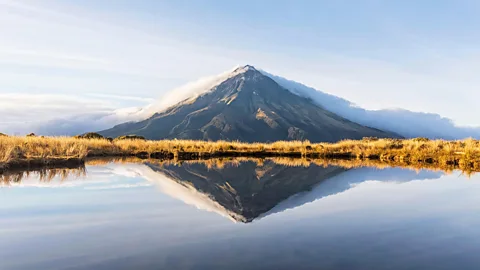
Alamy Mount Taranaki volcano in New Zealand reflected in a still lake (Credit: Alamy)

Global temperatures rose and extreme weather ramped up, but there were also some significant breakthroughs for the climate this year. Here are seven quiet wins that may have gone under your radar in 2024.

It’s been another tough year for the climate and nature. From the 1.5C threshold set to be breached for a full year for the first time, to the disappointment of vulnerable nations at this year’s UN climate summit, it can feel like the challenge is overwhelming. Then there’s the extreme weather increasingly impacting both poor nations and rich countries.

But this year also saw some extraordinary breakthroughs for climate and nature. In case you missed them, we have rounded up some of the biggest wins for our planet from the past year.

The end of coal in the UK…

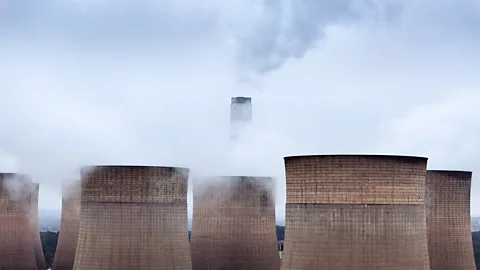
The UK closed its last coal-fired power plant in 2024. It was a symbolic moment as the UK was the first country in the world to use coal for public power generation and the fossil fuel was the lifeblood of the industrial revolution. 

On 30 September, the turbines at the Ratcliffe-on-Soar power plant in Nottinghamshire fell silent and its chimneys stopped belching out fumes. The site will now undergo a two-year decommissioning and demolition process. It is unclear what the site will become after that, but one proposal is to turn it into a battery storage site.

This has already been done in West Yorkshire, at the decommissioned power plant Ferrybridge C, which has a storage capacity of 150MW, enough to power 250,000 homes. As countries aim to rapidly decarbonise their economies, many former fossil fuel power plants are proving to be promising sites for industrial-scale batteries.

Read more about the UK coal plant that became a giant battery in this story by Michael Marshall.

Getty Images The UK stopped burning coal for power in 2024 (Credit: Getty Images)
The UK stopped burning coal for power in 2024 (Credit: Getty Images)

…and a global surge in green power

Renewable energy sources are growing rapidly around the world. In the US, wind energy generation hit a record in April, exceeding coal-fired generation.

The International Energy Agency (IEA) expects the world to add 5,500 GW of renewable energy capacity between now and 2030 and to grow global renewable capacity 2.7 times compared to 2022, slightly falling short of a UN goal to triple capacity by 2030. By the end of this decade, renewable energy sources are set to meet almost half of all electricity. 

The lion’s share of this growth comes from just one country: China. By 2030, China is forecast to make up at least half of the world’s cumulative renewable electricity capacity, according to the IEA. Read about China’s “bullet train for power” designed to cope with this growing renewable capacity.

Fatih Birol, executive director of the IEA, noted at a press conference that the world’s “massive growth in renewables” was mainly driven by economics rather than government policies, as renewables – especially solar – were the cheapest option in almost every country in the world. The major expansion was a “beautiful story”, he said, which he could sum up in two words: “China” and “solar”.

The rivers, mountains, waves and whales given legal personhood

Back in 2021, the Ecuadorian government issued a landmark ruling stating that mining in its Los Cedros cloud forest violated the rights of nature. Another ruling in Ecuador stated that pollution had violated the rights of the Machángara River that runs through the capital, Quito.

This year, a report was published which found that such rulings can indeed help protect endangered ecosystems. Read more about Los Cedros legal personhood in this article by Becca Warner.

Beyond Ecuador, a growing number of natural features and spaces were granted legal personhood in 2024. In New Zealand, the peaks of Egmont National Park – renamed Te Papakura o Taranaki – were recognised as ancestral mountains and jointly became a legal person, known as Te Kāhui Tupua.

In Brazil, part of the ocean was given legal personhood – with the coastal city of Linhares recognising its waves as living beings, granting them the right to existence, regeneration and restoration. Meanwhile, a new treaty formed by Pacific Indigenous leaders saw whales and dolphins officially recognised as “legal persons”.

“A case filed to protect whales from cross-ocean shipping may rely on an individual claiming to be harmed because her ability to whale watch has been diminished,” says Jacqueline Gallant, a lawyer working in climate change, biodiversity and rights. “If whales themselves were recognised as legal subjects, the case could more accurately focus on the harms to the whales themselves as opposed to the individual claiming an ancillary harm in order for the court to hear the claim.”

Gallant, who works for the Earth Rights Research and Action programme at New York University School of Law, says they are pushing the boundaries of legal imagination.

“Legal personhood provides the understanding that nature and living non-human beings should be understood as subjects [as opposed to objects] – with intrinsic value and interests and needs of their own,” she says.

Getty Images Granting animals and other parts of nature legal personhood can lead to stronger protections (Credit: Getty Images)
Granting animals and other parts of nature legal personhood can lead to stronger protections (Credit: Getty Images)

New ocean protections for the Azores

The North Atlantic saw a new marine protected area (MPA) announced by the Azores. When established, it will be the largest in the region, spanning 30% of the sea around the Portuguese archipelago. Half of the 111,000 sq miles (287,000 sq km) protected area will be “fully protected”, with no fishing or other natural resource extraction, according to the initiative behind the MPA. The other half will be “highly protected”.

The area contains nine hydrothermal vents, 28 species of marine mammals and 560 species of fish, among many others. 

MPAs can be highly effective in protecting biodiversity if their restrictions are adequately enforced. Overall, just 2.8% of the world’s oceans are effectively protected and only 8.3% are conserved, according to a report by Bloomberg Philanthropies Ocean Initiative.

Read about how MPAs and other large-scale protections can boost biodiversity.

Amazon deforestation reaches nine-year low

Deforestation in the Brazilian Amazon dropped to a nine-year low in 2024, falling by more than 30% in the 12 months to July, according to data released by Brazil’s national space research institute, INPE. Roughly 2,428 sq miles (6,288 sq km) of the rainforest were destroyed, an area larger than the size of the US state of Delaware. While this area is still vast, it is the lowest annual loss since 2015. Deforestation fell despite the fact that fires in the Brazilian Amazon increased almost 18-fold during the same time period following a historic drought.  

The development comes almost two years after President Luiz Inacio Lula da Silva took office and pledged to end deforestation by 2030 and crack down on illegal logging.

Conservation really can make a difference to biodiversity

A major review of conservation initiatives this year found that more often than not they are effective in slowing or reversing biodiversity loss.  The scientists reviewed 665 trials of conservation measures across the world, including several historic trials, and found they had had a positive effect in two out of every three cases.

Getty Images The saiga antelope was one winner from conservation efforts in 2024 (Credit: Getty Images)
The saiga antelope was one winner from conservation efforts in 2024 (Credit: Getty Images)

One example of this is the Altyn Dala Conservation Initiative, which worked in Kazakhstan with local partners and other international organisations to save the critically endangered Saiga Antelope in the Golden Steppe grassland from extinction. The project used careful, science-based monitoring, tagging and habitat protection and restoration to ensure the best recovery for the Saiga Antelope, which numbered just 20,000 in 2003. Today, 2.86 million of the antelope roam the Golden Steppe, and it has been moved from “critically endangered” to “near threatened” status on the International Union for Conservation of Nature’s Red List.

Indigenous-led efforts replenish skies and rivers

In California, wildlife has benefited from decades-long drives by the Native American Yurok Tribe to replenish animals on tribal territories. In 2024, this culminated in salmon returning to the Klamath River.

After a 100-year hiatus, the fish were spotted in Oregon’s Klamath River basin, following an historic dam removal further downstream in the California stretch of the Klamath. In August, the final of four dams were removed – in what was America’s biggest dam removal project – following pressure from environmentalists and tribes. Read about the return of salmon to the river in Lucy Sherriff’s story.

Tribal members expected salmon to take months to return to the upper stretches of the river, as their numbers had been decimated by poor river health caused by the dam blocking natural water flow. But in October biologists sighted the fish in Oregon tributaries.

“What’s surprising is the sheer number of fish that are back, and the geographic range,” said Barry McCovey, senior fisheries biologist for the Yurok Tribe. “I couldn’t believe they’d been spotted in Oregon. It was incredible news to hear – it was mind boggling. When I heard, I was like ‘wait, already?!’. They’ve exceeded any expectations anyone had.”

More like this:

• The people cracking the toughest climate words

• Scandinavia’s push for more Arctic fox cubs

• The 1969 mission to save Vermont’s wild turkeys

Meanwhile, an intensive programme to reintroduce California condors, saw growing success too. The tribe has been running a release project for the vulture-like bird, which is sacred to the tribe, since 2008. On 4 October of this year, the tribe released two more of the birds, bringing the total of California condors in Yurok territory to 18. Read the full story on the condor’s return to Yurok skies.

“They’re doing great,” says Tiana Williams, director of the Yurok Tribe Wildlife Department and member of the Yurok Nation. “It’s been really exciting to watch the flock expand and change in their dynamics.”

Endangered species need urgent help. Here’s what we can do, right now

This opinion was written by Jasper Lament, the CEO of the Nature Trust of British Columbia and was published by the Globe & Mail on December 23, 2024.

    It is estimated that one in five species in Canada is at risk owing to climate change, habitat loss, pollution and other factors.

    When I first started studying biology in university, the slender-billed curlew – a beautiful shorebird species – was still travelling the flyways of mainland Europe. Now it’s gone. It’s likely extinct.

    This is a call to action. We don’t want to lose one more bird species in Canada; almost three billion birds have already been lost in North America since 1970. But biodiversity declines are not limited to birds. It is estimated that one in five species in Canada is at risk of being lost as a result of multiple factors, including climate change, habitat loss and fragmentation owing to development and human activity, pollution and more.

    But the problem goes beyond habitat loss: According to a recent audit, Canada’s species assessment backlog is so extreme that, at the current pace, it would take 30 years to catch up with assessments for more than 1,000 vulnerable species. Species assessments are critical as they help us determine which wildlife species are at risk of decline or are in decline before they approach extinction. For some species, these assessments could determine whether or not they survive.

    While we must address the backlog, we cannot wait three decades for assessments to catch up and for us to take action to mitigate biodiversity loss. We already have the data, the will, the tools, the ability and a proven track record of success to protect species in peril right now by protecting the land they call home. And we know how to make our efforts go further: by learning from mistakes like the loss of the slender-billed curlew and targeting biodiversity hot spots in Canada.

    I live and work in British Columbia, which is Canada’s most biodiverse province. But there is a wealth of biodiversity across the country. They include grasslands, such as the Antelopebrush ecosystems in the South Okanagan, old-growth forests, such as the Coastal Douglas-fir forest in British Columbia, and the Carolinian zone in Ontario.

    Targeting such areas is strategic conservation, which can protect at-risk species while also contributing to climate-change mitigation. And it works.

    Targeting biodiversity hot spots also makes sense, given the restraints of our economy. Most species live in the same places that people like to live, but the cost of buying land there to protect species and their homes continues to escalate – and with it, the conservation challenge. Traditionally, the key measure of success for programs like the Natural Heritage Conservation Program has been the number of hectares or acres protected, and while acres are important, this approach doesn’t capture the whole picture. Every acre is not equal for biodiversity. We must double down on land acquisition and restoration in targeted hot spots to truly protect Canada’s biodiversity.

    Protection and restoration of the Kw’a’luxw (Englishman) River and watershed on Vancouver Island is a good example of a determined and concentrated conservation effort in a Canadian biodiversity hot spot. The northern goshawk, Townsend’s bigeared bat, and the red-legged frog are just three at-risk species known to live here. This story began more than 40 years ago; since 1971, the Nature Trust of British Columbia has purchased, restored and managed land with critical habitats for species that depend on them, working with our partners to protect more than 500 conservation areas and more than 180,000 acres. More recently, we have taken strides in purchasing and protecting the lower river and estuary, working in close collaboration with the Snaw-Naw-As First Nation on restoration and stewardship. Now, much of this culturally and ecologically important river corridor remains protected for future generations.

    There’s still more work to be done. We know we need to strengthen this lifeline for land, wildlife and people, and we know we can’t wait for species risk assessments. The human impact on this watershed is intense, and we are missing out on conservation opportunities due to ever-higher land costs.

    Strategic, science-backed conservation efforts today can halt species declines and restore vital ecosystems for tomorrow. We must continue to drive resources into conservation science and accelerate species assessments. We cannot allow the species assessment backlog to prevent us from acting now.

    To save imperilled species at risk and the places they call home, we can’t wait for species assessments to catch up. We can and must purchase and protect critical habitats right now.

    Sea turtles stranded by climate change fill New England animal hospital

    This article was written by Rodrique Ngowi and Patrick Whittle, and was published in the Globe & Mail on December 4, 2024.

    Workers examine a Kemp’s ridley sea turtle at the New England Aquarium in Quincy, Mass., on Tuesday. Cold-stunned sea turtles wash up on Cape Cod every fall and winter.

    As global warming fills the plankton-rich waters of New England with death traps for sea turtles, the number of stranded reptiles has multiplied over the past 20 years, filling one specialized animal hospital with the endangered creatures.

    The animals enter areas such as Cape Cod Bay when it is warm, and when temperatures inevitably drop, they can’t escape the hooked peninsula to head south, said Adam Kennedy, the director of rescue and rehabilitation at the New England Aquarium, which runs a turtle hospital in Quincy, Mass.

    More than 200 cold-stunned young turtles were being treated there Tuesday, Mr. Kennedy said.

    “Climate change certainly is allowing those numbers of turtles to get in where normally the numbers weren’t very high years ago,” he said.

    Cold-stunned sea turtles, sometimes near death, wash up on Cape Cod every fall and winter. The aquarium expects the number of turtles it rescues to climb to at least 400, Mr. Kennedy said. In 2010, the average was 40, he said.

    The total five-year average of cold-stunned sea turtles in Massachusetts was around 200 in the early 2010s, according to National Oceanic and Atmospheric Administration data, growing to more than 700 in recent years.

    All the turtles at New England Aquarium’s hospital are juveniles, mostly critically endangered Kemp’s ridley sea turtles whose migratory patterns fuel their strandings here. They are being treated for maladies ranging from pneumonia to sepsis.

    The Kemp’s species – the world’s smallest sea turtle – lives largely in the Gulf of Mexico and ventures into the Atlantic Ocean when juvenile.

    Some recent science, including a 2019 study in the journal PLoS One, says the warming of the ocean increases the chance of cold-stunning events once the turtles reach the Northwest Atlantic. Warmer seas may have pushed the turtles north in a way that makes stranding more likely, the study said.

    The turtle hospital allows the animals to rehabilitate so they can be safely returned to the wild, sometimes locally and sometimes in warmer southern waters, Mr. Kennedy said.

    Upon arrival, the turtles are often critically ill.

    “The majority of the turtles arrive with serious ailments such as pneumonia, dehydration, traumatic injuries, or sepsis,” said Melissa Joblon, director of animal health at the aquarium.

    Around 80 per cent survive. High wind speeds and dropping temperatures have played a role in recent strandings, Mr. Kennedy said.

    Some of the turtles that arrive at the hospital are green turtles or loggerheads, which are not as endangered as the Kemp’s ridley, but still face numerous threats.

    After a lifetime of activism, Jane Goodall is not done yet

    This article was written by Ann Hui and was published in the Globe & Mail on November 30, 2024.

    Left: Goodall and infant chimpanzee Flint reach out to touch each other’s hands in 1964 at Gombe National Park in Tanzania.

    Ever since her seminal work on the social lives of chimpanzees was published, she’s had a complicated relationship with the spotlight

    Jane Goodall was sitting in a chair, looking glum. It was early afternoon at a Toronto hotel and a photographer was shooting her portrait, directing her to look this way and that under the glare of a large light. Goodall was co-operating, albeit reluctantly. Her chin was in her palm, like a child in the midst of a punishment. She hates – hates – to be photographed.

    Would she try a few shots with her jacket off? Goodall let out a long sigh and let her green puffer slump to the floor. “I don’t care,” she said miserably. “I just want it to be over with.”

    It’s not the Jane Goodall you expect. In most corners, hers is a name that carries with it saintlike status – a name evocative of trees being planted and chimpanzees being cuddled, of kindness and goodwill. And for the past 60-plus years, ever since her seminal work detailing the social lives of chimpanzees was published in National Geographic, Goodall has been a household name. The 90-yearold has been famous for entire lifetimes – for so long that most people can’t remember when she wasn’t a household name.

    Despite living a very public life, she still has a complicated relationship with the spotlight. “I didn’t choose this,” she said, gesturing at the camera and the publicists around her. She was in Toronto ahead of a speech she would deliver the next day at a 2,000-seat concert hall in Kitchener, Ont.

    “The first time I was walking in the street and was recognized, I was so horrified,” she said. “I hated it. I tried to hide from journalists.”

    So how did she wind up being here? She has a few different versions of that story.

    Sometimes, Goodall begins the tale at the age of 1, in London, England. That’s when her father gave her a stuffed chimpanzee – a toy she named Jubilee. (It now tours in a bulletproof box, looked after by the National Geographic Society.)

    Other times, she’ll begin the story at the age of 23, when she first travelled to Kenya and met the archeologist Louis Leaky. It was Leaky who encouraged her – despite her lack of scientific training – to go to Tanzania to study primate behaviour.

    Goodall’s work at Gombe National Park would redefine our understanding of humans in relation to the world around us. Before Goodall, scientists were convinced that humans were distinct in our abilities. Her work showed that in many cases animals not only matched our physical abilities, but our social ones, too: They formed bonds, and displayed personalities and emotions.

    “We’d been very, very arrogant,” she said. Other times still, Goodall begins her story in 1986. That’s when she learned, at a conference in Chicago, about the effect deforestation was having on chimpanzee populations. It’s also where she first saw images of animal testing in laboratories, and the cruelty inflicted upon the great apes in captivity.

    “I went to that conference as a scientist, and left as an activist,” she said. “I just had to try and do something.”

    That’s around the time when Goodall’s perspective on fame began to shift.

    “I realized that, if I want to make a difference – if I want to help people understand the urgency with which we need to protect chimpanzees and the environment – then I must make use of this fame.”

    There’s also the fact that people just really like seeing her. The day before, she was recognized while waiting in a customs line at Toronto Pearson International Airport. Parents and kids alike crowded around, wanting photographs.

    “It makes people so happy,” she said. “If just seeing me can make people happy, what nicer thing can you do?”

    These days, Goodall tours, on average, 300 days out of the year. Most of it is on behalf of her foundation, the Jane Goodall Institute, which runs programs aimed at wildlife conservation and environmental preservation. She’s also an outspoken advocate for action on climate change.

    This year, her tour is an extended celebration of her 90th birthday. Before Toronto, she had made appearances in Tampa Bay, Fla., and in Los Angeles (including an appearance on The Late Show with Stephen Colbert). After Canada, she flew to Paris, where she delivered a speech at UNESCO’s headquarters. Even after all these years, everyone still wants a piece of her.

    By Goodall’s own estimation, she’s had at least 30 birthday cakes since her actual birthday back in April. “Luckily, I don’t have to eat them all.”

    Resting beside her at the Toronto hotel was a cardboard sign that she had been carrying around on her tour. It had the words “Vote for Nature” written across it in what looked to be black Sharpie.

    Richard Branson had held it up in a selfie during her stops in Los Angeles, she said. So, too, did Hillary Clinton and Prince Harry. “Leonardo DiCaprio – his mother – held up the sign.”

    This was ahead of the U.S. election, and she wanted to remind people that the only way to see real change is to vote.

    “So many people are fed up with politicians, so they don’t bother to vote,” she said. (During her appearance on Colbert’s show, she drew a comparison between the chimpanzees she has studied with today’s lawmakers. “When you see two males competing for dominance, they stand upright, they swagger and have a furious face and shake their fists. Doesn’t that remind you of some male politicians?”)

    Given the urgency of the climate crisis, she said, there’s no excuse not to participate. “We’re in a very, very crucial time. So look at the two candidates and find out which one is most likely to have some kind of environmental program to save the environment.”

    And though Ms. Goodall doesn’t endorse specific candidates, she does make her position on certain issues known. She’s not an advocate of carbon taxes, for example. “In the long term,” she said, “all it does is encourage the big corporations to go on putting CO2 in the atmosphere, so it’s carrying on with business as usual.”

    Of course, it’s owing to her fame that she’s able to broadcast her message.

    So has she enjoyed any part of her birthday tour? She grimaced. “It’s been total hell,” she deadpanned.

    But then she reconsidered. There was one stop, in California, where she was surprised on a beach with 90 dogs to mark her 90th birthday. “I really, really enjoyed it.”

    Though her name will forever be associated with chimps, Goodall’s favourite animals are actually dogs. She grew up with one (a black-and-white mixed breed named Rusty), and there’s always a dog to visit with when she returns to the home she shares with her sister in England.

    As the interview wound down, her mood visibly relaxed. She was looking forward to a bit of rest, some space to relax before her speech the next day. Not without finishing the job first, however. She reiterated the importance of voting, and of individual action. If we lose hope, she said, we’re doomed.

    “The message is this,” she said, slowing her words to make sure each one was coming across. “Every one of us makes an impact every day. We get to choose what sort of impact.”

    With the interview over, one of the publicists leaned over to make a confession: Unbeknownst to Goodall, there was yet another photographer waiting upstairs. Yet another photo shoot.

    The publicist whispered this warily, watching as Goodall stood up to leave.

    But before anyone could say anything else, Goodall stopped. She turned around and looked at the people behind her. “Would either of you like a photo?”

    Experts urge environmental review

    Scientists and medical professionals ask federal minister to assess the impact of provincial plan

    This article was written by Noor Javed and was published in the Toronto Star on November 29, 2024.

    The request from experts comes just two days after the province passed legislation to fasttrack Highway 413 by designating it a priority project to expedite its environmental assessment.

    Just days after Ontario passed a bill to expedite the construction of Highway 413, more than 100 Ontario scientists and medical professionals have signed a letter appealing to the federal government to step in to take over the environmental assessment of the project.

    The letter sent Wednesday urged federal Environment Minister Steven Guilbeault to designate the project for an impact assessment, which would, once again, put the entire environmental assessment process for the highway under federal review.

    “We urge you to act because this project threatens values that are under clear federal jurisdiction,” says the letter, organized by advocacy groups Environmental Defence and the David Suzuki Foundation.

    “Scientific research has shown that the construction of Highway 413 could negatively impact as many as 29 species listed under the federal Species at Risk Act and 122 species of birds protected under the Migratory Birds Convention Act … (and) fish habitat in over 100 waterways crossing the proposed Highway 413 will be adversely impacted,” according to the letter.

    “In the absence of federal action, a proper review of the environmental impacts of the proposed highway will not occur and dozens of federallylisted species at risk could be harmed, perhaps irrevocably.”

    The letter comes two days after the province passed Bill 212 Reducing Gridlock, Saving You Time Act, legislation intended to fasttrack Highway 413 by designating it a priority project to expedite its environmental assessment. In some cases, construction for early works on the 52km route connecting Vaughan to Milton will take place without any kind of environmental assessment at all.

    This concerns Beth Savan, a senior lecturer in the school of the environment at the University of Toronto, one of dozens to sign the letter.

    “The proposed Highway 413 has the potential to be quite damaging,” said Savan. “I would like to see a full environmental assessment undertaken. We would then have the data, and we could make an informed decision.

    “We won’t have that now.” The letter says the signatories are concerned that several federally protected species “that could be harmed are listed as endangered or threatened,” including the RedHeaded Woodpecker, Jefferson Salamander, Western Chorus Frog and the Redside Dace.

    “Failure to protect these species could lead to meaningful reductions in their chances of longterm survival and recovery of these species at risk in Canada,” the letter states.

    The highway project has been stuck in gridlock at the environmental assessment stage for the past three years, after the federal government decided in 2021 to oversee the province’s work. Earlier this year, Ottawa and Queen’s Park struck a deal removing the federal oversight, after Ontario filed a court challenge.

    Wednesday’s letter comes at a time when the federal minster is deliberating over whether to redesignate the project for a review after a request from an environmental group, Environmental Defence. The minister has 90 days — until midJanuary — to respond to that request. If he decides to take a second look, that could delay the project for years.

    Guilbeault’s office did not respond to a request for comment by deadline.

    Ontario’s transportation ministry previously told the Star that the accelerated environmental assessment will build on studies done over the past few decades, but “will be maintaining environmental protection throughout the detail design of Highway 413.”

    Gideon Forman, who works with the David Suzuki Foundation, said the letter was intended to get the “most credible, objective voices at the table.”

    He said in addition to the risk to species, Ontario’s decision to push and fasttrack the highway “sets a terrible precedent. If you can build an expressway through the Greenbelt, then no green space is safe.”

    How (not) to save the boreal caribou

    This editorial was written and published by the Globe & Mail on November 25, 2024.

    In 2016, the Val-d’Or boreal caribou population, in northwestern Quebec, was already on the edge of disappearing. A survey counted 18 animals. That year, the Quebec Liberal government announced it would produce a strategy to save the majestic mammal.

    Four years later, only seven caribou were left. And the strategy, also promised by Quebec Premier François Legault’s government, elected in 2018, was still missing. The remaining wild animals were put into a pen.

    That sad story of dwindling herds, even as the government refuses to act, was repeated elsewhere. The Charlevoix population, north of Quebec City, had at least 56 animals in 2017, but no more than 20 remained in 2021. They were put in a pen the next year. The Pipmuacan population, split between the remote North Shore and Saguenay – Lac-Saint-Jean regions, still has a few hundred animals but could cross the “quasiextinction” threshold within the next 10 years, Environment and Climate Change Canada says.

    Boreal caribou have been declining throughout the country for decades. Human activities such as logging and mining, along with forest fires, disturb their habitat and leave them vulnerable to predators.

    Scientists consider the caribou an “umbrella species,” meaning that protecting it also shields dozens of others in its habitat. Not to mention its cultural importance for Indigenous peoples such as the Pessamit Innu, who fight to save the nearby Pipmuacan population.

    In Quebec, home to “the three most at-risk boreal caribou populations in Canada,” according to ECCC, political inaction gets in the way of the species’ recovery, even as other provinces strike conservation agreements with the federal government. If Quebec continues to stall, Ottawa can and should step in to protect boreal caribou for future generations.

    Of course, a deal with the province does not guarantee recovery. Alberta still experiences “very high habitat disturbance levels in all boreal caribou ranges,” according to a recent report, and more should be done across Canada. But this is no reason to wait for the last boreal caribou in Quebec to die.

    A commission found in 2022 that there was “an urgent need to act” to avoid local extinction. It made 35 recommendations, including immediately protecting mature forests making up much of its habitat.

    After years of delays, Mr. Legault’s government published a partial plan this spring for pilot projects and further consultations. The plan was widely criticized by experts, environmentalists and Indigenous communities.

    Boreal caribou have been listed as threatened under the federal Species at Risk Act (SARA) since 2003. It is also protected – on paper – under Quebec law. In reality, a Globe investigation found that the province rarely declines authorizations for projects altering at-risk species’ habitat.

    The SARA offers better protections, but has limited application outside federal lands. However, if the environment minister finds a province does not “effectively protect” critical habitat or a species “faces imminent threats to its survival or recovery,” they must recommend an order to protect it.

    Such orders are rare, but federal Environment Minister Steven Guilbeault found in January, 2023, that “almost all boreal caribou critical habitat located on non-federal lands in Quebec is not effectively protected” and recommended intervening. The government did not act on his recommendation, preferring a “collaborative” approach.

    In June, Mr. Guilbeault went back on offence and announced he would recommend an emergency order to protect the Val-d’Or, Charlevoix, and Pipmuacan populations. Quebec said in a letter to Mr. Guilbeault that this represents “an unspeakable affront” and refused to participate in consultations on the order. The letter says it could kill 2,000 jobs.

    But, as the 2022 commission noted, pitting resource extraction against biodiversity “is sterile and cannot bring about a real solution.” Unions and forest engineers argued that the sustainable exploitation of Quebec’s forests is tied to the fate of the caribou, an indicator of healthy woodlands.

    In September, Mr. Guilbeault repeated his demands and offered hundreds of millions of dollars to help Quebec achieve effective protection. He said he wanted an agreement before Christmas. Yet, the stalemate persists.

    If the Legault government is unhappy with Ottawa’s intrusion, it has a solution at hand: take the action that has been promised for years.