Study also finds heat waves have become the deadliest extreme weather events
This article was written by Alexa St. John and was published in the Toronto Star on December 31, 2025.
Climate change worsened by human behaviour made 2025 one of the three hottest years on record, scientists said.
It was also the first time the three year temperature average broke through the threshold set in the 2015 Paris Agreement of limiting warming to no more than 1.5 C since preindustrial times. Experts say keeping the Earth below that limit could save lives and prevent catastrophic environmental destruction around the globe.
The analysis from World Weather Attribution (WWA) researchers, released Tuesday in Europe, came after a year when people around the world were slammed by the dangerous extremes brought on by a warming planet.
Temperatures remained high despite the presence of a La Niña, the occasional natural cooling of Pacific Ocean waters that influences weather worldwide. Researchers cited the continued burning of fossil fuels — oil, gas and coal — that send planetwarming greenhouse gases into the atmosphere.
“If we don’t stop burning fossil fuels very, very, quickly, very soon, it will be very hard to keep that goal” of warming, Friederike Otto, cofounder of World Weather Attribution and an Imperial College London climate scientist, told The Associated Press. “The science is increasingly clear.”
Extreme weather events kill thousands of people and cost billions of dollars in damage annually.
WWA scientists identified 157 extreme weather events as most severe in 2025, meaning they met criteria such as causing more than 100 deaths, affecting more than half an area’s population or having a state of emergency declared. Of those, they closely analyzed 22.
That included dangerous heat waves, which the WWA said were the world’s deadliest extreme weather events in 2025. The researchers said some of the heat waves they studied in 2025 were 10 times more likely than they would have been a decade ago due to climate change.
“The heat waves we have observed this year are quite common events in our climate today, but they would have been almost impossible to occur without human induced climate change,” Otto said. “It makes a huge difference.”
Meanwhile, prolonged drought contributed to wildfires that scorched Greece and Turkey. Torrential rains and flooding in Mexico killed dozens of people and left many more missing. Super Typhoon Fungwong slammed the Philippines, forcing more than a million people to evacuate. Monsoon rains battered India with floods and landslides.
The WWA said the increasingly frequent and severe extremes threatened the ability of millions of people across the globe to respond and adapt to those events with enough warning, time and resources, what the scientists call “limits of adaptation.” The report pointed to Hurricane Melissa as an example: The storm intensified so quickly that it made forecasting and planning more difficult, and pummelled Jamaica, Cuba and Haiti so severely that it left the small island nations unable to respond to and handle its extreme losses and damage.
This year’s United Nations climate talks in Brazil in November ended without any explicit plan to transition away from fossil fuels, and though more money was pledged to help countries adapt to climate change, they will take more time to do it.
Officials, scientists and analysts have conceded that Earth’s warming will overshoot 1.5 C, though some say reversing that trend remains possible.
Yet different nations are seeing varying levels of progress.
China is rapidly deploying renewable energies including solar and wind power — but it is also continuing to invest in coal. Though increasingly frequent extreme weather has spurred calls for climate action across Europe, some nations say that limits economic growth.
Meanwhile, in the U.S., the Trump administration has steered the nation away from clean energy policy in favour of measures that support coal, oil and gas.
This Letter to the Editor was written by Samantha Green and was published in the Toronto Star on December 27, 2025.
Two key Toronto climate policies appeared set to be shelved. Then the public spoke up, Dec. 9
What climate impacts are people experiencing in their homes? Impacts to their health. Canadians spend 90 per cent of their time indoors. As the climate crisis worsens, the buildings we live in can either cause harm or help protect us from extremes. Across Canada, summers are getting hotter and more deadly. A maximum heat bylaw in rental units is critical. In Toronto, we saw 24 days last summer in which temperatures exceeded 30 C. We don’t know what next summer will bring, but we know access to cooling saves lives.
The Building Emissions Performance Standards Policy, revived by popular demand after having been shelved, will also deliver significant health benefits. Its emissionsreduction requirements will drive retrofits that could help protect a building’s residents from temperature extremes; the installation of heat pumps with air filters to reduce exposure to wildfire smoke; and a transition away from gas, improving indoor air quality and lowering asthma rates, especially among children.
We shouldn’t be surprised that residents support these policies. We know we need to drive down the emissions fuelling the climate crisis and to protect our health from climate hazards where we experience them most: in our homes.
Wildfires, drought and storms underscore a changing climate
This article was written by Josh McGinnis and was published in the Toronto Star on December 21, 2025.
Environment Canada has released its list of the top 10 weather events that left indelible marks on the country this year, including the massive snowstorm that buried all of southern Ontario in February.
Between Feb. 8 and Feb. 15, about 66 centimetres of snow blanketed Toronto, according to the weather agency, shutting down schools, causing headaches for commuters and sparking numerous complaints about the city’s snowclearing operations.
Additionally, on Nov. 9, snow fell across southern and eastern Ontario, from Ottawa to Hamilton to Toronto, coming weeks before the official start of winter. It was the first time Toronto saw its earliest snowfall greater than five centimetres since 1966.
Second worst wildfire year on record
Topping the list was the number of wildfires that hit major areas nationwide. Manitoba and Saskatchewan accounted for more than half the area that burned in the country, while Ontario, British Columbia and Alberta were all above their 25year averages.
Drought deepens across much of the country
Long stretches of hot dry heat during the summer ravaged agricultural areas across the country. Parts of British Columbia, the Prairies, eastern Ontario and southern Quebec along with the Maritimes provinces received less than half their usual summer rainfall, causing severe drought and leaving farmers scrambling to recoup their losses.
Powerful thunderstorms sweep central and eastern Ontario
On the evening of June 21 and into the early hours of June 22, a largescale thunderstorm system brought torrential rain and damaging winds across Ontario. The storm stole power from tens of thousands of people. Fallen trees and power lines obstructed roads and made travel impossible for many.
May heat wave and dry conditions intensify wildfires in Manitoba
In early May, fires stretched across the provinces, causing heatwaves in the Prairies and into Ontario, and forced thousands to evacuate.
Major ice storm brings Ontario to a standstill
A major ice storm in Ontario and Quebec from March 28 to March 31 brought up to 20 millimetres of ice buildup in northern parts of the provinces. At one point on March 30, 380,000 people were without power in Ontario, causing frigidlylow temperatures in homes. The ice storm also contributed to nearly 100 collisions in eastern Ontario.
Snowstorm blankets central and eastern Canada
A trio of backtoback, “remarkable and disruptive” snowstorms in February buried much of central and eastern Canada. Later, in November, a similar, intense system blanketed parts of the country from Ontario to Labrador in snow so heavy, it caused widespread travel disruptions. In the February storms, Toronto saw its fourthdeepest snowpack on record, at 50 centimetres, as school boards across the GTA announced closures.
Storm havoc sweeps the Prairies
“Aug. 20 will be remembered as one of the more impactful days of severe summer weather across the Prairie provinces in recent years,” Environment Canada said, referring to severe thunderstorms which struck Alberta, Saskatchewan and Manitoba and carved destruction over hundreds of kilometres.
Arctic Ocean storm surge floods Tuktoyaktuk
In late August, in the Northwest Territories, relentless wind had drawn surges of cold ocean water into the coastal community of Tuktoyaktuk. Water levels reached 2.62 metres, a recordhigh for the hamlet, and also caused power outages. “This surge event is another sign of a changing Arctic, where powerful storms and rising seas are creating new challenges for coastal communities like Tuktoyaktuk,” Environment Canada said.
August is hurricane season in Atlantic Canada, and this year, the season passed with most hurricanes staying offshore. Instead, on Nov. 4, a “weather bomb” made landfall in southeastern Newfoundland, producing fierce winds and low pressure levels.
Western Canada bakes in record latesummer heat
A heat wave from late August to early September caused more than 200 daily high temperature records to break across B.C. and the Yukon.
This article was written by Jenn Thornhill Verma and Ivan Semeniuk, and was published in the Globe & Mail on December 17, 2025.
The permafrost cliffs around Sachs Harbour, NWT, keep inching closer to residents; this is where they were in the summer of 2024. Locals have had to consider relocating or reinforcing the shoreline.
If 2025 was the year that climate change was supposed to take a back seat to more pressing matters, then there’s one part of the planet that didn’t get the memo.
On Tuesday, the U.S. National Oceanic and Atmospheric Administration released its annual Arctic Report Card – a collection of concise, peer-reviewed summaries that aims to capture how the climate is behaving at Earth’s northern extremes, including in Canada.
The latest version comes with some big implications for those who live in the Arctic. If efforts to mitigate fossil fuel emissions, the main drivers of climate change, are sidelined, then northern communities will be even further pressed to adapt to a changing environment – and more quickly.
“The Arctic is getting warmer, the Arctic is getting wetter, the Arctic is getting greener,” said Chris Derksen, director of Environment and Climate Change Canada’s climate research division. “Year over year, it may seem like an incremental change, but over 20 years, the body of evidence for the holistic changes to the Arctic – they just become clear.”
A well-known feature of climate change is that the Arctic is warming several times faster than the rest of the planet on average. This year’s Arctic Report Card confirms that the region has just logged its warmest year since 1900 – a new extreme that follows the general trend.
Other broken records in 2025 include the lowest maximum sea ice extent in the 47year satellite record, the warmest fall on record and the highest annual precipitation since tracking began.
Multiyear sea ice – the thick, old ice that once dominated the Arctic – has declined 95 per cent since the 1980s, with what remains now largely confined to coastal areas around Greenland and the Canadian Arctic Archipelago. That difference alone is set to utterly transform the Arctic.
As the report card notes, “The profound changes in sea ice since 2005 are opening the Arctic to more human activity and bringing to the fore concerns about safety, security and the environment.”
Dr. Derksen added that the report card serves as “an annual checkup on what’s happening in the Arctic.” But increasingly, the ocean and lands it describes are beginning to look like an entirely new sort of patient.
NOAA began issuing its report card in 2006 as a way to highlight Arctic change for a broad audience, including policy makers. Canadian experts are among the 112 scientists from 13 countries that authored this year’s 20th edition of the document.
Notwithstanding its international flavour, the effort has always been organized and led by U.S. researchers and is presented each December at the annual meeting of the American Geophysical Union.
Tuesday’s release comes at an especially fraught time for circumpolar science and collaboration.
Earlier this year, the U.S. administration, guided by President Donald Trump’s open contempt for concerns about climate change, cut hundreds of staff, including scientists, from NOAA’s ranks. Others were blocked from attending international meetings and avoided speaking openly on international calls.
For Canadian scientists, the situation comes with a hint of déjà vu. The last time politics got in the way of U.S. and Canadian climate scientists working together on joint projects such as the Arctic report card, it was prime minister Stephen Harper’s government that furnished the roadblocks.
Yet this year’s report card is surprisingly candid about the barriers, such as “cutbacks in funding and logistical support for Arctic research and spaceborne monitoring capabilities in the United States and the European Union.” Of the 31 observing systems it assesses, 23 depend on U.S. federal support.
Dr. Derksen, whose division works with U.S. counterparts on the report’s snow monitoring, described the impact of entire federal departments in upheaval, compounded by an extended government shutdown.
“You can’t have business as usual when it comes to scientific collaborations when you have disruptions of that scale,” he said.
During a news conference on Tuesday, U.S. authors of the report card acknowledged the challenges they faced.
Twila Moon, a climate scientist at the National Snow and Ice Data Center in Boulder, Colo., and an editor of the report card, said international collaboration helped fill the gaps. “Bumps can happen,” she said. “This was another year where we saw people stepping up, making things happen, working extra time and really hustling, because all of us believe that this is incredibly important information.”
Yet political realities cast a shadow on the briefing once it was apparent that participants, in contrast to previous years, could not speak openly about why the Arctic climate is changing so dramatically.
Repeating a phrase uttered by NOAA’s administrator Neil Jacobs during his congressional confirmation hearings, NOAA’s acting chief scientist, Steve Thur, merely stated that “there is a human role.”
For Canada, home to a vast Arctic coastline and the planet’s third-largest reserve of glacial ice, the strained relations with its closest research partner highlight the need for more domestic monitoring. The country’s own observing systems and Indigenous-led research networks are becoming more critical.
Globally, emissions-reduction efforts have stalled – last month’s COP30 summit ended without a fossil fuel phase-out road map and with new national climate plans delivering less than 15 per cent of the emissions cuts needed to hold warming to 1.5 C.
“Inuit Nunangat is at the forefront of climate change, and irreversible changes are occurring in our homeland,” said Denise Baikie, manager of policy advancement at Inuit Tapiriit Kanatami, the national representational organization for Inuit in Canada. (Inuit Nunangat refers to the Inuit homeland, spanning four regions and most of Canada’s Arctic coastline.)
“Our adaptation costs and needs will grow whether or not global temperatures remain within 1.5 or 2.0 degrees. ITK is deeply concerned that Canada won’t meet its emissions targets.”
CHANGES BY SEA AND LAND
This year’s report card documents a litany of changes that are reshaping Arctic ecosystems and outpacing the models scientists use to predict them. Among those highlighted are:
Atlantification
This is the intrusion of warm, salty Atlantic water several hundred kilometres into the central Arctic Ocean. It is happening because a cold-water barrier called the halocline, which historically kept heat trapped at depth and protected sea ice from below, has lost roughly 30 per cent of its stability over three decades.
Climate models have projected that atlantification would not reach the western Arctic Ocean this century; yet, the report card documents evidence to the contrary. In the coastal seas north of Europe, August sea surface temperatures were as much as 7 C warmer than the 1991-2020 average. On Canada’s Atlantic side, the cold Labrador Current still acts as a buffer – but the report card suggests this is a delay, not a reprieve.
Borealization
Warming bottom waters, declining sea ice and rising plankton levels are driving the northward expansion of southern marine species and sharp declines in Arctic species – disrupting commercial fisheries, food security and Indigenous subsistence. In the northern Bering and Chukchi Seas, roughly one-third of Arctic species examined are declining; snow crab and Arctic cod are losing ground while walleye pollock and yellowfin sole push north. Plankton productivity has spiked – up 80 per cent in the Eurasian Arctic, 34 per cent in the Barents Sea and 27 per cent in Hudson Bay since 2003. The result has disrupted the food webs on which Arctic communities depend.
Toxic rivers
Across Alaska, iron and toxic metals released by melting permafrost have turned streams in more than 200 watersheds visibly orange over the past decade. The increased acidity and elevated metal levels
have degraded water quality, eroded biodiversity and in some streams exceeded safe drinking water guidelines for cadmium and nickel. Similar chemical processes have been documented in Canada’s Yukon and Mackenzie watersheds, though visible rusting has not yet been reported at the same scale.
Water security
Glaciers in Arctic Scandinavia and Svalbard experienced their largest annual net loss on record between 2023 and 2024; Alaskan glaciers have lost an average of 38 metres of ice since the mid-20th century. In Canada’s northernmost community, Grise Fiord (Ausuittuq) in Nunavut, the pressure is tangible.
“The glaciers here on Ellesmere Island are disappearing faster than we thought they would, or people predicted,” said Meeka Kiguktak, the mayor of Grise Fiord. The hamlet – situated closer to the North Pole than to Southern Canada – relies on glacier runoff and iceberg water as its only sources of freshwater and is now building a new water plant.
“Ausuittuq means the place that never melts,” Ms. Kiguktak said. “It’s melting now, so we gotta change the name of our community soon.”
Melting glaciers are not the only change the community has witnessed: This year, sea ice arrived late and so rough that hunters couldn’t find seal holes, pushing the season back a month; narwhals and belugas stayed until late October, weeks past normal.
A TRADITION OF WATCHFULNESS
While the changes now evident across the Arctic are historically unprecedented, the report card notes that survival in the region has always depended on close observation of the environment. Only recently has the value of this tradition been fully appreciated. “For too long, Arctic research has treated Indigenous peoples as ‘informants’ or ‘stakeholders,’ ” the report card states, adding that Indigenous experts who combine Western and traditional knowledge to care for their lands and waters “have always been scientists.”
Philippe Archambault, a marine scientist at Laval University who leads the research network ArcticNet, said that he and his colleagues have benefited from the realization that Indigenous peoples in the Arctic constitute a permanent community of observers and analysts. By partnering with them, he said, “we’re doing our work in a more effective way.”
In Canada, Inuit Nunangat is on the verge of complete climate strategy coverage. In 2019, ITK released the National Inuit Climate Change Strategy. The Inuvialuit Settlement Region adopted its strategy in 2021; Nunavik published an adaptation plan in 2024; and Nunatsiavut released its climate strategy this year. When Nunavut’s territory-wide strategy is released next year, it will close the loop: co-ordinated climate frameworks across a vast territory, built from the ground up by the communities most affected.
“Inuit know what’s happening and what’s needed,” Ms. Baikie said. “Decisions about our homeland must be inclusive of Inuit as rights holders and knowledge holders.”
This co-operation stands in contrast to the federal picture. Canada’s Climate Competitiveness Strategy, released in November, has been criticized for lacking Indigenous input. That same month, federal cabinet minister Steven Guilbeault resigned over the rollback of climate policies he had championed, including carbon pricing and the oil-and-gas emissions cap. And a report by the University of Waterloo’s Intact Centre on Climate Adaptation found Arctic coastlines are eroding by up to 40 metres a year – yet Canada lacks a co-ordinated national framework for shoreline management.
The report card sits alongside a growing ecosystem of Arctic assessments: the Arctic Monitoring and Assessment Programme (AMAP, the Arctic Council’s scientific arm) produces circumpolar reports; the Intergovernmental Panel on Climate Change (IPCC) has its seventh assessment under way, with a synthesis report expected by late 2029; and Canada’s own national assessment, Canada’s Changing Climate, is expected next spring (published every five years, the last was published in 2019). Together, these reports build a layered picture of Arctic change from global to local scales.
But Canada has no equivalent to NOAA’s report card, and federal Arctic science remains fragmented: Natural Resources Canada tracks permafrost and glacier change, Fisheries and Oceans Canada produces Arctic seas reports, while Environment and Climate Change Canada monitors snow and ice.
Dr. Archambault said the situation resembles that of a medical patient who hears only from specialists, without reference to a broader prognosis.
“What we need now is to synthesize, to bring all these different streams of information together in a more cohesive way,” he said.
For John Smol, an ecologist at Queen’s University in Kingston who was just awarded Norway’s Mohn Prize for outstanding Arctic research, the distributed and costly nature of polar science means the region is getting less attention than it should from Canadians over all.
“We’re fickle with the environment,” Dr. Smol said, noting how the country’s vast northern wilderness seems to recede when the national discussion is focused on more immediate matters.
In the long run, however, Canada must prioritize the Arctic and its rapid transformation. Otherwise, he added, “we’re sleepwalking to disaster.”
This article was written by Kate Allen and was published in the Toronto Star on December 3, 2025.
As Toronto continues to grapple with extreme weather, a slate of proposals meant to address what the city calls its “most urgent climate threat” — extreme heat — delays longanticipated measures by years and leaves vulnerable residents at risk, critics say.
After a severe heat wave last June exposed what Mayor Olivia Chow called “serious gaps” in the city’s heat relief strategy, council directed staff to report back with improvements. That request came amid ongoing efforts, endorsed by council, to create a maximum indoor temperature bylaw that would enforce safe living conditions for renters.
On Tuesday, city staff released a package of updates to those plans that critics called “disappointing.” While the reports touch on everything from drinkingwater trailers to airconditioning grants to proactive public pool repairs, critics said they don’t protect residents who need it the most, and that a “very significant delay” in implementing the most impactful measure — the maximum temperature bylaw — will leave many Torontonians exposed to harm. The proposals will be considered by the mayor’s executive committee next week.
“My patients can’t wait,” said Dr. Samantha Green, a family physician and president of the Canadian Association of Physicians for the Environment. “I have patients who are suffering from heatrelated illness when we are experiencing extreme heat in Toronto. And we experienced a lot this summer,” Green said.
Last summer’s heat was extreme, the reports make clear: Toronto suffered through six separate heatwaves with a combined 29 heat warning days. Another report released Tuesday found that of all the climate threats facing Toronto, “heat will intensify most rapidly, redefining how summers are experienced with every passing year.”
Last June, when Pearson broke a Humidex record, the city struggled. Residents were frustrated to find pools closed after the city touted them as places to cool off, and advocates warned that unhoused people had nowhere safe to go.
In one of Tuesday’s reports, staff admitted that the city “did not sufficiently prepare pools to operate,” leading 21 of them to temporarily suspend operations on one day. Those challenges were related to the city’s policies to keep its own employees safe, an obligation under Ontario law — and one the Star previously reported had been flagged by the Ministry of Labour four years earlier.
The city says it boosted pool staffing levels by 30 per cent this summer to ensure lifeguards and other aquatics staff could take necessary breaks to prevent heat illness, as well as added fans and other cooling and safety measures. Those extra staff and resources cost an additional $2.9 million, a figure that staff anticipates requiring again next year, assuming summer’s heat is similarly severe.
The reports called the reliable operation of pools “critical to an effective heat response.” Experts said this focus is misguided.
“Pools are nice to have, but they are not a solution to protect the most vulnerable,” said Green.
The people most at risk of harm from heat include infants and very young children, the elderly, people with limited mobility or chronic illnesses, unhoused people, and workers exposed to heat on the job. Pools are of limited or no use to these groups: Construction workers, babies, and elderly people who need help walking can’t just pop over to Sunnyside and jump in.
The most important strategy, experts say, and one backed up by public health evidence, is to maintain safe temperatures in indoor living spaces. After the western heat dome in 2021, the B.C. coroner found that nearly all of the 619 people who died were found in homes, most without access to airconditioning.
Last year, council endorsed a plan to create a maximum temperature bylaw that would require landlords to keep residences below 26 C, and asked staff to come back with a plan to implement the new rules. Instead of an implementation plan, Tuesday’s report recommends carrying out a “compliance analysis” in 2026 and reporting back to council in 2027 with the results of that study.
Ford government repeals emission reduction law at heart of court case brought by students
This article was written by Marco Chown Oved and was published in the Toronto Stat on November 26, 2025.
Less than a week before a seminal climate lawsuit was set to be heard in court, the provincial government has repealed the emissionreduction law at the heart of the case.
The hearing was cancelled after government lawyers submitted that the law underpinning the case was no longer in force, casting into doubt a sixyear legal odyssey that attempts to hold Premier Doug Ford’s Progressive Conservative government accountable for its climate policy.
At a hearing scheduled for next Monday, seven youth brought together by Ecojustice, the environmental organization that filed the case, were set to argue the province’s weakening of emissionreduction targets in 2018 constituted a breach of their Charter rights because it was not consistent with action scientists say is necessary to maintain a livable planet.
On Tuesday, the province repealed those targets altogether, prompting a judge to adjourn the hearing so the implications of the government’s legislative changes could be assessed.
“When someone has to change the rules midgame, it’s usually because they’re losing,” said Nader Hasan, lead counsel for the youth applicants. “The timing of these `amendments’ is not coincidental. These changes are yet another attempt by the Ford government to sidestep its responsibility to protect young people and future generations from the harms of climate change.”
Fraser Thomson, a lawyer for Ecojustice, said he intends to argue the case should remain alive and will ask the judge for a new hearing, though it’s not clear the case can proceed now that the law it was based on is no longer in force.
In a statement, Ford’s office did not address the repeal of emission reduction targets, saying instead, “In the face of economic uncertainty, with (U.S.) President Trump taking direct aim at our economy, our government is taking a hard look at the unnecessary processes that have held us back.”
“All options are on the table, and we will continue to invest in energy efficiency, electricity generation, storage and distribution to reduce emissions while streamlining processes, keeping costs low for families,” wrote Ford spokesperson Hannah Jensen in an email.
Launched in 2019, the climate lawsuit brought together seven girls and nonbinary youth from across the province, some of whom were still in elementary school. They argued Ford’s weakened climate targets allow 200 additional megatons of carbon to be emitted, which will accelerate climate change and infringe upon the Charter rights of youth and future generations by failing to ensure their health, safety and freedom.
It was the first climate case in Canada to have a full hearing on its merits, during which the province made no attempt to defend its legislated targets, instead arguing they were a communications exercise and had no effect on emissions.
A judge dismissed the case, but the youth appealed and won, with the Court of Appeal sending the case back to Superior Court for a new hearing. The province appealed that decision to the Supreme Court, which declined to hear the case, setting the stage for Monday’s pivotal trial — some six years after the case was first filed.
“Over the time that this case has been going on, I’ve been able to see the climate crisis unfold in real time,” said Zoë KearyMatzner, who was 12 and in grade 8 when the case was launched and is now 19 and in second year at university. “Since this case began, tens of thousands of people have died as a result of natural disasters, heatwaves and floods across the world. But alongside that, we’ve also seen some glimmers of hope: movements around the world have produced real results and achieved remarkable wins.”
While global emissions continue to rise, carbon releases in some of the world’s leading developed economies have started to fall, some dramatically. In the U.S, greenhouse gas emissions have fallen more than 20 per cent from their peak in 2005. German emissions are down by nearly half since their peak in 1979. Much of this is due to a collapse in the burning of coal and the recent blitz in the construction of renewable energy: wind and solar.
Emissions in Russia and India, however, continue to rise, and Chinese emissions overtook the U.S. as the largest in the world in 2006 and continue to increase. The rapid deployment of renewables has started bending those curves downward, and some early estimates predict 2025 could have lower emissions than 2024, marking the peak of global emissions and the beginning of an age of reductions toward net zero by 2050.
Canada’s emissions have dropped about 8.5 per cent since 2005, but have been relatively flat for the last few years. Even though emissions have fallen or stayed flat in virtually every sector, oilsands emissions have risen 75 per cent, cancelling out much of that progress.
Ontario’s emissions are down by 22 per cent since 2005, which puts the province within striking distance of the nowrepealed 30 per cent target by 2030. The previous target, before it was weakened by the Ford government, would have been the equivalent of a 55 per cent reduction by 2030.
“At its core, the question in this case is whether the government’s fuelling of the climate crisis violates the fundamental Charterprotected rights of Ontarians,” said Ecojustice’s Thomson.
“The courts have already ruled that it’s indisputable that Ontarians are experiencing an increased risk of death and increased threats to security of the person as a result of climate change, and critically, that by not taking steps to reduce greenhouse gas emissions, Ontario is contributing to these risks.”
“It kind of feels like the urgency of climate change is not really something that is compatible with the Canadian judicial system, with how long everything takes,” said Alex Neufeldt, one of the applicants.
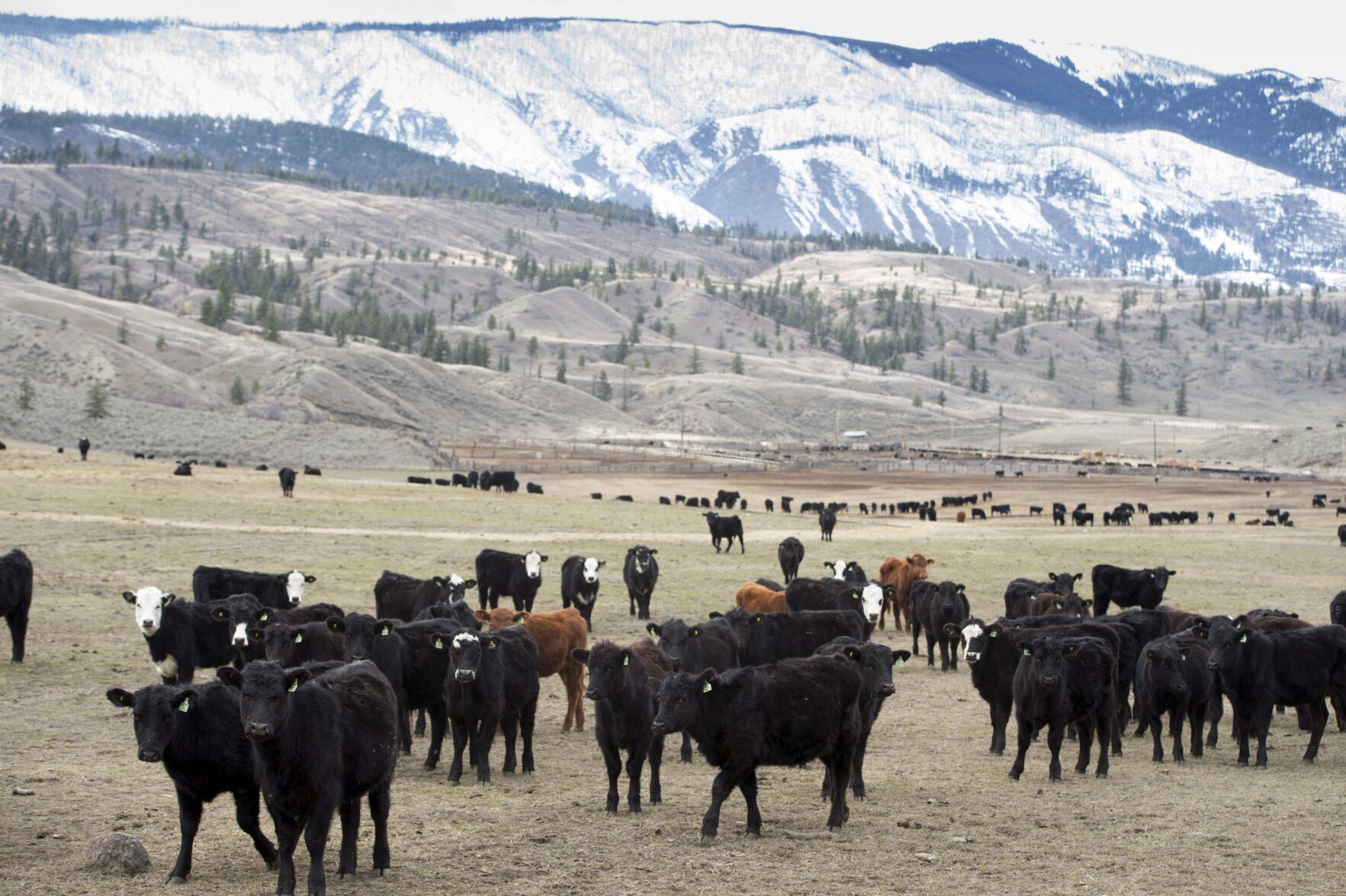
Cattle are seen in a field near Ashcroft, B.C. in 2017. “Nearly a third of global greenhouse gas emissions come from the way we produce food; meat, especially beef, is by far the biggest contributor,” writes Jessica Scott-Reid. JONATHAN HAYWARD THE CANADIAN PRESS
This article was written by Jessica Scott-Reid and was published in the Toronto Star on November 23, 2025. Jessica Scott-Reid is a Canadian journalist, independent animal advocate, and a correspondent for Sentient Media.
After Hurricane Melissa left dozens dead across the Caribbean, experts said the disaster is a stark example of how climate change is transforming weather, in this case infusing hurricanes with heat and moisture until they barely resemble storms of the past.
While U.S. President Donald Trump claims that climate change is a hoax, the science remains very clear: 2024 was the hottest year on record, with global temperatures about 1.5 C above pre-industrial levels. From record-breaking heatwaves and floods, to wildfires that are now four times more frequent than in the 1980s, the evidence of human-caused climate chaos is undeniable.
What remains far from clear, though, are the causes of this planet-heating — and the solutions. This confusion leaves much of the public in the dark about our own complicity in climate change and about how we can help. And too often, media coverage on climate only deepens that confusion.
In most media coverage about the causes of climate change, fossil fuels, transportation and manufacturing tend to be the targets. Solutions are then presented as things like renewable energies, electric cars and recycling. But second only to fossil fuels is another major cause that is rarely covered in media: agriculture, particularly animal farming.
Nearly a third of global greenhouse gas emissions come from the way we produce food; meat, especially beef, is by far the biggest contributor. Yet, a recent analysis of top American news outlets shows that less than 4 per cent of climate stories even mention animal agriculture as a cause.
The analysis was led by Sentient Media, a U.S.-based non-profit newsroom that focuses exclusively on factory farming and its impacts on animals, people and the planet. I work as the outlet’s culture and disinformation correspondent, and took part in the data collection process.
For the analysis, my colleagues and I gathered recent online articles that discussed climate change, fromThe Washington Post, Reuters, The Boston Globe, The New York Times, CNN, The Wall Street Journal, the New York Post, the Los Angeles Times, the Star Tribune, the Chicago Tribune, and The Guardian — 960 articles in total. The analysis was then performed using Anthropic AI, revealing that only 36, or 3.8 per cent of the articles mention animal farming, or meat, as a cause of climate change.
As someone who has been covering this topic in Canadian and U.S. media for the last decade, these findings are frustrating though not unfathomable. As I regularly shout from my lonely island here in the opinion section — or from climate-savvy publications like Corporate Knights Magazine, Vox.com, and Sentient Media — about the role our food systems and eating habits play in the destruction of our planet, I’ve come to understand something else: meat and climate are an uncomfortable pairing for many mainstream editors and readers.
Nonetheless, I can’t help wonder how much longer the media can tiptoe around the cow in the room; because until we treat animal agriculture with the same scrutiny we do oil, transportation and manufacturing, our climate coverage will remain half-told.
As Mark Hertsgaard, executive director and co-founder of Covering Climate Now — a non-profit that supports stronger climate journalism — recently told The Guardian, this lack of coverage is “not necessarily nefarious.” However, he adds, “as the climate crisis has accelerated, it is increasingly indefensible for news coverage of climate change not to make it clear that this crisis is driven by very specific human activities — primarily burning fossil fuels. And in second place is food, agriculture, forestry.”
Over at Sentient Media, we are presenting this information as an opportunity for journalists and newsrooms to do better, to expand their knowledge and reporting, to more holistically inform the public. And we continue to do our own part to counter meat industry disinformation, hold industries and governments accountable, and highlight the science of sustainable food systems that rely more on plant production than animal farming.
Because at a time when politics are increasingly working against science, and climate change-infused disasters are becoming too common, the job of journalists to tell the whole story about climate change has never been more crucial.
This article was written by Globe Newswire and was published in the Toronto Star on November 19, 2025.
While leaders have been focusing on avoiding breaching the +1.5°C threshold of the Paris Agreement, a sweeping new scientific analysis of the most dangerous summer weather conditions across 100 major global cities revealed that minimum nighttime temperatures have been rising up to 10 times faster than daytime average highs in many global cities during oppressively hot weather.
Heat exposure has traditionally been measured by exposure to daytime high temperatures and increasing “average” temperatures. This study points clearly to the urgent need for preventative and responsive actions on extreme heat to explicitly account for and address the rapidly rising threat of hotter nights.
Increases in nighttime temperatures, and decreases in the gap between daytime highs and nighttime lows across much of the globe
83% of cities in the study are experiencing sustained, higher nighttime temperatures.
Nighttime temperatures are rising fastest in Melbourne, Australia (dry tropical), where they increase by 1°C every 5.36 years, and Dubai, UAE (moist tropical), where they rise by 1°C every 8.81 years.
During moist tropical weather, Santa Maria, Upington, Seoul, Samarkand, Paris, Kuwait City, Portland, and Abadan are seeing the biggest decrease between daytime and nighttime temperatures. The number of cities seeing decreases per region breaks down as follows:
Africa: 13 out of 15.
Asia: 18 out of 22.
Central and South America: 10 out of 11.
Europe: Seven out of 12.
Middle East: 5 out of 5.
North America: 14 out of 16.
Oceania: Nine out of 11.
83% of cities in the study are experiencing sustained, higher nighttime temperatures.
Nighttime temperatures are rising fastest in Melbourne, Australia (dry tropical), where they increase by 1°C every 5.36 years, and Dubai, UAE (moist tropical), where they rise by 1°C every 8.81 years.
During moist tropical weather, Santa Maria, Upington, Seoul, Samarkand, Paris, Kuwait City, Portland, and Abadan are seeing the biggest decrease between daytime and nighttime temperatures. The number of cities seeing decreases per region breaks down as follows:
Africa: 13 out of 15.
Asia: 18 out of 22.
Central and South America: 10 out of 11.
Europe: Seven out of 12.
Middle East: 5 out of 5.
North America: 14 out of 16.
Oceania: Nine out of 11.
During dry tropical weather, Melbourne, Agadir, Seoul, Mumbai, Cairo, Luxor, Kuwait City, and Santiago are seeing the biggest decrease between daytime and nighttime temperatures. The number of cities seeing decreases per region breaks down as follows:
Africa: 10 out of 14.
Asia: 13 out of 22.
Central and South America: Seven out of 11.
Europe: Four out of six.
Middle East: Six out of seven.
North Americas: 11 out of 14
Oceania: Five out of nine.
Some of the regions show weaker differentiation, possibly because dry tropical weather types are rarely present in the cities we evaluated in those regions.
83% of cities in the study are experiencing sustained, higher nighttime temperatures.
Nighttime temperatures are rising fastest in Melbourne, Australia (dry tropical), where they increase by 1°C every 5.36 years, and Dubai, UAE (moist tropical), where they rise by 1°C every 8.81 years.
During moist tropical weather, Santa Maria, Upington, Seoul, Samarkand, Paris, Kuwait City, Portland, and Abadan are seeing the biggest decrease between daytime and nighttime temperatures. The number of cities seeing decreases per region breaks down as follows:
Africa: 13 out of 15.Asia: 18 out of 22.Central and South America: 10 out of 11.Europe: Seven out of 12.Middle East: 5 out of 5.North America: 14 out of 16.Oceania: Nine out of 11.
During dry tropical weather, Melbourne, Agadir, Seoul, Mumbai, Cairo, Luxor, Kuwait City, and Santiago are seeing the biggest decrease between daytime and nighttime temperatures. The number of cities seeing decreases per region breaks down as follows:
Africa: 10 out of 14.Asia: 13 out of 22.Central and South America: Seven out of 11.Europe: Four out of six.Middle East: Six out of seven.North Americas: 11 out of 14Oceania: Five out of nine.Some of the regions show weaker differentiation, possibly because dry tropical weather types are rarely present in the cities we evaluated in those regions.
83% of cities in the study are experiencing sustained, higher nighttime temperatures.Nighttime temperatures are rising fastest in Melbourne, Australia (dry tropical), where they increase by 1°C every 5.36 years, and Dubai, UAE (moist tropical), where they rise by 1°C every 8.81 years.
During moist tropical weather, Santa Maria, Upington, Seoul, Samarkand, Paris, Kuwait City, Portland, and Abadan are seeing the biggest decrease between daytime and nighttime temperatures. The number of cities seeing decreases per region breaks down as follows:
Africa: 13 out of 15.Asia: 18 out of 22.Central and South America: 10 out of 11.Europe: Seven out of 12.Middle East: 5 out of 5.North America: 14 out of 16.Oceania: Nine out of 11.
During dry tropical weather, Melbourne, Agadir, Seoul, Mumbai, Cairo, Luxor, Kuwait City, and Santiago are seeing the biggest decrease between daytime and nighttime temperatures. The number of cities seeing decreases per region breaks down as follows:
Africa: 10 out of 14.Asia: 13 out of 22.Central and South America: Seven out of 11.Europe: Four out of six.Middle East: Six out of seven.North Americas: 11 out of 14Oceania: Five out of nine.Some of the regions show weaker differentiation, possibly because dry tropical weather types are rarely present in the cities we evaluated in those regions.
Increases in the frequency of extreme heat days
Over the 30-year study period, summertime moist tropical weather patterns have increased close to or over 50 percent in Central and South America, Oceania, and Africa – and have grown by 37 percent globally. Dry tropical weather patterns have grown by 13 percent over the same period, with the largest increase in Australia, which had a 29 percent rise.
“Before this analysis, we did not know how rapidly nighttime heat has been rising within the most dangerous air masses,” said Larry Kalkstein, climatologist, Chief Heat Science Advisor at Climate Resilience for All, and the study’s lead author. “It is critical for us to understand how the heat of summer—that sends people to the emergency room—is shifting, and what we are overlooking when we talk about it.” “We want this analysis to mobilize city and health leaders to urgently broaden their view of what is a 24-hour heat crisis. This research uncovers a critical blind spot in our understanding of extreme heat,” said Kathy Baughman McLeod, CEO of Climate Resilience for All.High nighttime temperatures prevent the human body from cooling down, increasing risks of heat exhaustion, dehydration, and cardiovascular stress. When sleep is disrupted by heat, the body loses its ability to recover from daytime exposure, heightening the danger of illness and death—especially for older adults, women, and those living in poorly ventilated housing.Heat warning systems are focused on high daytime temperatures and currently minimize the impact of overnight temperatures. The study offers guidance and urges health officials and policymakers to integrate these changing patterns into their work and to ramp up regionally targeted heat warning systems that account for the growing probability of multi-day, high-intensity events that offer little nocturnal relief.About Climate Resilience for AllClimate Resilience for All is a global adaptation NGO dedicated to protecting the health, income, and dignity of women on the frontlines of extreme heat.
Major issues facing negotiators include $300B in aid, trade barriers, transparency
This article was written by Melina Walling, Seth Borenstein and Anton L. Delgado, and was published in the Toronto Star on November 19, 2025.
With a direct letter sent to nations and a draft text released Tuesday, host country Brazil is shifting the UN climate conference into a higher gear.
The letter sent late Monday comes during the final week of the first climate summit in the Amazon rainforest, a key regulator of climate because trees absorb carbon dioxide, a greenhouse gas that warms the planet. COP30 president André Corrêa do Lago later released a proposal with 21 options for negotiators to choose from on four sticky and interrelated issues.
“It’s text Tuesday and we’re off to the races,” said World Resources Institute’s David Waskow, who said the ninepage proposal “addresses some of the core questions that have been part of the presidency consultations.”
The four key political issues are whether countries should be told to do better on their new climate plans; details on handing out $300 billion (U.S.) in pledged climate aid; dealing with trade barriers over climate; and improving transparency, which Waskow said is really about reporting climate progress.
While the options in the draft text “are a first step, what’s required now is to eliminate the options that add to delay and ignore the urgency of action,” said Jasper Inventor, deputy program director of Greenpeace International.
Tuesday was also a day for speeches from highlevel ministers.
“At this very moment, there are people in a number of countries across the world, including my own, who want to deny the crisis even exists or delay the urgent action we need to address it,” said U.K. Energy Secretary Ed Miliband.
Sophie Hermans, the Netherlands’ deputy prime minister, said “the transition is no longer about setting targets. It is about executing them. And execution requires realism, planning and the ability to adjust when circumstances change.”
The documents ask leaders to hash out many aspects of a potential agreement by Wednesday so that much is out of the way before the final set of decisions Friday, when the conference is scheduled to end. Climate summits routinely go past their last day as nations face balancing domestic concerns with the major shifts needed to protect the environment and cut greenhouse gas emissions.
Brazil President Luiz Inácio Lula da Silva was scheduled to return to Belem on Wednesday and the deadline may be timed for him to push parties together or celebrate some kind of draft agreement, observers said. But many don’t think countries will actually be ready with everything Brazilian leaders have asked for by Wednesday. That timeline is “pretty ambitious,” said Alden Meyer, a senior associate at climate think tank E3G.
Brazil’s guidance for the summit, called COP30, is raising hopes for significant measures to fight global warming, which could range from a road map to move away from fossil fuels like oil and coal to more money to help nations build out clean energies like wind and solar.
“There are important concessions we expect from all sides,” do Lago said Monday. “It is said you have to give to receive.”
Some have expressed concern the agreements will be short of what’s needed.
“The draft text might have the right ingredients, but it’s been cooked up in a way that leaves a bitter aftertaste,” said Andreas Sieber of 350.org, which works to end use of fossil fuels. Without a fossilfuel transition at the core, the documents are “weak and empty, a dish with its main component left out.”
But Monday night, Meyer, of E3G, said the optimistic spirit of the host country “is starting to get a little infectious” and that is part of building trust and goodwill among nations.
“I sense ambition here, I sense a determination,” former German climate envoy Jennifer Morgan said.
This article was written by Seth Borenstein, Anton L. Delgado, and Melina Walling, and was published in the Globe & Mail on November 17, 2025.
Activists participate in a climate protest during the COP30 UN Climate Summit on Saturday in Belem, Brazil. The urgency of climate change is causing some negotiators to push for more action.
Going into United Nations climate negotiations, the Brazilian hosts weren’t looking for big end-of-session pronouncements on lofty goals. This conference was supposed to hyperfocus on “implementation” of past promises not yet kept. Throw that out the window. The urgency of climate change is causing some negotiators to push for more big-picture action – on weak plans to cut emissions of heat-trapping gases, on too little money to help nations wracked by climate change, on putting teeth into phasing out coal, oil and gas. Because of that pressure to do more – including from Brazil’s President Luiz Inácio Lula da Silva – the diplomat chairing the talks said Saturday he’ll consider a big picture, end-of-negotiations communiqué, sometimes known as a decision or cover text.
“I think things have changed, which is a very good thing,” said veteran observer Jean Su of the Center for Biological Diversity. “So I think there’s momentum that we will get some type of decision text, and our hope is that in particular there’s going to be some commitment on phasing out fossil fuels.”
“I would say that what’s at stake now is probably higher than the last several COPs because you’re looking at an ambition gap,” said former Philippine negotiator Jasper Inventor, international program director at Greenpeace International. “There’s a lot of expectation, there’s a lot of excitement here, but there’s also a lot of political signals that’s been sent by President Lula.”
“We’re at the middle of the COP, and at the middle of COP is usually where the negotiators stare each other eye-to-eye. It’s almost like a staring contest,” Mr. Inventor said. “But next week, this is where the negotiations need to happen, where political decisions are made by the ministers.”
Because this process stems from the Paris Agreement on climate, which is mostly voluntary, these end statements grab headlines and set global tone but have limited power. The last few COP end statements have made still-unfulfilled pledges for rich countries to give money to poor nations to cope with climate change and the world to phase out fossil fuels.
Key among those issues is the idea of telling nations to go back to the drawing board on what experts consider inadequate climate-fighting plans submitted this year.
In the 2015 Paris agreement, which is being celebrated here on its 10th anniversary, nations are supposed to have submitted climate-fighting, emissions-curbing plans every five years. So far 116 of 193 countries have filed theirs this year, but what they promised isn’t much. United Nations and Climate Action Tracker, a group of scientists, calculates that these new pledges barely reduced future projections for Earth’s warming.
Even if the world does all it promises, Earth would be about seven-tenths of a degree Celsius above the Paris goal of limiting warming to 1.5 C above preindustrial times, the groups estimated.
So small island nations, led by Palau, asked that this conference confront the gap between what’s planned in national pledges and what’s needed to keep the world from hitting the temperature danger zone.
That’s not on the agenda for these talks. Nor are specific details on how to fulfill last year’s pledge by rich nations to provide US$300-billion annually in climate financial aid.
So when nations early on wanted to address these issues, COP president André Corrêa do Lago, a veteran Brazilian diplomat, set up special small confabs to try to decide if the controversial topics should be discussed. On Saturday, the conference punted the issue to the incoming ministers.
“The parties will decide how they want to proceed,” Mr. do Lago said at a Saturday evening news conference. Given what countries are saying and past history that usually means a final end-of-COP message to the world, several experts said.
In a casual exchange with a reporter about how the conference is going, Mr. do Lago said: “Eh, could be better but not as bad as it could be.”
UN General Assembly president Annalena Baerbock, the former German foreign minister who has been to 10 of these sessions, told the Associated Press Saturday morning before the evening’s session that she saw “new momentum” in Belem.
“We can fight the climate crisis only together if we commit to a strong mitigation target,” she said. “This means also transitioning away from fossil fuels, investing into renewable energy.”
Two years ago in Dubai, the world agreed to “transition away from fossil fuels,” but last year no mention of that was made and there have been no details on how or when to do this.
Ms. Baerbock hailed as crucial Mr. da Silva’s call during the Leaders’ Summit last week for “a road map for humanity to overcome, in a just and planned way, its dependence on fossil fuels, reverse deforestation, and mobilize the resources needed to do so.”

 My Climate Change Website