A nuclear renaissance fuels research potential and growth at McMaster University

This article was written by Joe Friesen and was published in the Globe & Mail on January 12, 2026.

A blue glow emanates from the core of the McMaster Nuclear Reactor, which provides neutrons for research and medical isotope production at McMaster University’s campus in Hamilton.

Funding and new minor studies program attract students keen to work in industry

A mesmerizing deep blue glow emanates from the nuclear reactor nestled in the heart of the campus at McMaster University in Hamilton.

Sunk 10 metres beneath the surface of a pool of water, encased in an air-locked, 15-sided, concrete building, the uranium fuel generates enough power to heat hundreds of homes.

But its significance to the university is far more about its research potential than its three megawatts of power.

At a time when nuclear power is in the midst of a renaissance, McMaster is wrapping itself in the label of Canada’s nuclear university.

The school launched a minor in nuclear studies in the fall and plans for a bachelor’s degree in nuclear engineering are in the works. Last term, 148 students signed up for a new interdisciplinary course on nuclear technology applications. Meanwhile, the university’s reactor produces about 60 per cent of the world’s supply of iodine-125, a medical isotope used for cancer treatment. And its new president, Susan Tighe, is bullish about nuclear’s role in driving the university’s ambitions.

“I think nuclear has great potential from a research perspective, as well as commercialization,” Dr. Tighe said. “And it’s great training for our students.”

Dr. Tighe, who became president of McMaster in July, is the first engineer to hold the top job at the university.

Having previously been provost at McMaster for five years she’s conscious of the financial clouds hanging over the university sector and says she’s determined to keep McMaster operating within its means. She’s proud to note that the school ran a surplus in 2025 and is among the handful of Ontario universities operating in the black.

“What I like to say is we’re a public sector organization that operates with private-sector principles,” she said. “We’re trying to be responsible with what we get.”

In September, the Ontario government announced $18-million in funding to allow McMaster to operate the nuclear reactor around the clock, seven days a week, up from five days. The extended hours will also allow it to boost production of medical isotopes that are crucial to cancer care and to expand research and training opportunities for students.

“We do have this unique research facility, and given that we’ve had support from the provincial government to operate 24 hours a day, it’s enabling more access to the reactor,” Dr. Tighe said.

The McMaster nuclear reactor was built in 1959, when the university had begun to grow beyond its Baptist roots. The project was spearheaded by Harry Thode, a Canadian nuclear pioneer who worked on the Canadian branch of the Manhattan project in the Second World War. He later served as president of the university from 1961 to 1972.

“For Canada to put a research reactor on a campus at that time was really visionary,” said David Novog, a physics professor, who has been leading tours of the reactor since the 1990s.

Prof. Novog said he first came to McMaster as a grad student because he was drawn by the chance to work on the most powerful research reactor on a Canadian campus. He explains that the blue light that surrounds the low-enriched uranium fuel cells in the water of the reactor pool is actually Cherenkov radiation, named for a Nobel-winning Soviet scientist.

Today Prof. Novog supervises grad students such as Jessica Lo, who is looking into neutron imaging of fuel bundles.

She decided to go into the nuclear field after finishing an undergraduate degree in physics. “There’s no other school that compares to McMaster. You have a reactor right on campus,” Ms. Lo said.

The reactor has a few dozen students working at various times in the week, often using its rays for imaging, particularly for close examination of turbine blades.

They also study health physics, looking at the impact of radiation on humans. And there are research applications for mining, too.

For Arianna Santos, a fourthyear engineering student, the chance to attend a university with a nuclear reactor was also too good to pass up.

Ever since watching science shows on television when she was young she has been captivated by nuclear’s potential to serve the world’s energy needs with a minimum of greenhouse gas emissions.

“I’ve been told that all the energy a person needs for their life on Earth could be contained in a single soda can of uranium,” she said.

Many of today’s students would be too young to remember some of the disasters that have led to public skepticism about nuclear technology: notably, the reactor meltdown in Fukushima, Japan, following a 2011 earthquake and the explosion in Chernobyl, Ukraine of the Soviet-built reactor in 1986.

Ms. Santos recognizes there’s public anxiety about the technology. But she feels reassured by the extensive safety protocols in nuclear facilities.

“These buildings are really, really safe,” she said.

Ms. Santos is one of about 150 students who’ve signed up for McMaster’s new minor in nuclear studies. She’s also a member of McMaster’s nuclear club, where students network and explore job opportunities.

Last summer she conducted research in nuclear science, working with a hot cell where she used mechanical arms to manipulate radioactive material. Her dream after graduation is to pursue a career in the nuclear field.

“This small atom, you just split it and it releases so much energy and heat that we barely have to use any uranium. It’s amazing, it’s crazy, it’s fascinating.”

Indigenous entrepreneurs seek bigger piece of energy contracts, closer scrutiny of procurement system

This article was written by Emma Graney and was published in the Globe & Mail on September 30, 2025.

Canative Energy director Raylene Whitford says First Nations in ‘performative partnerships’ don’t always receive their expected returns.

When Mike Deranger set up his tipi last month at the site of a hunger strike on the side of Highway 63, which leads from Fort McMurray, Alta., to the oil sands, he was protesting what he and others say is an Indigenous procurement system that does little to advance economic reconciliation.

The problem, they say, is a lack of transparency and oversight combined with barriers faced by Indigenous entrepreneurs when trying to access capital and a system that, in some cases, pits individual business owners against large First Nation development corporations.

Ken Coates, a professor emeritus of public policy at the University of Saskatchewan, also points to what he calls “redwashing,” in which firms partner with a First Nation or an Indigenous representative in order to gain contracts from large companies or governments that have mandated minimum Indigenous spends.

“The new procurement requirements in place are designed to give Aboriginal companies a head start,” but there are numerous examples of companies presenting dubious claims of Indigenous status, Prof. Coates said. “And that kind of stuff is really, really upsetting.”

Mr. Deranger calls them “pretendians.” His company, Derantech Welding Ltd., does mechanical work, maintenance and heavy equipment repair in the Fort McMurray region.

He has been in business for more than 20 years. As oil companies have boosted their commitment to contracts with Indigenous companies, he said, he has seen more multinationals pursuing joint ventures to get in on the action. The problem, he said, is that nobody is really policing it.

“In the last 10 years or so, things went off the rails. So the focus is no longer on building Indigenous companies … it went to just getting the job done and hiring these big companies that now self-identify as Indigenous or have become Indigenous partners,” he said.

Mr. Deranger said more and more Indigenous entrepreneurs are being pushed out of the market as a result.

“It’s not working to the benefit of our Nations. They aren’t getting ahead the way they should be,” he said.

Raylene Whitford, a director of Canative Energy, which works with Indigenous communities affected by the energy sector, has also seen how mandated Indigenous procurement minimums have resulted in “performative partnerships,” in which First Nations see limited financial benefits from resource projects.

Some companies might sign a $100-million contract with an Indigenous joint venture partner and promote the contract in their sustainability report and on their website, she said, “but they don’t acknowledge that only 2 to 3 per cent of that actually flows to the Nation that is a part of that partnership.”

As a result, she said, First Nations don’t receive their expected returns – even as corporations report massive profits.

Jennifer Cooper, spokesperson for Indigenous Services Canada, said in an e-mail that the agency has heard from consultations that joint ventures are a beneficial and effective way for Indigenous businesses to operate when they are thoughtfully and effectively managed.

“Through joint ventures, Indigenous businesses can partner with other businesses, including non-Indigenous businesses, to increase their ability to compete for contracts,” Ms. Cooper said. She added that all businesses on the Indigenous Business Directory must provide documentation demonstrating at least 51-per-cent Indigenous ownership and control, such as shareholder information and corporate governance documents.

Ms. Whitford worries that the shift toward awarding contracts to communityowned organizations, as opposed to individuals, is being interpreted as a proxy for consent or even support for a project.

But to muddy the concept of consent risks undermining Indigenous people’s rights, she said, which sets a dangerous precedent.

Ms. Whitford believes the solution is to educate industry as to what consent actually is and who can give it, combined with tighter regulations that standardize corporate reporting and make it more transparent.

Both government and industry also need to take a more rights-based approach to major projects, she said.

“In an ideal world, all resource-based companies – and any company that has a footprint on Indigenous lands, whether it’s Canada or South America – would unequivocally commit to obtaining free platform consent. But I don’t know if I’ll ever see that in my lifetime.”

Prof. Coates acknowledged that there can be tension between individual entrepreneurs and First Nation development corporations.

Governments and companies tend to gravitate toward those corporations because of their demonstrable ties to an Indigenous community, even when the terms of an agreement don’t necessarily benefit a First Nation as much as they could, he said.

But some are doing things differently. He pointed to the English River First Nation, outside Saskatoon, which set up the Des Nedhe Development Corp. in 1991.

Jordan Baptiste is the president of Creative Fire, one of a number of companies under the Des Nedhe umbrella. Like Prof. Coates, he has witnessed what he calls the “rent a feather” phenomenon of dubious joint partnerships just to secure contracts under Indigenous spends.

Part of it, he said, boils down to companies’ desire to mitigate risk – which also plays into why they tend to lean toward First Nation development corporations instead of individual entrepreneurs.

“English River has always been quite innovative and forward-thinking,” he said. “About 35 years ago, they decided to fully purchase a construction company to put them in control of their destiny.

“Instead of having the relationship be between a construction company and the proponent, it actually becomes a relationship directly between the proponent and the community itself.”

Guelph prof became key to Trump’s cli­mate plan

Aca­demic helped write report being cited in U.S. as a reason to repeal pro­tec­tions and policies

This article was written by Joe McGinty and was published in the Toronto Star on August 31, 2025.

An eco­nom­ics pro­fessor from the Uni­versity of Guelph is one of five research­ers whose report is play­ing a key role as the United States starts repeal­ing the legal found­a­tion for reg­u­lat­ing cli­mate change.

Ross McKitrick was one of five coau­thors per­son­ally picked by the U.S. Sec­ret­ary of Energy to con­duct a study the Trump admin­is­tra­tion is now cit­ing as a reason to repeal Obama­era cli­mate pro­tec­tions.

The report down­plays the effect green­house gases have on cli­mate change and chal­lenges dec­ades of global sci­entific con­sensus that humans are irre­vers­ibly alter­ing the cli­mate.

McKitrick and the Depart­ment of Energy did not respond to requests for com­ments on this story.

Key find­ings in the report con­clude that “car­bon diox­ide­induced warm­ing appears to be less dam­aging eco­nom­ic­ally than com­monly believed,” and that “aggress­ive mit­ig­a­tion strategies could be more harm­ful than bene­fi­cial.”

It also stated that U.S. policy, such as the Endan­ger­ment Find­ing, has “undetect­ably small dir­ect impacts on the global cli­mate.”

This 2009 fed­eral find­ing recog­nized that emis­sions from motor vehicles and engines con­trib­ute to green­house gas pol­lu­tion that threatens pub­lic health and wel­fare. It became the sci­entific under­pin­ning for most cli­mate change policy in the U.S.

McKitrick has played a crit­ical role in the new study. He was called “indis­pens­able” by co­author Roy Spen­cer, a met­eor­o­lo­gist at the Uni­versity of Alabama and a cli­mate change skep­tic.

“One thing I learned through this pro­cess is how pro­lific and smart a researcher Ross McKitrick (U. of Guelph, Ontario) is. He was indis­pens­able to our effort,” said Spen­cer on his web­site.

McKitrick has been known to butt heads with main­stream cli­mate sci­ent­ists and reject find­ings by the lar­ger sci­entific com­munity. He has writ­ten numer­ous let­ters for con­ser­vat­ive think tanks, such as the Fraser Insti­tute, and reports for politi­cians.

He has also shared his opin­ions in op­eds in vari­ous news out­lets, par­tic­u­larly on cli­mate change, tak­ing an anti­alarm­ist view.

“U.S. cli­mate policy will soon no longer be a thing,” wrote McKitrick in a National Post op­ed in 2024.

“The incom­ing Trump admin­is­tra­tion will not settle simply for stalling on new cli­mate action, it’s more likely to try to dis­mantle the entire cli­mate bur­eau­cracy.”

The 151­page report was con­duc­ted by McKitrick; Spen­cer; John Christy, an atmo­spheric sci­ent­ist; Judith Curry, a cli­ma­to­lo­gist; and Steve Koonin, a former phys­i­cist with the Cali­for­nia Insti­tute of Tech­no­logy.

The group was selec­ted by Depart­ment of Energy Sec­ret­ary Chris Wright and was given a strict dead­line of two months to com­plete the report, start­ing in early April and end­ing on May 28.

In July, the Trump admin­is­tra­tion announced it would start the pro­cess to repeal the Endan­ger­ment Find­ing, tar­get­ing emis­sion reg­u­la­tions for gas­burn­ing engines.

The report has triggered law­suits from envir­on­mental groups in the U.S. seek­ing to block the repeal and chal­lenge what they say is a biased report.

Blair Felt­man, head of the Intact Centre on Cli­mate Adapt­a­tion at the Uni­versity of Water­loo, said that it would take longer than two months to write an essay in an under­gradu­ate pro­gram, let alone a policy­shift­ing report.

“They want to open the door on coal, oil and nat­ural gas devel­op­ment in the U.S.,” said Felt­man.

“It’s a little bit sus­pect as to why a report that’s going to guide U.S. policy on energy use from start to fin­ish would be determ­ined to be done in two months. That makes no sense.”

Hav­ing been part of groups that peer review reports before pub­lic­a­tion, he said to verify a report of this nature would typ­ic­ally take about two years.

“All of a sud­den, these guys, and I’m not blam­ing them, I’m say­ing, they were basic­ally given a month and a bit … it’s hard to edit a report like this in two months. Never mind, write it,” he said.

In a fed­eral law­suit, the Envir­on­mental Defense Fund and the Union of Con­cerned Sci­ent­ists claim the Trump admin­is­tra­tion “quietly arranged for five hand­picked skep­tics of the effects of cli­mate change” to write a report reject­ing a global con­sensus on cli­mate change.

Felt­man notes every­one is free to their own sci­entific opin­ion and is not claim­ing bad con­duct by the research­ers.

“The admin­is­tra­tion in the U.S, the Depart­ment of Energy, went through a roll­a­dex and said, `which people are not favour­able toward cli­mate change … par­tic­u­larly from the per­spect­ive of being human­induced. Let’s put them together and have them write this report.’ ”

“To have this done in a period of two months, I mean, it’s almost non­sensical,” he said.

Many of the research­ers, includ­ing McKitrick, pos­ted on their social media and blogs that they were unaware the gov­ern­ment would use their report as jus­ti­fic­a­tion and sci­entific basis to remove the Endan­ger­ment Find­ing.

“We weren’t involved in the EF (Endan­ger­ment Find­ing) rule­mak­ing dis­cus­sion. Only knew what was in the news,” wrote McKitrick.

Felt­man sides with the sci­entific com­munity and says cli­mate change needs to be addressed, and policy needs to be put in place to bet­ter pro­tect the pop­u­la­tion.

“It’s unbe­liev­able that a topic of mag­nitude and con­sequence as that of cli­mate change would be con­sidered within the con­text of a report com­pleted within a period of two months from start to fin­ish with five people involved,” he said.

U.S. Pres­id­ent Don­ald Trump's admin­is­tra­tion tapped Ross McKitrick, a pro­fessor of eco­nom­ics at the Uni­versity of Guelph, below, to help write a report that chal­lenges dec­ades of global sci­entific con­sensus that humans are irre­vers­ibly alter­ing the cli­mate.

AI is fast­track­ing cli­mate research, from weather fore­casts to sardines

This infrared satellite image from the National Oceanic and Atmospheric Administration shows Hurricane Helene in the Gulf of Mexico last September. When it comes to tracking such events, Microsoft's Aurora is said to be more accurate and cheaper than what has come before.

This article was written by Laura Millan and Yinka Ibukun, and was published in the Toronto Star on August 24, 2025.

Arti­fi­cial intel­li­gence is giv­ing some cli­mate research projects a much ­needed boost at a time of worsen­ing extreme weather and fund­ing cuts that threaten sci­ence in the U.S. and else­where.

While gen­er­at­ive AI faces cri­ti­cism due to the large amounts of power required to train and run soph­ist­ic­ated mod­els, it also holds the prom­ise of advan­cing sci­ence.

“It’s a gigantic step for­ward,” says Ángel Borja, a bio­lo­gist at AZTI mar­ine research centre in north­ern Spain. “It will allow us to pro­cess data and get res­ults much faster, so people that make decisions can act faster, too.”

Research­ers are teach­ing exist­ing AI mod­els and cre­at­ing new ones to per­form routine tasks that would require sev­eral people to work for weeks or even months. Data gathered in sci­entific exped­i­tions from the bot­tom of the oceans to the farthest corners of Ant­arc­tica can now be cata­logued in a mat­ter of hours.

To be sure, the use of gen­er­at­ive AI has its dangers, some sci­ent­ists warn. Machine learn­ing tech­niques are tools that should never replace human think­ing, writ­ing and ana­lysis, said Jonathan Foley, the exec­ut­ive dir­ector of Project Draw­down. The organ­iz­a­tion, which uses sci­entific data to provide guid­ance on cli­mate solu­tions, has lim­ited the use of AI assist­ants to simple tasks like check­ing gram­mar, format­ting doc­u­ments and scrap­ing inform­a­tion from dis­persed sources.

“By defin­i­tion, gen­er­at­ive AI relies on pla­gi­ar­ism (albeit in a stat­ist­ical sense) and often fab­ric­ates inform­a­tion, cita­tions, data, and cre­at­ive con­tent,” Foley said.

But that hasn’t stopped other research­ers for­ging ahead. Here are three examples.

Research­ers now `reach faster con­clu­sions’

Borja remem­bers gath­er­ing data manu­ally and filling data­bases with hun­dreds of meas­ure­ments when he star­ted doing sci­entific work 45 years ago. The rise of com­puters and the inter­net helped speed up some of that work. But AI’s growth over the past three or four years has felt like something com­pletely dif­fer­ent and more trans­form­at­ive, he said.

“My younger col­leagues worry that AI will steal their jobs, that it will make us unne­ces­sary,” he said. “It’s the other way around: We’re advan­cing so much because AI is doing routine work that takes us so many hours, and we’ll be able to focus on inter­pret­ing that data.”

AI is set to tur­bocharge what the centre can offer poli­cy­makers, Borja said, allow­ing them to make more­informed decisions. Sci­ent­ists at AZTI work closely with poli­cy­makers to, among other things, estab­lish fish­ing quotas and set up mar­ine pro­tec­ted areas.

ATZI research­ers have star­ted feed­ing mil­lions of data points gathered over three dec­ades into an AI model. The data includes everything from water qual­ity to the pres­ence of dif­fer­ent types of fish and plank­ton. The model then pro­duces research notes that tell sci­ent­ists what inform­a­tion is in the data­base and how it’s struc­tured, allow­ing research­ers to more eas­ily decide which data sets to use for their invest­ig­a­tions.

The centre is also using videos and pic­tures from research exped­i­tions to train another model to recog­nize dif­fer­ent types of fish and mar­ine life. The task cur­rently requires sci­ent­ists to watch hun­dreds of hours of under­wa­ter video foot­age, and manu­ally record which spe­cies appear, where, how often and how abund­ant they are.

“It will allow us to reach faster con­clu­sions on the state of the mar­ine envir­on­ment in cer­tain places,” Borja said. “I expect within the next five years, we’ll see an explo­sion of AI applic­a­tions in sci­entific fields and in ways I can’t even ima­gine right now.”

Weather fore­cast­ing more accur­ate

Some AI­powered mod­els are already out­per­form­ing con­ven­tional fore­cast­ing sys­tems. Microsoft’s Aurora has been trained on over a mil­lion hours of diverse geo­phys­ical data. In 91per cent of the tar­gets estab­lished by its cre­at­ors, it is more accur­ate than the tra­di­tional model from the European Centre for Medium­Range Weather Fore­casts and Google Deep­Mind’s AI model Graph­Cast.

It’s able to pre­dict, among other things, air qual­ity, waves and trop­ical cyc­lone paths, accord­ing to a research paper authored by Microsoft Research employ­ees in the May edi­tion of Nature. Aurora can per­form these tasks at a frac­tion of the com­pu­ta­tional cost com­pared to tra­di­tional mod­els, they said.

“AI mod­els such as Aurora can enable cli­mate sci­ent­ists to explore hun­dreds of times more scen­arios than they can today, help­ing to unlock new insights at scale,” said a Microsoft Research spokes­per­son.

AI mod­els are some­what of a black box com­pared to their tra­di­tional weather coun­ter­parts, which wor­ries some fore­casters. But highqual­ity weather inform­a­tion is the first step to set­ting warn­ing sys­tems that give people time to find shel­ter when extreme events hit.

Cit­izen sci­ent­ists get an AI assist

The com­bin­a­tion of humans and AI can provide the best res­ults for sci­entific research, accord­ing to a paper pub­lished last year in Cit­izen Sci­ence: The­ory and Prac­tice. Lead author Nir­wan Sharma, a com­puter sci­ent­ist at The Open Uni­versity in the U.K., star­ted using nat­ural lan­guage gen­er­a­tion — an early name for what’s now known as gen­er­at­ive AI — in 2010 for a cit­izen sci­ence project.

People were encour­aged to send Sharma and his co­research­ers pic­tures of bumble­bees as they walked in the woods or worked in their gar­dens. AI would then identify which of the 22 U.K. bee spe­cies they had spot­ted, and research­ers would verify the AI’s work. Finally, cit­izen sci­ent­ists would get an auto­mated email thank­ing them for the con­tri­bu­tion and reveal­ing the type of bee they pho­to­graphed.

The model, a part­ner­ship between Aber­deen Uni­versity and the Bumble­bee Con­ser­va­tion Trust, cor­rectly iden­ti­fied spe­cies about half the time, a rate on par with untrained human users. Ini­tially, about 10 people were required to identify the type of bee cor­rectly. As the model learned more, it helped cut down on the num­ber of people required to as little as three.

Using the large amount of pic­tures gathered over the years, research­ers trained the model to identify the plants that bees were pho­to­graphed on, allow­ing it to provide plant­ing recom­mend­a­tions depend­ing on the types of bees cit­izen sci­ent­ists wanted to attract.

“Much of the know­ledge about how to identify spe­cies is bottled up in sci­entific journ­als or places which are really dif­fi­cult to access for people,” Sharma said. “AI is another piece to improve our learn­ing — it’s a means to have a dia­logue with that know­ledge.”

Pho­tos of Brit­ish bees in the wild, such as this red mason hard at work, have been used to train arti­fi­cial intel­li­gence which uses the same images to make plant­ing recom­mend­a­tions.

The heat wave that shattered cli­mate cer­tainty

Extreme tem­per­at­ures in Lyt­ton, B.C. chal­lenged mod­els and forced a rethink on what’s pos­sible in a warm­ing world

In June 2021, Lytton, B.C., experienced an unprecedented heat wave that broke Canadian temperature records three days in a row, reaching 49.6 C. Soon after, a fastmoving wildfire burned most of the village to the ground.

This article was written by Eric Roston and was published in the Toronto Star on July 20, 2025.

How hot can a heat wave really get? Before June 2021, sci­ent­ists thought they knew.

That’s when one of the most extreme heat spikes ever hit west­ern North Amer­ica, leav­ing at least 1,400 people dead.

Vis­it­ors brave the heat at Fur­nace Creek Vis­itor Cen­ter in Death Val­ley National Park, Calif., in August 2020. Fur­nace Creek set the highest­ever recor­ded tem­per­at­ure of 56.7 C in 1913, accord­ing to the World Met­eor­o­lo­gical Organ­iz­a­tion.

Lyt­ton, B.C., smashed the 84­yearold Cana­dian heat record on June 26, reach­ing 46.6 C.

And it smashed that the next day by 1.3 C.

And smashed that the next day by another 1.7 C.

And the next day, Lyt­ton burned to the ground.

When a team of cli­mate sci­ent­ists assembled days later to ana­lyze the heat wave, they found the local his­tor­ical weather data offered a para­dox: Their stand­ard approach for estim­at­ing a heat wave’s rar­ity con­cluded the new records were too extreme to occur in the region where they actu­ally did. They were in a sense “impossible” even though they actu­ally occurred, as three Amer­ican sci­ent­ists put it earlier this year.

They adjus­ted their method to accom­mod­ate the new real­ity (and use that approach still), but noted “fol­lowup research will be neces­sary to invest­ig­ate the poten­tial reas­ons for this excep­tional event.”

In the four years since then, dozens of stud­ies have taken up that chal­lenge, with a tight­en­ing focus on a simple ques­tion that eludes easy answers: How hot can it get?

The answer has grave implic­a­tions for human­ity, from those liv­ing in places where high tem­per­at­ures are cur­rently rare to those in places that are increas­ingly on the edge of hab­it­ab­il­ity as cli­mate change makes heat more intense and fre­quent.

Every­one, every­where, needs to know the risks about where they live.

There are as many answers to this ques­tion as there are ther­mo­met­ers around the globe. To make find­ing an answer slightly more man­age­able, sci­ent­ists look not at abso­lute tem­per­at­ures, as any­body would when leav­ing the house in the morn­ing. Instead, they parse each weather sta­tion’s depar­tures from the aver­age.

The 2021 event “shocked every­one, includ­ing spe­cial­ists work­ing on the sub­ject. People were com­pletely stunned,” said Robin Noyelle, a post­doc­toral researcher in cli­mate sci­ence at ETH Zurich.

Heat can spike in any sea­son or place. The most anom­al­ously warm tem­per­at­ure was actu­ally set in Ant­arc­tica, where tem­per­at­ures rose 39 C above aver­age in March 2022. Tem­per­at­ures at the North Pole surged 20 C higher than nor­mal in Feb­ru­ary, just past the melt­ing point in the middle of winter.

Those anom­alies are par­tic­u­larly extreme in part because those areas are so dry, and also because it’s easier to heat something cold. But how much nor­mal tem­per­at­ures could devi­ate is argu­ably more press­ing in places where people live and where heat is par­tic­u­larly acute in sum­mer.

Years of por­ing over stat­ist­ics and model out­put — on top of basic com­mon sense — has taught sci­ent­ists that there is a heat limit.

“You can’t have 500 degrees,” said Michael Wehner, a senior staff sci­ent­ist at Lawrence Berke­ley National Labor­at­ory.

That research has also shown which met­eor­o­lo­gical ingredi­ents are most likely to fuel extreme heat.

Cloud­less skies and high pres­sure work to allow more of the sun’s energy to reach the Earth while dark sur­faces keep it trapped close to the ground. Lower alti­tudes have higher pres­sure, which means they can get hot­ter.

And lastly, a lack of water can allow heat to build unchecked. Places where these factors are in play are the most likely to see the hot­test tem­per­at­ures.

Many of these ele­ments were in place dur­ing the June 2021 west­ern North Amer­ican heat wave, and they are com­mon in the hot­test places on the planet.

“Basic­ally all of these con­di­tions are met in Death Val­ley, but not in many other places in the world,” said Friederike Otto, a cli­mate sci­ent­ist at Imper­ial Col­lege Lon­don and co­founder of World Weather Attri­bu­tion, a U.K.­based team of sci­ent­ists who under­took the 2021 heat wave ana­lysis.

Fur­nace Creek in Cali­for­nia’s Death Val­ley set the highest­ever recor­ded tem­per­at­ure of 56.7 C in 1913, accord­ing to the World Met­eor­o­lo­gical Organ­iz­a­tion. And whatever the upper limit for anom­al­ously high tem­per­at­ures at a par­tic­u­lar loc­a­tion may be, it too will rise with global warm­ing, she said.

Sev­eral groups around the world are stalk­ing heat’s the­or­et­ical max­imum and how it’s set to change, motiv­ated by the need for gov­ern­ments and com­pan­ies to under­stand the con­di­tions people and infra­struc­ture will have to with­stand in com­ing dec­ades.

Mul­tiple papers have attemp­ted to tease out how con­di­tions kilo­metres above the Earth’s sur­face can drive heat. The “met­eor­o­logy nitty­gritty details” are being worked out, said Erich Fisc­her, a cli­mate sci­ent­ist at ETH Zurich, but “we now have a much, much bet­ter under­stand­ing of what sets that ther­mo­stat.”

That includes devel­op­ing new tools and apply­ing them to past epis­odes of extreme heat, seek­ing a second opin­ion on what was or wasn’t pos­sible at the time.

Wehner, the Berke­ley National Lab sci­ent­ist, and two col­leagues in a recent paper defined tem­per­at­ures as “impossible” when they exceed an upper heat limit, as determ­ined by a com­monly used stat­ist­ical approach. They then examined whether that heat was indeed impossible or just super­lat­ively rare in a pre­indus­trial cli­mate.

They found 1,545 unpre­ced­en­ted tem­per­at­ures that occurred between 1901 and 2022. By draw­ing addi­tional data from nearby weather sta­tions, they found their method was able to make sense of 86 per cent of the impossible tem­per­at­ures, com­pared with 16 per cent with the ori­ginal approach.

The num­ber of remain­ing “impossible” events rises through the 21st cen­tury, as the world warms more quickly.

“It is clear that whether or not a given his­tor­ical event is deemed `impossible’ is largely a func­tion of what stat­ist­ical meth­ods are used,” they wrote earlier this year.

Arti­fi­cial intel­li­gence is also help­ing project what max­imum heat looks like in the future.

Noah Dif­fen­baugh, a cli­mate sci­ent­ist at Stan­ford Uni­versity, has begun con­duct­ing extreme weather cli­mate­attri­bu­tion stud­ies using AI. His team trains machine­learn­ing pro­grams on phys­ical mod­els that can replay past weather extremes under dif­fer­ent green­house gas scen­arios to estim­ate the role of cli­mate change.

They are also try­ing to use this approach to estim­ate heat­related deaths. In a work­ing paper not yet accep­ted by a peer­reviewed journal, Dif­fen­baugh, Stan­ford postdoc Chris­topher Cal­la­han and col­leagues sug­gest that if West­ern Europe’s lethal 2003 heat wave happened in a world slightly hot­ter than today’s, 17,300 more people would have died in a week. All told, the epis­ode may have killed more than 70,000.

The approach “enables us to make a pre­dic­tion,” Dif­fen­baugh said, about what would hap­pen if a past extreme heat wave occurred in a hot­ter world. “If we get the same weather con­di­tions, how hot would those heat waves be?”

Oth­ers are devel­op­ing new approaches to make global cli­mate mod­els more use­ful for local offi­cials or cit­izens who want a plaus­ible under­stand­ing of worst­case scen­arios. Take Dal­las, where out of thou­sands of sim­u­la­tions across 21 mod­els, two mod­els each project that by the 2040s, the tem­per­at­ure could hit 60 C or above on at least one occa­sion — an unreal­istic sim­u­la­tion.

“If you are, let’s say, try­ing to insure prop­er­ties in Dal­las, you don’t know if the risk model that you’re using is pulling from that model,” said Robert Rohde, chief sci­ent­ist of the non­profit research group Berke­ley Earth. “It becomes very chal­len­ging to get a clean read.”

Berke­ley Earth in Decem­ber pre­viewed an upcom­ing open­source project that uses his­tor­ical data to reduce unreal­istic res­ults and hone in on plaus­ible extreme scen­arios.

Fisc­her, whose work on extreme tem­per­at­ures demon­strated that a June 2021­type event was pos­sible just before it happened, has spent the years since study­ing pat­terns within heat records. As hot as many events are every year, weather con­di­tions gen­er­ally fall short of their the­or­et­ical ceil­ing. And as import­ant as under­stand­ing how anom­al­ously hot it can get is decod­ing how long it can last.

“Maybe the next import­ant ques­tion to under­stand is how long that heat could last. There is actu­ally less of an easy con­straint,” he said.

Heat waves are typ­ic­ally regarded as per­sist­ing for no longer than sev­eral days. “We basic­ally have no law of phys­ics that tells us it can­not last longer than three weeks or four weeks,” Fisc­her said.

Forecast for the next 5 years? Record-breakingly hot, UN weather agency says

Arctic warming at more than 3.5 times the global rate

This article was written by Thomson Reuters and was published by CBC News on May 28, 2025.

Men, who collect recyclables for living, gather as they take bath to cool off from the heat, at a leaking water pipeline, during a hot summer day in Karachi, Pakistan May 25, 2025.
Men who collect recyclables for a living cool off from the heat at a leaking water pipeline in Karachi, Pakistan, on May 25, 2025. The UN weather agency says the next five years are likely to be record-breakingly hot. (Akhtar Soomro/Reuters)

There’s a very high chance that one of the next five years will set a new heat record. It’s also very likely that the next five years will see average temperatures above the lower limit in the Paris Agreement on climate change, the UN weather agency forecasts. And the Arctic is warming at more than triple the global average rate.

The World Meteorological Organization (WMO) said Wednesday that this would all fuel more extreme weather.

“Every additional fraction of a degree of warming drives more harmful heatwaves, extreme rainfall events, intense droughts, melting of ice sheets, sea ice, and glaciers, heating of the ocean, and rising sea levels,” it said in a statement.

From this year until the end of 2029, the mean near-surface temperature globally is forecast to be between 1.2 C and 1.9 C higher than pre-industrial levels of the years 1850-1900, the WMO said in a new report.

2024 ‘virtually certain’ to be warmest year on record

Scientists warn that this year could end 1.5 C hotter than pre-industrial times, surpassing the current record of 1.48 C set just last year. Some experts now fear Donald Trump’s less-than-friendly stance on climate change could make the crisis even worse.

There is an 80 per cent chance that at least one of the next five years will see record heat, and a 70 per cent likelihood that average warming will exceed 1.5 degrees Celsius above pre-industrial levels.

Last year, the hottest year on record, the WMO reported the first breach of the lower 2015 Paris climate agreement target, which committed countries to “pursue efforts” to limit global warming to 1.5 C, while “holding the increase in the global average temperature to well below 2 C above pre-industrial levels.” However, those targets are based on 20-year average temperatures. That means the measured and forecast temperatures do not yet officially breach the lower limit of the Paris Agreement.

What the Arctic and Amazon can expect

In the Arctic, the above-average projected warming will accelerate ice melt in the Arctic and northwest Pacific Ocean.

The WMO report said Arctic warming was predicted to be more than three-and-a-half times the global average, at 2.4 C above the average temperature during the most recent 30-year baseline period over the next five winters.

2027: the year with no sea-ice?

That’s possible, according to a new study published this week in the journal Nature Communications. An ice-free summer by 2027, they say, is the worst-case scenario — but things can still change if we can limit global warming to 1.5 degrees.

Overall global temperatures will remain at or near record levels until the end of the decade, the report said.

Above-average rainfall is forecast in parts of the world, including the Sahel, northern Europe, Alaska and northern Siberia, for the months between May and September between 2025 and 2029, while drier-than-average conditions are foreseen this season over the Amazon, according to the weather agency.

General Fusion at urgent financial crossroads

This article was written by Ivan Semeniuk and Sean Silcoff, and was published in the Globe & Mail on May 6, 2025.

The LM26 is seen at General Fusion in Richmond, B.C., last week. The company is seeking US$125-million in additional funding to complete development of the device.

The B.C.-based company announced on Monday it is actively seeking funding to build ‘break-even’ reactor

Last week was a momentous one for B.C.-based General Fusion, as it conducted a successful test of the machine it hopes will lead to the development of a commercial-scale fusion reactor. That was Tuesday.

By Friday the company had laid off at least one-quarter of its staff and reduced operations in response to a capital shortfall that puts its plans at risk as competitors in the United States and elsewhere push ahead with their own efforts to develop fusion power.

“The last thing we want to do is slow things down and lose this race,” said Greg Twinney, the company’s chief executive officer.

In an open letter issued on Monday, General Fusion announced it is actively seeking new funding from private and government partners to address a situation it described as both unexpected and urgent.

Mr. Twinney told The Globe and Mail the company is seeking US$125-million in additional funding to complete development of its LM26 device and achieve the 100-million-degree temperatures needed to cross “scientific break-even” – a threshold that means the machine would be capable of producing more energy than it absorbs to ignite nuclear reactions.

Such an achievement would set the stage for building a working reactor that is double the size to prove the viability of the technology as a method of commercial power generation.

But with resources running out and investors limiting their risk in an uncertain financial climate, General Fusion says its path has become much more challenging.

“We need to weather the short term to unlock the potential of the company in the longer term,” Mr. Twinney said.

The stakes could hardly be higher. General Fusion has emerged as Canada’s champion in a global effort to harness the same form of energy source that makes the sun shine. If successful, it would be a transformative technology that provides virtually limitless, carbon-free electricity.

The practical hurdles remain enormous but governments and private investors around the world have committed about $8billion to more than 40 companies seeking to develop commercial fusion, according to the U.S.based Fusion Industry Association.

Over the past 20 years, General Fusion has raised about US$350-million in financing, with about three-quarters of that coming from private investors and one-quarter from public sources – primarily the federal government through Canada’s Strategic Innovation Fund.

But the current geopolitical environment – including the Trump administration’s fondness for traditional fossil-fuel industries – and shaky markets for early-stage technologies have eroded the company’s ability to raise additional capital. Investors have been “stepping back and moving a lot slower than previously,” Mr. Twinney said.

We need to weather the short term to unlock the potential of the company in the longer term.

GREG TWINNEY GENERAL FUSION CEO

General Fusion’s existing investors are looking for the company to bring in new sources of capital, he said. That could include financing that cuts the valuation of the company with new investors setting conditions while earlier backers who don’t participate see their stakes sharply diluted.

“We’re going to have to be flexible on valuation to raise the capital we need during this opportunistic time” for investors willing to put up the needed funds, Mr. Twinney said. “There’s going to be a burden carried by existing investors that don’t participate for sure.”

He said the company is also looking to re-engage with the federal government “at the highest levels” in the aftermath of last week’s election.

“We’re an important technology for Canada,” Mr. Twinney said.

Axel Meisen, president of the Fusion Energy Council of Canada, which includes both industry and academic partners, said Ottawa and the government of British Columbia will need to act quickly to arrive at a decision on whether to support General Fusion materially or not.

“It will be a test for the newly elected federal government to consider how to make such decisions,” he said.

Dr. Meisen added that General Fusion’s dilemma could have consequences for hundreds of specialized workers across an industry that is still in its embryonic stages in Canada and is receiving more support in other countries.

“If General Fusion scales down significantly, it will result in a loss of expertise not only at General Fusion but also supplier industries and related research centres,” he said.

Monday’s announcement is the latest twist in a winding journey for the company co-founded in 2002 by physicist Michel Laberge, who sought to revive an approach to nuclear fusion that was shelved in the 1970s. Now called “magnetized target fusion,” the method includes using a metal sheath to momentarily contain and then rapidly compress plasma to reach the temperatures and pressures needed to initiate fusion reactions.

The approach is different from those pursued by other companies, including Commonwealth Fusion Systems of Massachusetts, which had raised more than US$2-billion by last year – the largest capitalization in the industry to date – to build a small tokamak reactor that uses superconducting magnets to confine plasma.

After years of development in B.C., General Fusion announced an agreement with the U.K. Atomic Energy Authority in 2022 to build its own demonstration reactor in Oxfordshire. However, those plans were put on hold a year later when the company said it was focusing on building a new machine in Canada – the LM26 – to prove out its technology.

The machine is not designed to generate electricity because it only uses deuterium, an isotope of hydrogen, rather than the deuterium-tritium mix that can deliver a higher energy return. But it is the precursor to a fullscale fusion reactor that the company envisions as its ultimate goal.

During last week’s test, the LM26 machine successfully compressed and heated deuterium plasma that was injected into a solid lithium liner. The next milestone, which Mr. Twinney said could be achieved in a matter of months, is achieving temperatures in the plasma of 10 million degrees. Prior to downsizing, the company said it was on track to achieve 100 million degrees, needed to ignite fusion reactions, at some point next year.

“The quicker we can get capital in, the quicker we can get back to growth and demonstrating these milestones,” Mr. Twinney said. “We need urgent capital to keep the momentum going.”

Americans increasingly understand how climate change harms health

This report was issued on February 28, 2025.

Dear Friends, We are pleased to release a new report, “Climate Change in the American Mind: Public Perceptions of the Health Harms of Global Warming, Fall 2024,” based on our latest national survey, conducted December 11 – 22, 2024.
Key Findings: 39% of Americans think Americans’ health is currently being harmed by global warming, an 8 percentage point increase from 2014. Compared with 2014, many more Americans think that health problems such as heat stroke, air pollution, asthma and other lung diseases, and pollen-related allergies will become more common in their communities if global warming is not addressed. Compared with 2014, many more Americans trust a broad range of information sources about the health harms of global warming, including half or more Americans who trust primary care physicians (60%), first responders (60%), and climate scientists (50%).
Overall, we find Americans have become increasingly aware of the health harms of global warming, and many understand that certain groups of Americans are more vulnerable to these harms than others. Our findings also highlight the crucial role of health professionals as trusted messengers for engaging the public on the health risks of global warming.
Beliefs about the health harms of global warming
About four in ten Americans (39%) think global warming is currently harming the health of Americans either a “great deal” or “moderate amount” (an 8 point increase since 2014).
Fewer (16%) think global warming is currently harming their own health a great deal or moderate amount. When asked to list health problems related to global warming, two in ten Americans (20%) mention respiratory problems (+5 percentage points since 2014), and one in ten (9%) mention extreme heat (+6 points since 2014). Other health threats commonly mentioned include pollution or contamination of air, water, soil, and food (6%, +3 points since 2014) and extreme weather events such as wildfires, storms, and floods (6%, +2 points since 2014). Forty-nine percent of Americans didn’t answer (+8 percentage points since 2014), while 8% said there are no health harms (-5 points), and 5% said they don’t know (-10 points).
An increasing percentage of Americans think many health harms will become more common in their community over the next ten years due to global warming if nothing is done to address it.
Currently, the health harms most anticipated to become more common include heat stroke (45%, +31 points since 2014), air pollution (44%, +26 points), asthma and/or other lung diseases (43%, +26 points), and pollen-related allergies (41%, +23 points).
Additionally, many Americans think bodily harm from wildfires (40%, +30 points), bodily harm from severe storms and/or hurricanes (39%, +26 points), hunger or malnutrition (39%, +28 points), severe anxiety (38%, +28 points), diseases carried by insects (38%, +26 points), depression (37%, +25 points), illness caused by food and/or water-borne pathogens (35%, +23 points), cancer (34%, +20 points), and bodily harm from flooding (32%, +22 points) will become more common.

Climate change driving up Toronto rat numbers: study

This article was written by Ivan Semeniuk and was published in the Globe & Mail on February 1, 2025.

For city dwellers around the world, the effects of climate change have been widespread and sometimes detrimental, including challenges to air quality, infrastructure and public safety.

But a new study of northern hemisphere cities including Toronto shows that rising global temperatures have benefited at least one urban group: rats.

According to the research, rat populations have been on the rise for at least a decade in the majority of urban centres where data are available. The environmental factor that tracks most closely with rodents’ surging numbers is climate.

The results suggest that without proactive measures – such as better management of garbage and other food sources – issues with rats are likely to increase. This is especially in northern cities, where the rate of warming temperatures caused by fossil fuel emissions is more pronounced than the global average.

“We think we’re explaining the majority of the variation in rat trend numbers across the cities,” said Jonathan Richardson, a biologist at the University of Richmond in Virginia who led the work. “Long-term increase in temperature was by far the strongest predictor.”

Rats are a ubiquitous presence in most cities and a concern for public-health officials because of their potential to spread disease. Even so, comparative, systematic studies of rats across multiple centres are surprisingly scarce.

For their own study, published Friday in the journal Science Advances, Dr. Richardson and his colleagues gathered data from cities on three continents to try to tease out what the numbers are showing. That meant zeroing in on locations where rats have been consistently monitored for a long enough period of time to establish a trend.

Despite public concern about the rodents, they found that – for most municipalities – such information simply does not exist.

“Nobody really knows exactly how many rats live in any city,” said Maureen Murray, a wildlife disease ecologist with Chicago’s Lincoln Park Zoo and a co-author on the study.

To overcome this challenge, the researchers focused on cities where they could access public complaints and inspection reports to get a sense of how rat numbers are changing over at least a seven-year period.

Only sixteen municipalities met those criteria, nearly all in North America, with Toronto as the lone Canadian city in the study. It scored the third highest behind Washington and San Francisco in showing a significant trend toward increasing rat numbers.

Next, the researchers tried to tease out which factors might have an effect on rat populations regardless of how rats were being counted. These included population density and degree of urbanization, which can influence availability of food and habitat, and gross domestic product (GDP), which speaks to the resources a city may be able to draw on for rat management.

Researchers also considered two climate-related factors for each city – the long-term temperature increase and the average minimum temperature.

Among all factors, it was longterm temperature increase that showed the strongest association with increasing rat numbers.

Dr. Murray said that this squares with what is known about the rat’s reproductive rate, which increases in tempo when temperatures rise and food tends to be more available.

“This animal has evolved to reproduce as quickly as possible,” Dr. Murray said.

For cities such as Toronto, which oscillate between cold and warm periods through the year, the study suggests that climate change is allowing rats to spend more time operating at their peak reproductive rate.

Among the factors that were least correlated with rat sightings was GDP, which indicates that wealthy cities are doing as poorly as cities with fewer resources when it comes to managing the problem. This points to a lack of forward planning in containing rat numbers before they balloon, Dr. Murray said.

“Being proactive about rat issues, understanding where the biggest issues are, monitoring sanitary conditions and improving those before you have a rat problem, are so important,” she added. “Because preventing rats is much, much more possible than exterminating rats that have already become established.”

Kaylee Byers, a public-health researcher at Simon Fraser University in Vancouver who was not involved in the study, said there are plenty of reasons to pay attention to rats in urban environments. Among the diseases that rats are known to carry is leptospirosis, a bacterial infection that can be fatal to humans and dogs and can be contracted from rat urine. More broadly, the presence of rats in or near where people live is known to negatively impact mental health.

Dr. Byers said the study’s authors did admirable work with the information available but she added data based on public reports can be affected by numerous factors, including how accustomed people are to the presence of rats and which cities are more or less likely to receive complaints about the rodents.

“It’s the best data we have, but it’s not perfect data,” Dr. Byers said. “I think it’s a really interesting first look and it points towards future questions that we should be asking.”

Those questions could include why four cities in the study – New Orleans, Louisville, St. Louis and Tokyo – showed a decreasing trend in rat reports, presumably for local reasons unrelated to climate.

Dr. Richardson said there was plenty of scope for further work, as well as public interest in the science. “Most people when they find out I study rats, they’re like, ‘Oh gross, but tell me more.’ ” he said. “There’s a visceral repulsion – but also intrigue.”

Fire is both the cause and effect of climate change

Small Things Big Climate | Podcasts

wildfire-chair.JPG
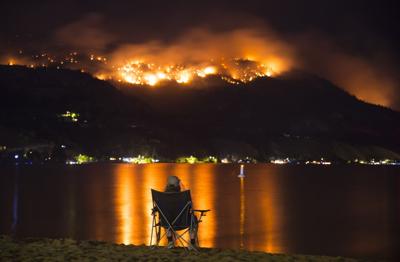
Flames are seen from the Christie Mountain wildfire along Skaha Lake near Penticton, B.C. Wednesday, August 19, 2020. Wildfires in the area have forced several thousand people to be on evacuation alert.  Jonathan Hayward/The Canadian Press
Marco-Chown-Oved

This podcast is by Marco Chown Oved, Climate Change Reporter and was published by the Toronto Star on November 13, 2024.

The way we talk about climate change needs to, well, change. Everything is either invisible, like emissions, or incomprehensible, like megatonnes, or inconceivable, like reductions of national emissions 25 years in the future. The cause of climate change is simple: it’s fire. To end global warming, we need to stop burning things.

Guests: Tim Stezik of Toronto Fire Services, Lytton fire survivor and author Meghan Fandrich and Pulitzer Prize finalist and author of Fire Weather, John Valliant.