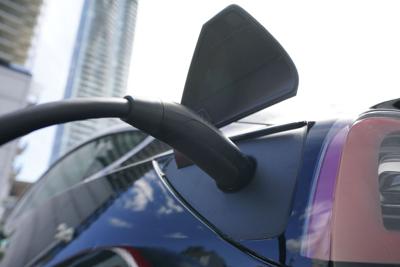
Canada needs its own EV auto­maker

This opinion was written by David Olive and was published in the Toronto Star on October 25, 2025.

The future of vehicle mobil­ity in Canada con­tin­ues to be elec­tric, des­pite the cur­rent slump in the Cana­dian elec­tric vehicle (EV) sec­tor.

The longer that stall­out lasts, the fur­ther Canada will fall behind in redu­cing its green­house gas emis­sions.

EV sales are soar­ing out­side of Canada. Global EV sales jumped by 25 per cent last year, to about 17 mil­lion vehicles, accord­ing to the Paris­based Inter­na­tional Energy Agency (IEA).

The eco­nom­ics of EV own­er­ship are com­pel­ling. Keep­ing an EV on the road can save thou­sands of dol­lars a year in fuel costs for fre­quent drivers.

But after sev­eral years of impress­ive growth, Cana­dian EV sales have fallen to just 7.7 per cent of new vehicle regis­tra­tions in July, down from the 2024 aver­age of 17 per cent.

EVs are still too expens­ive. The aver­age price of a new EV in Canada was $73,000 last year.

Ott­awa, B.C. and Que­bec sus­pen­ded their EV rebate pro­grams early this year, remov­ing a power­ful incent­ive for EV buy­ers. (Que­bec has since restored its rebate sys­tem.)

And there are only 35,000 EV char­ging sta­tions across Canada, far short of the coun­try’s goal of more than 100,000.

With access to the U.S. mar­ket in doubt due to the Trump admin­is­tra­tion’s tar­iffs on Cana­dian auto­mak­ing, sev­eral mult­i­bil­lion­dol­lar Cana­dian vehicle projects, not­ably EV bat­tery plants, have been post­poned.

And this week, Gen­eral Motors said it will dis­con­tinue pro­duc­tion of its Bright­Drop EV deliv­ery van in Inger­soll, Ont., idling Canada’s first full­scale EV man­u­fac­tur­ing plant.

Also this week, U.S. truck maker Pac­car (Peter­bilt, Ken­worth) was repor­ted to be shift­ing pro­duc­tion of vehicles for the U.S. mar­ket from its plant in Sainte­Thérèse, Que., to its U.S. plants ahead of Trump’s tar­iffs on medium­ and heavy­duty trucks that take effect Nov. 1., with a loss of about 300 Que­bec jobs.

And Stel­lantis N.V. (Chrysler, Dodge, Fiat) shocked the Cana­dian auto sec­tor this month in announ­cing the relo­ca­tion of pro­duc­tion of its elec­tric Jeep Com­pass SUV to Illinois from Bramp­ton to get around U.S. tar­iffs on the Cana­dian auto industry.

Amid the gloom, however, Volk­swa­gen AG remains on track to begin pro­duc­tion in 2027 at the $7bil­lion bat­tery plant it is build­ing in St. Thomas, Ont.

And NextStar Energy has begun pro­duc­tion of EV bat­tery com­pon­ents at its new plant in Wind­sor, Ont. NextStar, a part­ner­ship of Stel­lantis and South Korea’s LG Energy Solu­tion, expects to employ about 3,000 work­ers at the plant when it is fully oper­a­tional.

The VW and NextStar projects were heav­ily sub­sid­ized by gov­ern­ments.

It is pos­sible to ima­gine a more inde­pend­ent Cana­dian auto sec­tor less sub­ject to the whims of U.S. trade policy and the so­called Big Three auto­makers, GM, Stel­lantis and Ford Motor Co.

The Big Three, which have largely botched the EV trans­ition, have come close to abandon­ing Canada. Their Cana­dian vehicle pro­duc­tion has plunged by about 65 per cent since 2007, des­pite enorm­ous sub­sidies from Cana­dian gov­ern­ments.

Mean­while, Viet­namese homegrown EV man­u­fac­turer Vin­Fast sup­plies its domestic mar­ket and exports its vehicles to Europe, the Middle East and to mar­kets else­where in Asia Pacific.

Indone­sia, Egypt and other coun­tries import Chinese EV com­pon­ents for final assembly domest­ic­ally.

And Tur­key will soon be home to a $1.4­bil­lion EV assembly plant built by BYD, the largest Chinese auto­maker.

Those are options for Canada, which has the tech­no­logy, skilled work­force and man­u­fac­tur­ing infra­struc­ture to launch an EV auto­maker of its own that assembles EVs with impor­ted com­pon­ents.

Even­tu­ally it would expand to design and engin­eer all­Cana­dian vehicles for export to non­U.S. mar­kets, as Vin­Fast does. The branch plants of Canada’s for­eign­owned auto­makers export only to a U.S. mar­ket at risk of being closed to them.

The domestic mar­ket of almost 1.9 mil­lion vehicles bought in Canada in 2024 would sup­port a new Cana­dian auto­maker with ini­tial capa­city of 125,000 to 200,000 units.

And Ott­awa could lift or reduce its 100 per cent tar­iff on impor­ted Chinese vehicles in return for a Chinese com­mit­ment to build cars in Canada, as Toyota and Honda have long done.

China has said it will lift its pun­ish­ing counter­tar­iffs on Cana­dian can­ola, sea­food and pork in that event.

The same invit­a­tion could be exten­ded to other auto­makers, such as South Korea’s Hyundai Motor and its Kia sub­si­di­ary, on the prin­ciple that if you sell cars in Canada you make cars here.

Kick­ing the Cana­dian EV sec­tor into higher gear also requires an accel­er­ated rol­lout of char­ging sta­tions.

And while EV prices will come down with fur­ther tech­no­lo­gical advances — BYD’s entry­level Seagull retails for about $13,600 in China — rebates are still essen­tial.

They could be refor­mu­lated as a blend of cash and tax breaks that are less fisc­ally oner­ous.

With pas­sen­ger vehicles alone account­ing for about 12 per cent of Canada’s total green­house gas emis­sions, the cur­rent limbo for the Cana­dian EV industry can’t last.

The cleaner air, reduced noise pol­lu­tion, lower oper­at­ing costs and smal­ler car­bon foot­print that come with EVs will pre­vail.

It is pos­sible to ima­gine a more inde­pend­ent Cana­dian auto sec­tor less sub­ject to the whims of U.S. trade policy and the so­called Big Three auto­makers, GM, Stel­lantis and Ford Motor Co.

Canada’s costly EV scheme stalls out again

This editorial was written and published by the Globe & Mail on October 20, 2025.

On Wednesday, laid-off employees at the Stellantis plant in Brampton, Ont., received a robocall delivering bad news: they had no jobs to go back to. It was another stall on the road for Canada’s automotive strategy, which has seen federal and provincial governments dole out mounds of cash and add regulations and protective tariffs in a floundering attempt to create more jobs and build a state-of-the-art electric-vehicle industry.

Stellantis workers weren’t alone in being caught off guard that their jobs were moving to the U.S. Ottawa and Ontario were also surprised. The governments had boasted about funding Stellantis’s plant upgrades, and the company had promised to produce “the electric vehicles of the future” at the Brampton factory once it finished retooling for both gas and electric Jeep Compass vehicles.

The federal and provincial governments had also committed up to $15-billion in funding, in part contingent on production, for Stellantis’s Next Star EV battery plant, a partnership with LG Energy Solutions in Windsor, Ont. Industry Minister Mélanie Joly says the agreement with Stellantis requires the company to maintain its existing Canadian footprint.

The federal government is now threatening to sue Stellantis. The auto manufacturer says it is looking into producing a different model in Brampton, but it has given few details.

Donald Trump’s automotive tariffs and his cuts to EV subsidies have created massive disruption within the sector. But the truth is, Canada’s EV strategy never made much sense.

The idea of building EVs here using Canadian minerals, creating high-quality jobs and reducing emissions, was appealing. Unfortunately, it was a fantasy. The attempt to create the illusion of a growing industry has required constant consumer and business subsidies, barriers to selling gas-powered vehicles and tariffs to keep out cheap Chinese competition.

Like a multivehicle collision, the failures in Canada’s EV industry are piling up. Ottawa and Quebec pledged $2.7-billion to Swedish EV battery manufacturer North volt before it went bankrupt. Quebec has said its portion of the investment has been “lost.”

Last week also brought news that the planned expansion of Ultium CAM, a plant in Bécancour, Que., that produces materials for EV batteries, wouldn’t move forward. As a result, plans from Vale SA to create a nearby nickel sulfate plant were scrapped. Ottawa and Quebec had promised $300-million to support the first phase of Ultium CAM, a joint project of General Motors and South Korea’s POSCO Future M.

Even if everything in Canada’s EV strategy had gone according to plan, it was a costly bet. In 2022, the Parliamentary Budget Officer said that the $28.2-billion in federal and Ontario government subsidies for two electric-vehicle battery plants would take 20 years to break even, rather than the five years the Liberal government had suggested.

These projects in most cases leave the intellectual property and the most valuable technical knowledge in foreign hands. Lower level jobs aren’t guaranteed to Canadians either. At Next Star, union leaders reported that workers from South Korea, including electrical installers and forklift drivers, were brought in to set up the plant.

Consumers only seem interested in buying EVs when they can get heavy subsidies. With EVs only making up around 8 per cent of new sales, Prime Minister Mark Carney was forced to suspend this year’s minimum sales requirement for electric vehicles. The entire policy is under review.

Instead of doubling down on former prime minister Justin Trudeau’s dubious industrial strategy, Mr. Carney and the premiers should focus on creating a more hospitable business environment.

Businesses in Canada face a heavy regulatory burden, and protectionist barriers dampen competition, stifling innovation and driving up consumer costs. Restructuring the economy so companies aren’t relying on handouts and are instead forced to innovate and become more efficient is better for the economy, and cheaper for taxpayers.

If the goal is to reduce carbon emissions, the federal government can repeal the ban on Chinese EVs, which would be more widely adapted as they sell for as little as $14,000.

Mr. Carney recently spoke to business leaders about the importance of having a competitive corporate tax system. He has an opportunity to act in the upcoming federal budget. It would make more sense than throwing even more money at Canada’s stalled EV strategy.

Manitoba Premier calls on Ottawa to protect farmers hurt by tariffs

This article was written by Kate Helmore and was published in the Globe & Mail on October 16, 2025.

Kinew wants an end to duties Beijing levied against canola and pork, as China is a top export market for both

Manitoba Premier Wab Kinew is calling on Ottawa to prioritize agriculture in Western Canada and keep the country united as Foreign Affairs Minister Anita Anand heads to China to tackle the trade war.

Mr. Kinew wants an end to the 78.5-percent tariffs Beijing levied against canola in August and the 25-per-cent levies on pork, launched in March. Around $3.6-billion worth of Manitoba pork and canola was sold last year, and China is a top export market for both industries.

On Friday, Chinese Ambassador Wang Di said Beijing was prepared to drop its agricultural tariffs if Ottawa removes its 100-per-cent levies on Chinese-made electric vehicles, a policy that came into effect in October, 2024, and one which sparked Beijing’s reciprocal tariffs on agricultural goods.

“We need to have a strong Team Canada approach,” Mr. Kinew said. “Which means taking action to protect the auto industry and protecting Western Canada’s agricultural industry as well.”

Mr. Kinew’s calls to reconsider the EV tariff were echoed by Saskatchewan Premier Scott Moe, who said on LinkedIn that China is sending a “clear signal” and Ottawa should “get this deal done.”

But Ottawa is torn between provinces as other premiers also fight to protect their own economies and workers.

Ottawa’s tariffs on Chinese EVs last year was implemented after the U.S. took the same steps. The move was intended to protect a North America-wide auto manufacturing industry.

Conceding to Chinese demands might ignite retaliation from U.S. President Donald Trump, and could result in tariffs on Ontario’s auto manufacturing sector.

The industry has faced the threat of tariffs from their largest market – the U.S. – since February, and it has come at a steep cost. Stellantis on Tuesday said it would be moving its production of the Jeep Compass from Brampton, Ont., to Illinois. The plant had stood idle since 2023. Work on retooling for new vehicles paused in February after Mr. Trump announced tariffs on Canadian auto imports.

“There’s no damn way we should drop tariffs on China,” Ontario Premier Doug Ford said during an event at the Empire Club of Canada on Tuesday night, noting that Ontario auto manufacturing employs 157,000 people.

During a news conference on Tuesday, B.C. Premier David Eby also said his province has major concerns about U.S. tariffs and duties on softwood lumber. “We have to be way more aggressive to make sure that we get our message heard,” he said.

Mr. Kinew recognized the real concerns from the auto manufacturing sector, but said Western Canada’s agricultural industry has for too long taken a back seat to demands from other parts of the country.

“Something concrete coming out of the visit to China would be a welcome sign that the agricultural industry is factoring into federal decision making,” he said. “And we’re not just on the periphery of an all-consuming focus on the auto industry.”

Federal financial aid for farmers is also needed, Mr. Kinew said, adding that one Manitoba pork processor is on track to lose $19-million annually owing to Chinese tariffs. He’d also like to see immigration policy make more room for agriculture – a sector facing labour shortages.

Early September, Ottawa announced a temporary increase to interest-free loans available to farmers, in addition to some biofuel production incentives and amendments to the Clean Fuel Regulations to support domestic demand for the canola used in renewable fuel production.

Industry associations representing canola farmers and processors slammed the measures, saying they fell woefully short of the supports needed to tackle the trade disruption.

“I want to work with the federal government in figuring out how we can bring relief to our farmers and our manufacturers in a way that also helps Ontario,” Mr. Kinew said. “So lets get to it.”

On Friday, Chinese Ambassador Wang Di said Beijing was prepared to drop its agricultural tariffs if Ottawa removes its 100-per-cent levies on Chinese-made electric vehicles, a policy that came into effect in October, 2024, and one which sparked Beijing’s reciprocal tariffs on agricultural goods.

Canada still has an opportunity to build an electric-vehicle supply chain, industry experts say

This article was written by Jeffrey Jones and was published in the Globe & Mail on October 15, 2025.

Results of a survey conducted in May show a majority of Canadians see the value in developing an electric-vehicle supply chain, but most do not see one developing.

Players in Canadian industry still envision a complete domestic electric-vehicle supply chain, from mining to manufacturing, though it’s become more difficult amid the strained trade relationship with the United States and murky policies toward the sector at home.

The Canadian EV industry has been battered this year by the termination of failed battery manufacturer Northvolt’s Quebec manufacturing plant, U.S. President Donald Trump’s imposition of tariffs on Canada’s auto sector and threats to stop imports, and the expiry of federal incentives for EV buyers.

However, it remains clear that the costs of EVs are falling as technology improves, and that their worldwide share of the market will keep expanding, displacing internal combustion engines, said Bentley Allan, vice-president of future economy at the Canadian non-profit Transition Accelerator.

Canada has the critical minerals, precision manufacturing expertise and assembly capacity to be a key player as trade relationships shift, said Mr. Allan, who is also an associate professor of political science at Johns Hopkins University.

Some countries outside the U.S., such as Indonesia, Egypt and Ethiopia, import Chinese EVs and conduct final assembly domestically because of the economic advantages, such as reducing oil and gasoline imports, rather than climate aims, he said.

This shows opportunity for Canada as Ottawa prepares a climate competitiveness strategy that includes developing the EV battery industry.

“There are also just these underlying thermodynamic advantages to electric vehicles, which are going to continue to drive the market globally,” Mr. Allan said. “So this is going to be a market that we can export into, that we can continue to be competitive in and that we do really have strengths in. Every other country in the world would love to have our critical minerals base, our midstream chemicals expertise.”

Thorny trade disputes dog the industry, however. Canada has maintained a 100-per-cent tariff on Chinese EVs, which sell for prices that would undercut models available domestically. China retaliated by imposing a 100-percent tariff on Canadian canola oil and 75.8-per-cent duty on canola seed, making the country’s agricultural sector a victim of the dispute.

Saskatchewan Premier Scott Moe and Manitoba Premier Wab Kinew, whose provinces are major canola producers, have called for Prime Minister Mark Carney to scrap the EV tariff.

Mr. Allan said canola is a fungible commodity that can be sold to numerous markets, but added that Canada needs a more sophisticated response to the issue and should consider reducing its Chinese EV tariffs.

However, an industry association made up of manufacturers, parts suppliers, miners and others seeking to weave together the EV supply chain said Canada will eventually have to open its market to competition, but should maintain the import duty while the homegrown industry solidifies its footing.

Andrew McKinnon, director of policy at the industry association, known as Accelerate, said the key to a Canadian supply chain is diversifying the customer base, especially as the dominant force in the sector, China, imposes its own export restrictions on materials used to make auto components.

“If we are able to get these projects online and get minerals out of the ground and start to process them, this will make us more essential in the North American sphere. But it also opens up doors to have trading relationships in Europe and elsewhere we maybe weren’t doing before,” he said.

China last week dramatically expanded export controls on rare-earth minerals. In retaliation, Mr. Trump threatened to impose an additional 100-per-cent tariff on Chinese goods.

“That has a huge impact on not just supply chains that go into automotive, but everything else high-tech,” Mr. McKinnon said. “What we know from the battery materials producers here and innovators – and Canada has a lot of knowledge in this area – is that we can compete operationally.”

Meanwhile, Accelerate released the results of an Environics survey that showed a majority of Canadians see the value in developing an EV supply chain, but most do not see one developing. The survey of 2,039 people across the country, conducted in May, revealed at least two-thirds of respondents support the seven main components of the industry.

This includes 78 per cent in favour of critical-mineral mining, 77 per cent in favour of criticalmineral processing, 75 per cent in favour of EV component manufacturing, 73 per cent in favour of charging equipment and software, 69 per cent in favour of EV production, 70 per cent in favour of battery manufacturing and 66 per cent in favour of battery material production.

However, the results show polarization. Environics noted that, among Conservative voters, for instance, support is highest for critical-mineral mining and lowest for specific EV-linked industries.

Meanwhile, respondents cited the following as the top barriers to building an EV supply chain: uncertainty of the current global economic situation, extensive taxpayer funding required, regulations and bureaucratic red tape, and the length of time it takes from from project announcement to startup.

Saskatchewan Premier Scott Moe and Manitoba Premier Wab Kinew, whose provinces are major canola producers, have called for Prime Minister Mark Carney to scrap the EV tariff.

Algoma pivots to electric future after securing loan from Ottawa

This article was written by Niall McGee and was published in the Globe & Mail on September 30, 2025.

Algoma Steel employs about 2,800 people and is Canada’s sole manufacturer of steel plate used in the military. The American market accounted for up to 60 per cent of Algoma’s production before U.S.-imposed tariffs began in March.

Algoma Steel Group Inc. is pivoting early to a full rollout of its electric arc furnace technology after securing a crucial $500-million government financing, as it continues to fight U.S. tariffs.

Canada’s last independent steelmaker is currently producing far more steel than it can sell, both because of the evaporation of its U.S. business and because its blast furnace is designed to operate at full tilt.

On Monday, the Sault Ste. Marie, Ont.-based company said it is shutting down the blast furnace earlier than planned and accelerating the rollout of its electric arc furnaces.

The move will give Algoma far more flexibility to produce less steel during the trade war, give it more options to sell different kinds of steel, and dramatically lower its costs.

Electric furnaces operate on a batch basis and can be powered on and off with relative ease.

With both the government financing in place and a new aggressive trade war strategy, Algoma chief executive officer Michael Garcia said he’s confident the company can tough it out over the long term – even if U.S. tariffs remain in place indefinitely.

“We see a future for Algoma being a bedrock of the Canadian steel industry,” Mr. Garcia told The Globe and Mail in Sault Ste. Marie. “And we see that future even if the 50-per-cent tariff remains as a permanent or long-term feature of the trading relationship.”

The federal Department of Finance announced on Monday that it is advancing Algoma $400-million in low-interest loans as part of Ottawa’s $10-billion Large Enterprise Tariff Loan program. The Ontario government is providing an additional $100-million in funding to the Canadian steelmaker.

Algoma employs about 2,800 people and is Canada’s sole manufacturer of steel plate used in the military.

The U.S. market used to account for up to 60 per cent of Algoma’s production. But after U.S. President Donald Trump imposed 25-per-cent tariffs on Canadian steel imports in March, Algoma’s order book started to bleed. When he doubled the levy to 50 per cent in June, the company was effectively shut out of the market entirely.

The funding by the federal government isn’t the first time Ottawa has provided substantial financial assistance to Algoma.

Ottawa lent the company $200-million in 2021 to build its electric furnaces. The loan is forgivable if Algoma meets certain emissions standards over time. In addition, the company received a government loan of $130-million to modernize its plate mill.

Mr. Garcia is well aware of both the responsibility of accepting taxpayer funds and the need to repay it.

“I completely understand and respect the fact that this is public money,” he said.

“With that comes a higher level of scrutiny and a higher demand for 100-per-cent transparency and making sure that this is an investment that works for the country of Canada and for Algoma.”

Speaking at Algoma’s headquarters on Monday, Federal Minister of Jobs and Families Patty Hajdu said that Ottawa’s investment into Algoma strengthens Canada’s economic security because of its strategic importance to the defence sector.

“This is us working together to pull out all stops to ensure that we can save Algoma Steel, and save Canadian-made steel,” she said.

“Ultimately, the work that we’re doing today is about the sovereignty of Canada.”

Despite multiple rounds of talks with the U.S. over many months, Prime Minister Mark Carney’s government has been unable to secure tariff relief on steel for Canada.

Mr. Garcia said that if he could even get the Trump administration to reduce the steel tariff to between 10 per cent and 15 per cent, the company would have a shot again at re-entering the U.S. market.

During the trade war, the federal government has gone to considerable lengths to help the Canadian steel industry writ large.

Ottawa announced two crackdowns on cheap steel imports. New tariff quotas rolled out in the summer make domestic mills more competitive against their foreign competition.

International steel companies that don’t have free-trade agreements (FTAs) with Canada, including those from China and Turkey, currently face Canadian tariffs of 50 per cent if they ship above a certain level. And even countries with FTAs with Canada are facing import quotas and potential tariffs.

No dead­line for Ott­awa’s Chinese EV tar­iff review

News comes as Canada tries to reshape trade ties

This article was written by Nick Murray and was published in the Toronto Star on September 27, 2025.

The fed­eral gov­ern­ment says it is review­ing its decision to impose 100 per cent tar­iffs on Chinese EVs — but it can’t or won’t say when the review began, or when it will end.

The tar­iffs took effect Oct. 1, 2024, and the reg­u­lat­ory order pub­lished impos­ing them said “the gov­ern­ment intends to review this meas­ure within a period of one year from its entry into force.”

Fin­ance offi­cials now say the review is “informal,” with no spe­cific dead­line.

The news comes as Canada tries to recal­ib­rate its trade rela­tion­ship with China, which imposed heavy tar­iffs on Canada’s can­ola sec­tor last month. The move was widely seen as an act of retali­ation for Canada’s EV tar­iffs.

Canada intro­duced the sur­tax on Chinese EVs a year ago to match those of the United States. Ott­awa accused China of unfairly sub­sid­iz­ing its EV industry and over­pro­du­cing vehicles to flood mar­kets with cheaper cars.

The Cana­dian Press began ask­ing about the status of the Chinese EV tar­iff review two weeks ago, after Prime Min­is­ter Mark Car­ney appeared to con­fuse it with the newly announced review of the gov­ern­ment’s EV sales man­date.

On Sept. 11, a reporter at a press con­fer­ence asked Car­ney whether Canada would lower the 100 per cent tar­iffs, after not­ing they were cur­rently under review.

“Just to be clear,” Car­ney replied, “what’s under review — I think you know, but for oth­ers — is the EV man­date. We’ve sus­pen­ded it for 2026 and we’re review­ing that over­all approach … in the con­text of the trade envir­on­ment.

“That review just star­ted. We’re in the first week of a 60­day review, so I don’t want to pre­ju­dice it.”

Car­ney however was refer­ring to the 60­day review of the EV sales man­date his gov­ern­ment launched on Sept. 5, which was a sep­ar­ate issue than the tar­iffs imposed on Chinese vehicles.

The Prime Min­is­ter’s Office deferred ques­tions about the issue to Fin­ance Min­is­ter François­Phil­lippe Cham­pagne. His office told The Cana­dian Press on Sept. 17 the review hadn’t star­ted yet.

After fur­ther inquir­ies, Cham­pagne’s office changed course and said this week the review had star­ted.

“The review was ini­ti­ated within the pre­scribed one year timeline and remains under­way,” said press sec­ret­ary John Fra­gos. “The gov­ern­ment is cog­niz­ant of the interest that many stake­hold­ers have in the timely com­ple­tion of this review.”

Asked when the review began, Fra­gos said only that it began in early Septem­ber, though a depart­ment spokes­per­son later said there is no “spe­cific date.”

“There is no spe­cific date, I’m afraid, as this is an informal pro­cess (i.e., not a pub­lic con­sulta­tion),” wrote a Depart­ment of Fin­ance spokes­per­son in a mes­sage for­war­ded from Cham­pagne’s office.

“But you could say it began this sum­mer. And because it isn’t a formal pro­cess per se, there’s no open or close date like with a con­sulta­tion.”

Offi­cials did say they’re final­iz­ing their advice to Cham­pagne on the EV tar­iffs, based on what the gov­ern­ment heard from stake­hold­ers.

The Cana­dian auto sec­tor has called for the tar­iffs to remain in place to pro­tect Canada’s car­makers, while envir­on­mental groups have called for them to be lowered or repealed to help boost com­pet­i­tion in the EV mar­ket.

Last week, Ontario Premier Doug Ford urged the gov­ern­ment to keep the tar­iffs in place in a let­ter to Car­ney.

The tar­iffs on Chinese EVs took effect Oct. 1, 2024, and were to be reviewed “within a period of one year from its entry into force.” Fin­ance offi­cials say the review is “informal,” with no dead­line.

Opinion | EVs have become a litmus test for whether we’re still America’s buddy — or ready to be a global Canada

EV sales.JPG
“Many Canadians are wondering why we should keep in place a 100 per cent tariff on affordable Chinese EVs, with a recent survey by Abacus Data for Clean Energy Canada showing that four-in-five Canadians would prefer a much lower tariff or no tariff at all,” write Joanna Kyriazis and Trevor Melanson.Sean Kilpatrick The Canadian Pre

This opinion was written by Joanna Kyriazis and Trevor Melanson, and was published in the Toronto Star on August 3, 2025.

Joanna Kyriazis is the director of public affairs and Trevor Melanson is the director of communications at Clean Energy Canada, a think tank at Simon Fraser University.

There are few Canadian markets more integrated with the U.S. than vehicles. And not just the cars we build in Ontario, but the ones we drive across this country.

We rely on U.S. safety standards that effectively determine which cars end up on dealership lots, align our tailpipe emission standards and when the U.S. under Biden erected a 100 per cent tariff wall on Chinese electric vehicles (EVs), did Canada look to Europe’s much lower tariff or the U.K.’s lack of one? No, we put up a 100 per cent tariff wall too.

And then a few things happened.

Trump won the election and promised to slash government investments in EV charging and manufacturing, cancel consumer EV tax credits and weaken emission standards (all promises he’s since fulfilled). U.S. automakers have eased their EV ambitions accordingly.

Simultaneously, Canadian EV sales have declined in 2025 after funding ran out for EV rebates federally and in two key provinces, B.C. in Quebec, leaving buyers waiting on the sidelines for incentives to be reinstated (Quebec has since done so).

Seeing opportunity, certain members of Canada’s auto lobby are suggesting that Canada should follow the U.S.’s U-turn on EVs, namely by repealing Canada’s EV availability standard, a policy requiring automakers to supply more EVs to Canadians.

Suddenly, the electric car has become a litmus test for whether we’re still America’s buddy — or ready to be a more global Canada.

Frankly, the choice couldn’t be clearer: align our ambitions with the wider world — where one-in-four cars sold globally this year is projected to be electric — or follow Trump’s retreat, further fortifying an uncompetitive, fossil-fuel-powered North America.

Indeed, Trump is imposing inexplicable self-harm on America’s own auto manufacturing industry, applying tariffs to the steel, aluminum and auto parts it relies on. Combined with his efforts to roll back fuel efficiency standards, Trump is effectively forcing Americans to both produce and drive less efficient vehicles — and pay more to do so.

Like Canada, the EU revisited its EV requirements in light of tariffs and America’s trade war but, in sharp contrast with Trump, decided to keep them. As a result, drivers have access to more affordable EVs, and the EU is within striking distance of its 2030 climate target. It’s a similar story in the U.K., where carmakers are now on track to meeting EV targets, despite claiming they couldn’t possibly do so.

Canada has a number of tools to ensure similar success, such as reintroducing rebates (something the U.K. just did), potentially retooling the EV availability standard, investing in public charging with more focus put on helping apartment dwellers, and, yes, lowering the barriers faced by Chinese and European carmakers.

Indeed, many Canadians are wondering why we should keep in place a 100 per cent tariff on affordable Chinese EVs, with a recent survey by Abacus Data for Clean Energy Canada showing that four-in-five Canadians would prefer a much lower tariff or no tariff at all.

Chinese EVs are not barbarians at the gate, only a drawbridge away from decimating the competition. That simply hasn’t happened in other advanced nations, where Chinese EVs typically make up less than 10 per cent of the EV market. BYDs are built and priced for the countries they sell in and, to level the playing field for domestic producers, are often still tariffed — just not at 100 per cent. There is early evidence that the mere presence of Chinese EVs improves local market conditions and consumer adoption.

Ultimately, we must ask what’s best for Canada.

How about affordable EVs that will save drivers thousands on gas every year? Or better air quality, less strain on our health care system and 11,000 avoided premature deaths, according to one recent study?

And what about Canada’s canolaseafood, and pork industries, which have become collateral damage as a target of Chinese retaliation over our U.S.-aligned tariff? Or better yet, Canada’s enormous critical minerals opportunity, underpinned by the transition to clean energy and especially EVs?

Put another way, we’re not Americans and we needn’t drive like them — or with them.

Canadians want focus on cost of living, trade: poll

This article was written by Bill Curry and was published in the Globe & Mail on September 15, 2025.

Economy, immigration also among concerns respondents say MPs should prioritize

House of Commons sittings resume Monday and a new survey shows Canadians want MPs to focus on the rising cost of living and trade tensions with U.S. President Donald Trump as their top priorities.

The Nanos Research survey conducted for The Globe and Mail also shows concerns about jobs and the economy, as well as immigration, are top of mind.

Prime Minister Mark Carney and Conservative Leader Pierre Poilievre both aimed to set the tone Sunday for Parliament’s return. Mr. Carney announced the launch of Build Canada Homes with $13-billion in capital to build affordable housing, while

Mr. Poilievre delivered a speech to his Conservative caucus in which he accused the Liberals of being all talk and no action.

During his news conference in Ottawa, Mr. Carney said he spoke with Mr. Poilievre on Friday evening and expressed hope that the opposition parties will work with the government in the minority Parliament.

He said the government’s fall budget will focus on investments that encourage longer term growth, even though it will mean a larger deficit than last year.

“We’re transforming Canada’s economy from one that had become too reliant on a single trading partner to an economy that’s more diverse, more resilient, that’s built for Canadian workers and their families,” he said.

Mr. Poilievre was defeated in his Ottawa-area riding of Carleton in the April federal election but has since won a summer by-election in Alberta and has been sworn in as an MP, meaning he will be in the House on Monday to square off with Mr. Carney in Question Period for the first time.

The fall sitting will see Mr. Carney’s government continue trade talks with the U.S., table its first budget, update its climate change policies and announce additional major projects that will be reviewed for fast-track approvals.

So far this year, Mr. Carney has cancelled or delayed several of the Liberal government’s past climate-change policies, including shelving the federal fuel charge known as the carbon tax and delaying and reviewing Canada’s electric vehicle mandates. Further changes are likely to be rolled out as part of what the Prime Minister has called a “climate competitiveness” policy.

Alberta Premier Danielle Smith, who has long criticized federal environmental policies as a barrier to growth in that province’s oil and gas sector, praised what she described as an “exceptionally productive” meeting with Mr. Carney last week in Edmonton. She suggested Ottawa

and Alberta will have more energy-related news in the weeks to come.

Environmentalists have expressed concern with the Liberal government’s recent shift in favour of traditional oil and gas, but the Nanos Research survey shows environmental concerns are not top of mind for Canadians at the moment.

“Canadians are clearly fixated on economic issues, wanting the priorities for the House of Commons to be the cost of living, trade with the U.S., and jobs and the economy,” pollster Nik Nanos said in a statement. “Interestingly, there is a stark generational divide. Younger Canadians are more likely to want to see a focus on the rising cost of living while those over 55 years of age want trade negotiations with the U.S. to be the top priority.”

The survey of 1,028 adults was conducted between Aug. 30 and Sept. 3. It has a margin of error of 3.1 percentage points, 19 times out of 20.

The survey asked what issue should be the top priority for the House of Commons this fall? Respondents were asked to choose among 11 possible answers.

Rising cost of living and trade negotiations with the U.S. were tied for first at 21 per cent, followed by 16 per cent who selected jobs and the economy. Immigration was fourth at 9 per cent, followed by health care, housing and the deficit and debt all tied at 7 per cent. The environment was selected by 6 per cent, followed by 2 per cent who chose trade diversification. The rest were either unsure or chose “other.”

The survey found Mr. Carney gets a passing grade from Canadians when it comes to handling Mr. Trump on trade matters, despite the Prime Minister’s lack of success so far in persuading the U.S. President to cut punitive tariffs on goods such as steel, aluminum and autos.

Fifty-six per cent of respondents rated Mr. Carney’s performance in dealing with Mr. Trump as very good or good. Nineteen per cent said it’s been average and 18 per cent said it’s been poor or very poor. Another 3 per cent were unsure.

In his speech to caucus members Sunday, Mr. Poilievre laid out his party’s priorities for the fall sitting. He said Conservative MPs will focus on lowering taxes, making homes more affordable, reducing crime and “bringing immigration under control.”

He said his party will be willing to support the government when it proposes good ideas but it will oppose bad ideas. He also said that while Mr. Carney has made some positive promises, they are often not backed up by action.

As examples, he said the Liberals have not delivered on plans to build big projects, support new housing construction or to quickly reach a new trade deal with Mr. Trump.

“He promised elbows up, and where did the elbows go from there? The elbows are down. He has backed down again and again, and got absolutely nothing in return,” he said. “We’re going to work to turn things around. We’ll work with anybody from any party in order to make this session a success for the Canadian people.”

Auto industry says keep tar­iffs on Chinese EVs

Remov­ing 100% levy would pose `exist­en­tial threat,’ says group rep­res­ent­ing Big Three firms in Canada

BYD electric vehicles are prepared to be loaded onto a ship in China. Canada's 100 per cent tariff on Chinese electric vehicles faces an automatic review due by Oct. 1.

This article was written by Josh Rubin and was published in the Toronto Star on September 11, 2025.

Remov­ing 100% levy would pose `exist­en­tial threat,’ says group rep­res­ent­ing Big Three firms in CanadaSaveListenSharePrintMore

As the fed­eral gov­ern­ment reviews Canada’s 100 per cent tar­iff on Chinese elec­tric vehicles, industry insiders warn that ditch­ing it entirely would be “an exist­en­tial threat” to the Cana­dian auto­mot­ive industry.

The tar­iff, which came into place almost a year ago, faces an auto­matic review, with res­ults due by Oct. 1. Get­ting rid of it would prompt harsh retali­ation from the U.S., and be the death knell for auto­mot­ive pro­duc­tion here, said the head of the asso­ci­ation rep­res­ent­ing Detroit’s Big Three auto­makers in Canada.

“There is simply no option but to main­tain that tar­iff,” said Brian King­ston, CEO of the Cana­dian Vehicle Man­u­fac­tur­ers’ Asso­ci­ation. “Get­ting rid of it would be an exist­en­tial threat to the industry and all you need to do is look at other coun­tries that have been asleep at the switch on this one.”

The review comes as the fed­eral gov­ern­ment attempts to broaden Canada’s trade rela­tion­ship with China amidst a trade war sparked by tar­iffs from U.S. Pres­id­ent Don­ald Trump. In the wake of Canada’s EV tar­iff, China retali­ated with a 100 per cent levy on Cana­dian can­ola.

King­ston poin­ted to sales fig­ures that show a rapid growth in sales of Chinese­pro­duced cars in other coun­tries, includ­ing Mex­ico. In 2020, King­ston said, just four per cent of cars sold in Mex­ico were pro­duced in China. Now, roughly a third of new cars sold in Mex­ico are made in China.

“That’s what hap­pens if you open the door and we simply can­not take that risk,” said King­ston.

On Wed­nes­day, Mex­ico announced it was rais­ing tar­iffs on cars impor­ted from China to 50 per cent from 20 per cent.

The head of Canada’s Auto­mot­ive Parts Man­u­fac­tur­ers Asso­ci­ation (APMA) said let­ting cheaper Chinese EVs such as BYD or XPeng into Canada would ham­mer sales of North Amer­ican, European and Japan­ese cars here, and also poten­tially kill off a prom­ising Cana­dian EV industry.

“We know about the Chinese when they enter the mar­ket,” said APMA CEO Fla­vio Volpe. “They eat up mar­ket share res­ult­ing in lower volumes for mar­ket­driven play­ers. And lower volumes mean fewer

cars which means fewer jobs. The only ques­tion is the rate at which they gobble up the mar­ket share.”

And the Chinese auto man­u­fac­tur­ers are any­thing but mar­ket driven, Volpe argued, say­ing the Chinese cars are being sold well below their man­u­fac­tur­ing cost.

“When they’re going to sell you a $13,000 vehicle, do you think it costs $13,000 to make it or do you think it costs $20,000 to make it?” said Volpe.

“There’s Chinese over­sup­ply and they’re dump­ing product around the world.”

Volpe added that Chinese auto­makers don’t source any of their mater­i­als or parts in Canada.

“There isn’t any­body who’s in raw mater­i­als, parts, sales and after­ser­vice or assembly who thinks it’s a good idea to give away the mar­ket to cent­rally planned, overly sub­sid­ized com­pet­it­ors,” said Volpe.

The head of the trade asso­ci­ation rep­res­ent­ing steel makers in Canada said any­thing that hurts auto man­u­fac­tur­ing in North Amer­ica also hurts the Cana­dian steel industry.

“The North Amer­ican auto sec­tor has always been a sig­ni­fic­ant cus­tomer of the Cana­dian steel industry,” said Cath­er­ine Cob­den, CEO of the Cana­dian Steel Pro­du­cers Asso­ci­ation.

Chan­ging or drop­ping the tar­iffs on Chinese EVs — and on Chinese steel — would be a mis­take, Cob­den said.

“It would be a back­wards step, given that there was a strong rationale to put them in place a year ago. And frankly, noth­ing has changed since then,” Cob­den said.

Also Wed­nes­day, a fed­eral gov­ern­ment offi­cial called the review of the tar­iffs “routine,” and said the gov­ern­ment would pro­tect Cana­dian jobs and the man­u­fac­tur­ing sec­tor.

“The gov­ern­ment com­mit­ted to review these sur­taxes within one year. This is a routine assess­ment, as with any sur­tax or reg­u­lat­ory meas­ure, to ensure policies remain appro­pri­ate. Canada will always defend Cana­dian work­ers, sup­port our man­u­fac­tur­ing sec­tor, and strengthen our trade rela­tion­ships,” the offi­cial said.

On Tues­day, fed­eral Agri­cul­ture Min­is­ter Heath Mac­Don­ald said that redu­cing the tar­iff on Chinese EVs is “cer­tainly something that we’re look­ing at” but cau­tioned that other trade con­cerns are being kept in mind. Mac­Don­ald didn’t spe­cific­ally men­tion the U.S., which is also a big importer of Cana­dian can­ola and was the first to slap a tar­iff on Chinese EVs.

“Every decision that we make as a fed­eral gov­ern­ment, we want to ensure that we’re not jeop­ard­iz­ing a situ­ation that could be ever broader,” Mac­Don­ald told report­ers at the end of a meet­ing with his pro­vin­cial and ter­rit­orial coun­ter­parts.

The APMA’s Volpe sug­ges­ted that the Chinese gov­ern­ment delib­er­ately tar­geted the can­ola industry as a way of put­ting a wedge between Cana­dian regions, pit­ting the Saskat­chewan­based industry against the Ontario­dom­in­ated auto sec­tor.

“China has been try­ing to stick a wedge between us, and they’ve found where to put the wedge,” said Volpe.

The head of Canada’s largest private sec­tor union said get­ting rid of the tar­iff on Chinese elec­tric vehicles would hurt Cana­dian work­ers and the eco­nomy.

“Remov­ing the tar­iff guard­rails that are keep­ing unfair Chinese EV imports from flood­ing our home mar­ket would be the worst thing our gov­ern­ment can do,” said Uni­for national pres­id­ent Lana Payne. “Canada can­not become a dump­ing ground for Chinese vehicles. Rather, we need Prime Min­is­ter Car­ney to incentiv­ize the sale of Cana­dian­built EVs, pro­tect sup­ply chain invest­ments, and build the clean car infra­struc­ture Canada needs.”

Can­ola, EVs get cold shoulder

This opinion was written by Gillian Steward and was published in the Toronto Star on September 9, 2025.

Prime Min­is­ter Mark Car­ney’s move to help the west­ern Cana­dian can­ola industry fell flat on Thursday as he announced a sig­ni­fic­ant pack­age for Ontario’s auto industry but little in the way of relief for can­ola farm­ers.

And no doubt it fell flat with cost­con­scious Cana­dians who want EVs at reas­on­able prices. We could have had those from China but Car­ney kept the door closed.

“The Cana­dian can­ola industry is dis­ap­poin­ted with the sup­port meas­ures announced today by the fed­eral gov­ern­ment in response to the clos­ure of the Chinese mar­ket to Cana­dian can­ola seed, oil and meal. The announced meas­ures fall short of what is required to sup­port the industry dur­ing this unpre­ced­en­ted trade dis­rup­tion,” the Cana­dian Can­ola Coun­cil said in a pre­pared state­ment.

Can­ola farm­ers face a 76 per cent Chinese tar­iff on can­ola seed and a 100 per cent tar­iff on can­ola oil and meal. China is their second largest mar­ket after the United States with exports worth $4.6 bil­lion. Can­ola and EVs get the cold shoulder from Car­ney.

Instead, Car­ney dropped the EV man­date adop­ted by the Trudeau gov­ern­ment, which the auto industry had deman­ded, and offered $5 bil­lion for worker retrain­ing, exten­ded Employ­ment Insur­ance bene­fits and busi­ness loans, most of which is inten­ded for the auto industry.

The can­ola industry was offered $355 mil­lion to incentiv­ize pro­du­cers to switch to selling can­ola for bio­fuels and build up the Cana­dian renew­able fuel sec­tor. They also prom­ised to revise the Clean Fuel Reg­u­la­tions, but how exactly was not clear.

“We are dis­cour­aged with the gov­ern­ment’s sup­port pack­age for the industry. The meas­ures announced today do not reflect the ser­i­ous­ness of the chal­lenge facing the value chain,” says Chris Dav­ison, pres­id­ent and CEO of the Can­ola Coun­cil of Canada. “We have com­mu­nic­ated the need for appro­pri­ate fin­an­cial and policy sup­ports, and the fed­eral gov­ern­ment has missed the mark.”

The premi­ers of Alberta, Saskat­chewan and Man­itoba had asked the fed­eral gov­ern­ment to drop the tar­iff on Chinese EVs so can­ola farm­ers could regain their Chinese mar­ket. Saskat­chewan Premier Scott Moe trav­elled to China on Sat­urday to con­sult with gov­ern­ment offi­cials there about the tar­iffs. But it is Car­ney who will have to give the final word.

I wouldn’t bet on him chan­ging his mind since the Cana­dian auto industry cer­tainly had his atten­tion this time around. The prime min­is­ter’s announce­ment was made in Mis­sissauga, which need­less to say told us a lot about what he was going to deliver.

Get­ting inex­pens­ive EVs into Canada is obvi­ously not a pri­or­ity for the Car­ney gov­ern­ment, even though our auto industry has yet to pro­duce its own EV. By all means, we should offer some fin­an­cial sup­port to the Cana­dian auto industry. But where is the harm in drop­ping the tar­iff on Chinese EVs? It’s not as though they are going to flood the coun­try overnight. Does it have more to do with copy­ing the 100 per cent U.S tar­iff on Chinese EVs? Are we simply afraid to offend the unhinged pres­id­ent to the south?

And why drop the EV man­date, which would have seen Canada adopt EVs as 20 per cent of new car sales by 2026? Could it not have been exten­ded for a year? When Cana­dians are burdened with cost of liv­ing increases EVs that are within their price range would be a wel­come relief. But no, the Car­ney gov­ern­ment opted to keep Chinese EVs out of Canada lest they threaten our own industry.

The Can­ola Coun­cil was ignored, even though it rep­res­ents 40,000 can­ola farm­ers across Canada. And so were Cana­dians anxious to get inex­pens­ive EVs so they could save money on gas­ol­ine and upkeep. The rest of the world is adopt­ing EVs faster than most people can say EV.

In 2024, 20 per cent of new cars sold world­wide were elec­tric. Pity, it isn’t hap­pen­ing in Canada.

Where is the harm in drop­ping the tar­iff on Chinese EVs? It’s not as though they are going to flood the coun­try overnight. Does it have more to do with copy­ing the 100 per cent U.S tar­iff on Chinese EVs? Are we simply afraid to offend the unhinged pres­id­ent to the south?