
Torontonians made heartfelt pleas, gave angry lectures and implored city hall’s budget subcommittee on what services should be a priority.
This article was written by Mahdis Habibinia and Ben Spurr, and was published in the Toronto Star on January 27, 2025.
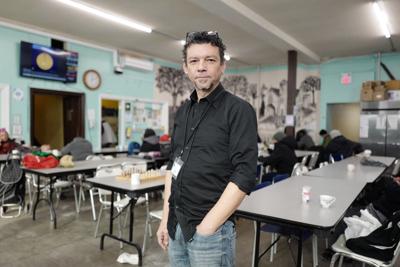
Rikki LaCoste lost everything after a house fire in 2015: he was homeless, his mental health plummeted and he pushed his friends away out of embarrassment.
“I was struggling to see any value in myself or my place in the world or any prospects of the future,” said LaCoste, who has now completely rebuilt his life. “It was the Weston King Neighbourhood Centre (in 2017) that stepped in to hold me together when I couldn’t.”
LaCoste was among the hundreds of Torontonians who showed up this week to a series of public consultations about this year’s proposed city budget. Over two days in person and online, deputants made heartfelt pleas, gave angry lectures and implored city hall’s budget subcommittee on what services should be a priority at a time when money is short. The city’s operating shortfall was estimated at $1.2 billion heading into 2025.
LaCoste, a 53–year-oldmental health advocate, was among multiple community workers who said they want to see an extra $3 million allocated to citywide drop-in agencies to extend hours, hire more staff and improve services. The proposed 2025 budget currently allots $12.87 million for the agencies, an increase of more than $1 million over last year’s funding.
Without the additional funding, LaCoste told the Star in an interview, he and his colleagues at Weston King will need to start turning people away because drop-ins — which he called “a lifeline” and a “cornerstone of Toronto’s social safety net” — are at or over capacity.
I ran a community program on a $10,000 budget. Toronto’s social services are dangerously underfunded
“There is nothing like having someone metaphorically and literally hold you together in your darkest moments,” said LaCoste. “Too often the city’s response to visible poverty has been to fund reactive measures such as increasing police budgets, but that doesn’t address root causes.”
Last fall, the city sent out digital surveys and hosted meetings where it received more than 22,200 responses that informed its budget plans. There were several recurring issues the public said they wanted addressed through this year’s spending: affordability, community services including shelters, safety, climate action and mobility, including better transit or congestion management. Respondents picked the police service, meanwhile, as the number one area the city should give less money to.
Many of those sentiments were reflected in this week’s public deputations. Mayor Olivia Chow is expected to consider this public input as she crafts her final version of this year’s budget, which she said she plans to release on Thursday.
Police
Dozens of Torontonians came out to talk about the $46-million increase to the police’s operating budget in the proposed 2025 spending plan — mostly asking to divert the funds to other city services.
Christina Vladimirov, a university student, recalled witnessing what she described as “the misuse of police resources” in 2020 on the evening her cat was hit by a car.
“We were heartbroken and spent most of the day crying,” Vladimirov told the budget committee. That night, officers knocked on her door after someone called the police because they heard shouting.
Toronto police board approves $1.2B proposed budget for 2025
“Why were six police officers, three squad cars and hours of work used to bother two women grieving their cat?” Vladimirov said.
Whether it was Vladimirov mourning her cat, a senior arguing “the biggest threat is climate change, not auto thefts,” or pro-Palestinian protesters saying they were being overpoliced, many argued those millions could instead be put to social supports, including the now-citywide mental health crisis service.
New mother Michelle Neal spoke of consoling her neighbour who witnessed police “hog tie” a naked man to the ground. The man only stopped screaming when paramedics arrived, placed a blanket over him and asked him his name.
“My neighbour was almost in tears as she recounted … how grateful she was someone showed the man humanity and respect,” said Neal, who also wants to see some of the additional police spending diverted to transit.
Transit
Candice Zhang is turning 13 this year and told councillors that the $2.40 youth fare is unaffordable — especially coupled with the fact her parents, at $3.35 each, take the subway to school with her everyday because they don’t think the TTC is safe.
“Please consider discounted fare policy for youth,” she said. “Please increase frequency of security patrols.”
Parks and wrecks: Toronto is set to spend a record amount on fixing public greenspaces and potholed roads — and it still won’t be enough
Those like homeowners Tony Saunders, who oppose the property tax increase, understand the importance of transit but questioned why the city should solely bear the burden of subsidizing the TTC to the tune of an extra $85 million this year to improve service and safety. “It shouldn’t be the responsibility of Toronto residents to cover this a hundred per cent,” he said.
Budget chief Shelley Carroll said council has been advocating for a “return to the Bill Davis deal” for two decades now, referencing Ontario’s former premier at a time when the province funded 75 per cent of the TTC’s capital spending on transit improvement and 50 per cent of its operating costs.
“There wasn’t this constant panicky back and forth, and in fact, it was a very stable property tax at the time,” Carroll told Saunders.
Property taxes
Anne Keary told the budget committee she’s lucky to be a homeowner and if it means her property taxes build a more “livable, affordable and sustainable city for everyone,” then so be it. “I see an extra $5 a week as money well spent if it advances the community and climate programs that we need,” she said.
City council has noted at almost every turn how local governments lack revenue tools, get the least share of tax dollars compared to higher levels, and that the property tax base is one of the city’s major revenue sources.
“If we want better services, we have to collectively pay for them,” resident Val Endicott said. “Perhaps people need to be reminded of this more often when they grumble about taxation.”
Toronto’s property taxes are going up. Here’s how much you could end up paying — and how that compares to Mississauga, Hamilton and other Ontario cities
But others were quick to emphasize that a 6.9 per cent hike this year, after last year’s historic 9.5 per cent, is unaffordable and exceeds the rate of inflation.
Millie Devillis, a senior, remembered Chow’s 2023 campaign which promised a “modest” tax increase. “This is outrageous,” she said. “How can she now possibly justify (this) … as modest?”
“I don’t know a lot of people whose incomes have gone up 17 per cent,” said Paul Beatty. “The pockets are not getting any deeper … Things are not getting any cheaper in this country and I’d hate to see what happens when Trump and his tariffs come in.”
Housing and affordability
Housing and the affordability crisis, including food insecurity, were also top of mind for dozens.
Gabe Ermatinger, a senior and a volunteer, said helost three brothers to drug overdoses in the last five years and pleaded for more funding for addiction, homelessness and mental health. “Supportive housing would have saved people like my brothers, who did not have access to safe and affordable housing to assist in their recovery journey,” he said.
Ten big problems define Toronto’s housing crisis. Here’s what every level of government is promising to do about it (and whether it will work)
A day after deputations wrapped, the need for more supportive housing was front and centre at the city’s planning and housing committee on Thursday. A new report looked at the city’s recent progress, and pointed to a federal funding program it has relied on heavily in recent years, which provided $4 billion nationally over three years starting in 2020. That program was replaced with one that offers only $963 million over five years. The report appeals for a “significant increase” to this federal program — to at least $1.5 billion per year.
Tenant Millicent Parke wanted more investments in RentSafeTO and frequent enforcement of property standards. Her bedroom windows are leaking heat, she said, so she bought a heater and is sleeping in her living room.
“The pests that are in there?” Parke added. “My refrigerator is their holding house. I think they’re getting more accommodation from my refrigerator than me getting from the house itself.”
Climate action
Tom Angellotti’s home in Etobicoke has flooded 12 times since 1976 with sewage backup from the city’s sanitary system. As climate change exposes how unprepared the city’s aging infrastructure is to manage its stormwater runoff, Angellotti had two simple questions for councillors: “Can you tell me what the plan is? … Why isn’t the city doing its job?”
The city’s budget plans include new line items to start addressing the risks and impacts posed by extreme weather, including a $200,000 operating fund to help vulnerable residents install indoor cooling and $500,000more in its capital plans for greener streets to help capture rainwater and prevent flooding.
Toronto is losing its fight against climate change amid budget squeeze
The Toronto Green Standard, which sets out greenhouse gas levels and other requirements for new private developments, saves the most GHG emissions of any city program, other than replacing TTC buses with electric ones. The initiative, at a community level, is slated to get $48 million in operating funds this year — but a recent legal challenge by a group of developers to strike this down threatens the city’s climate plans, which were already off track to achieve net zero by 2040.
There are also investments in converting TTC buses and city vehicles to electric, shifting waste trucks away from diesel, creating a new program so residents can find solar and heat pump installers, among other measures. While overall plans in general mean more money this year compared to past climate investments, some residents said they believe the city’s climate plans are moving too slow.
Virginia Thomson pointed to the L.A. fires devastating local communities as a reminder of what climate change is capable of. “There’s no time to move at a snail’s pace,” said Thomson, who supports the commercial parking levy, which is on the chopping block, and would give the city an extra $100 million a year.
Correction – Jan. 27, 2025
This article was edited from a previous version that mistakenly said that under the Bill Davis deal, the province funded half of the TTC’s operating budget, while the federal government covered 75 per cent of its capital spending. In fact, Ontario funded half of the TTC’s capital expenditures and 50 per cent of its operating costs. The federal government did not contribute.
 My Climate Change Website